This is the list I run through in my head when I come to look at a house. You can do a surprisingly large part of it without going on the roof, with a good look from the ground, a lamp in the attic and a phone for photos.
From top to bottom, because that is how the water runs too.
The ridge and the top
Are the ridge tiles in one straight line? Shifted or sagging ridge tiles mean the mortar underneath has crumbled. See
loose ridge tiles.
Is there mortar or grit in the gutter? That comes from the ridge or the chimney and is a sign that something is coming loose.
Are the end ridge tiles still secure? The tile at the end of the ridge is the most vulnerable. See
end ridge tile and hip.
Is there moss or plant growth between the ridge tiles? Roots in the ridge mortar speed up the crumbling.
The roof surface
Are there broken or shifted tiles? One tile out of line in the pattern is enough to let water onto the membrane.
Does the roof stay dark for a long time after rain? Then the tiles are absorbing water. See
porous roof tiles.
Is there moss, and where? Only on the north side is normal. Equally thick everywhere is a warning sign. See
moss on roof tiles.
“You can see more from the ground than people think. You just have to know what you are looking at.”
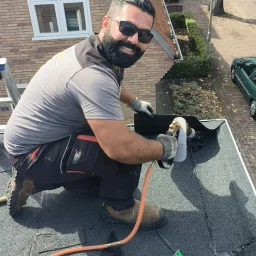
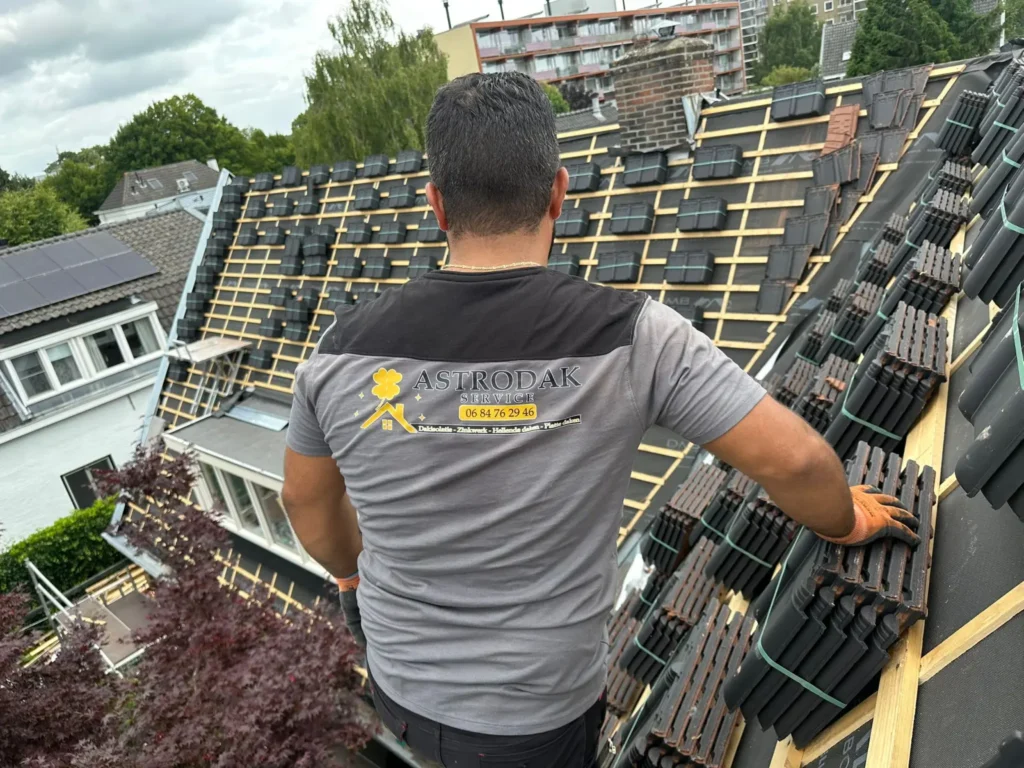
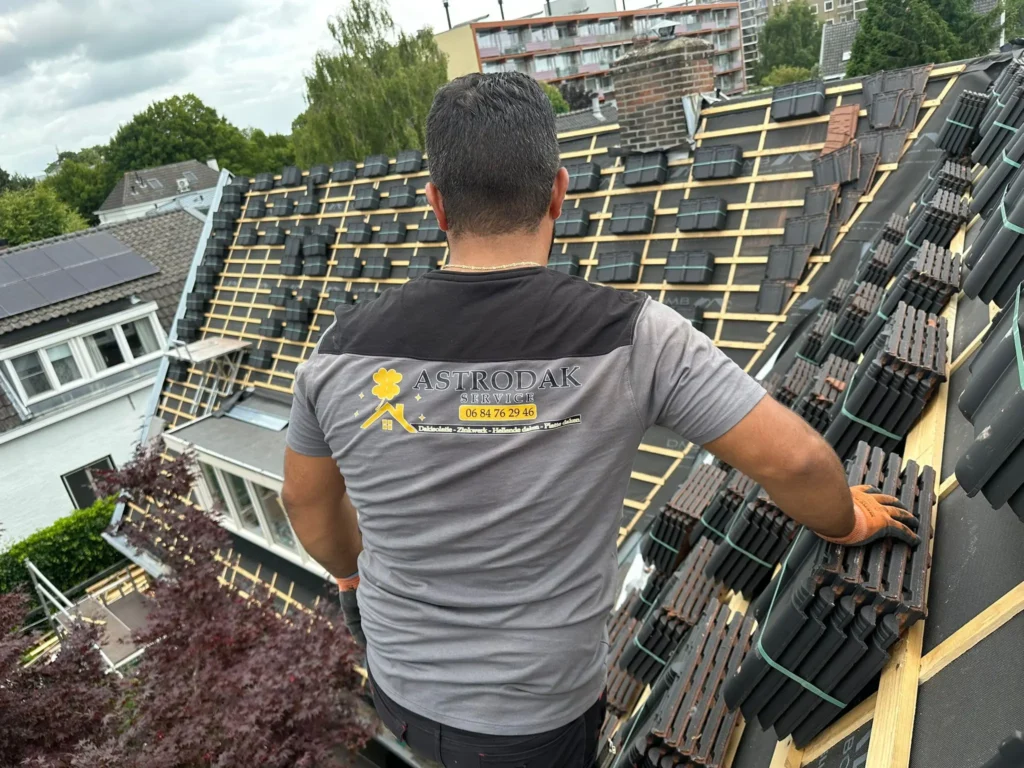
Fouad, owner of Astrodak Service
The junctions
The chimney pointing. Sandy or recessed pointing lets water through. See
repairing pointing.
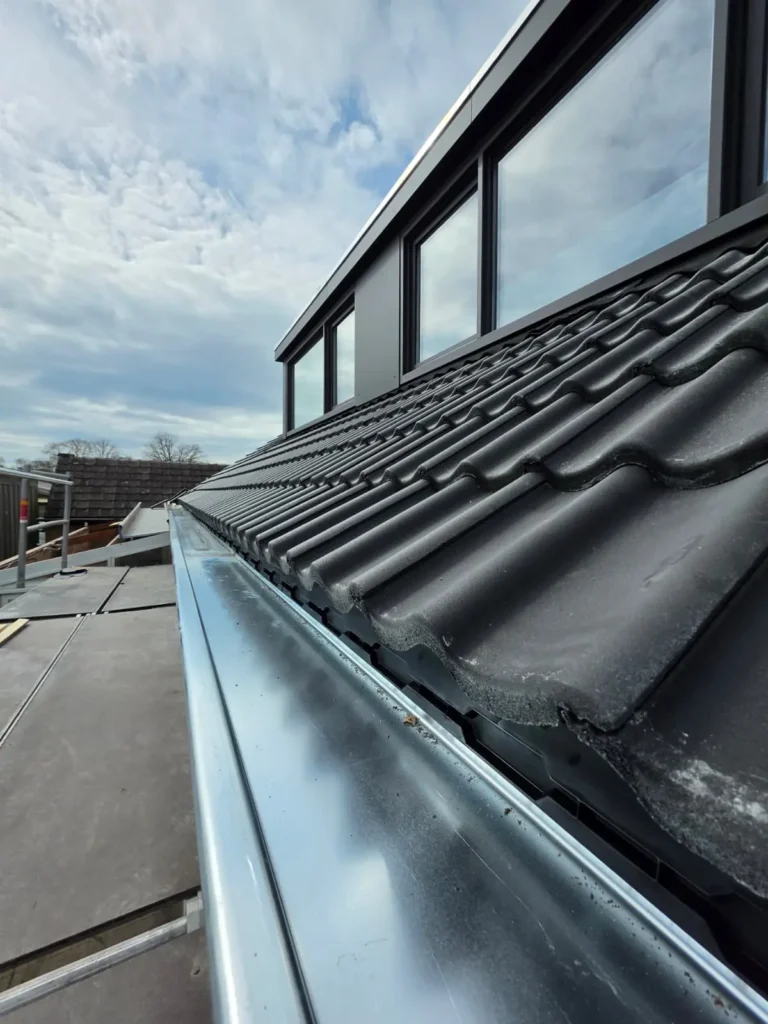
The valley gutter. Are there leaves in it, and are the tiles along the valley lying properly? See
valley gutter leaks.
Roof windows and dormers. Sealant joints, flashing pieces and the wooden frames. See
leaks at a dormer.
From outside
ridge to gutter
top to bottom
Have it checked before it becomes a job
Most of the damage I repair was still a small fix a year earlier. Have your roof checked with no obligation and you will know exactly where you stand.
The eaves and the gutter
Is the gutter empty and does it drain? And does water stay standing in it after a shower? See
an overflowing gutter.
Are the outlets clear? Leaf guard empty and the pipe running freely. See
a blocked downpipe.
Is there bird protection under the bottom row of tiles? And is it still intact and letting air through? See
bird protection.
From inside, in the attic
This is the most important part and the one most often skipped. Take a good lamp and look up at the underside of the roof boarding. Look for damp rings, white lime streaks, rusty nail points and dark or soft patches in the wood. See
following the water trail.
Press a screwdriver into the suspect spots by the chimney, the valley gutter and the eaves. Smell too: a musty smell means moisture that cannot escape. And check whether daylight comes through anywhere it should not.
What to do with the result
If you find none of this, there is probably nothing wrong and you can look again next year. If you find one or two points, that usually means a targeted repair, not a renovation. If you find five, it is time for a proper assessment.
When best to go through the list
Two moments work best. The first is a dry day in late autumn, once the leaves have fallen: then you do the gutter and the drainage, and the roof is in the condition it will go into winter with.
The second is during or just after a heavy shower, and that is the moment most people skip. Then you see where water comes over the edge, whether water runs down the wall anywhere, and whether anything appears inside. You cannot get that information in dry weather.
Frequently asked questions about roof maintenance