A roof tile should shed water, not absorb it. New tiles are so dense that rain runs off and the surface is dry within an hour. With a tile that has lost its density, that no longer happens.
That is not a cosmetic problem. Water in the material means frost damage in winter, and a tile that holds water is also a tile that can no longer take any load.
Four ways to recognise it
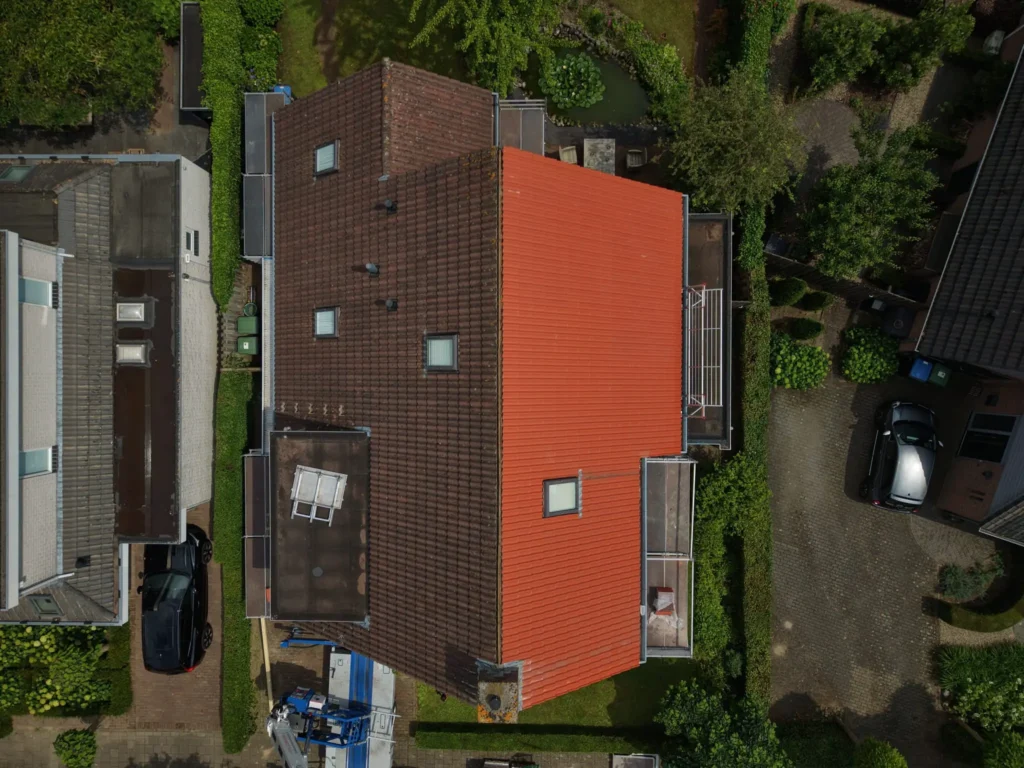
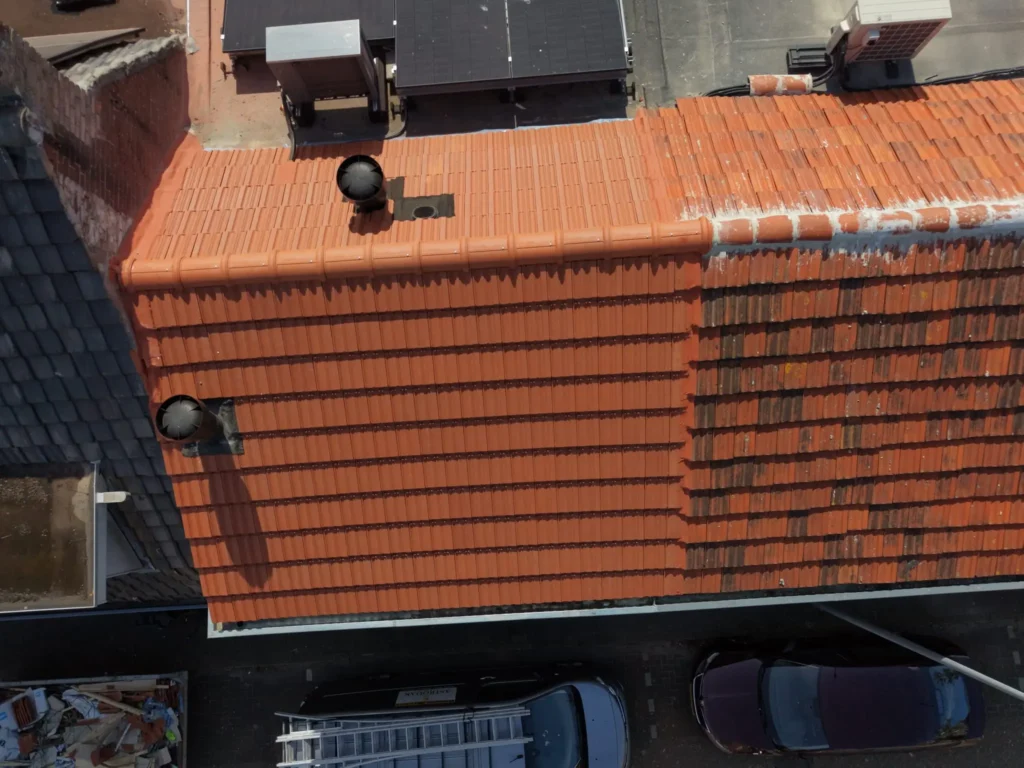
Look after a rain shower. The clearest test, and you do not have to do anything for it. If certain tiles or whole sections stay dark much longer than the rest, the water is in the tile rather than on it.
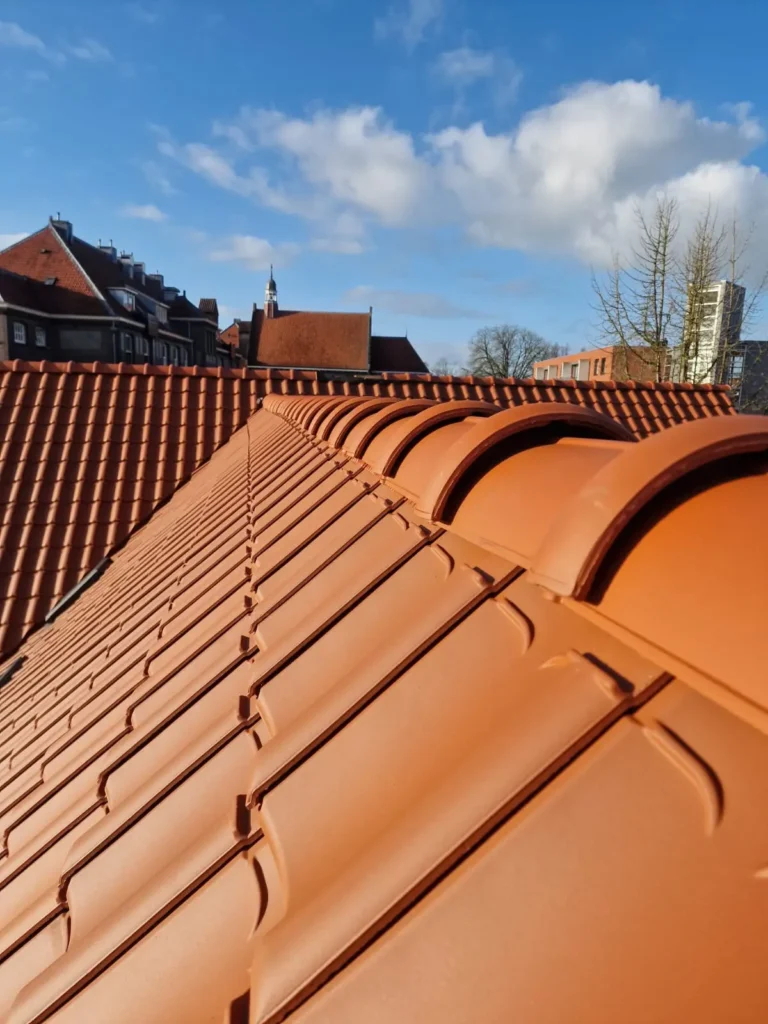
Look at the surface. A healthy tile has a dense, fairly smooth skin. A porous tile is dull, rough and sometimes grainy, and with concrete tiles you can see the texture of the concrete showing through.
Watch for moss everywhere. Moss needs moisture. A roof where the moss is not just on the north side but everywhere is holding moisture. See
moss on roof tiles.
Lift one up. A job for a roofer, but this is the definitive test. A porous tile is heavier than expected when wet, and often breaks just from being lifted.
“The test is free and takes one rain shower. If half your roof stays dark for two days, you know enough.”
Fouad, owner of Astrodak Service
What happens in winter
Water expands when it freezes. If that water is inside the tile itself, it pushes against the material from within. A tile will often survive one cold spell, but after a number of winters the edges start to chip, hairline cracks appear and tiles break.
You usually notice it in spring: bits in the gutter, a tile lying crooked, and more damage after a storm than the neighbours with the same roof. See
roof tiles after a storm.
Healthy tile
dry after an hour
water runs off
Porous tile
dark for days
water stays in
Not sure about the right approach?
I would rather come and look at your roof with my colleagues first than come up with a solution from a distance. During the free inspection you hear what is really needed, even if that is less than you thought.
Why relaying is then no longer possible
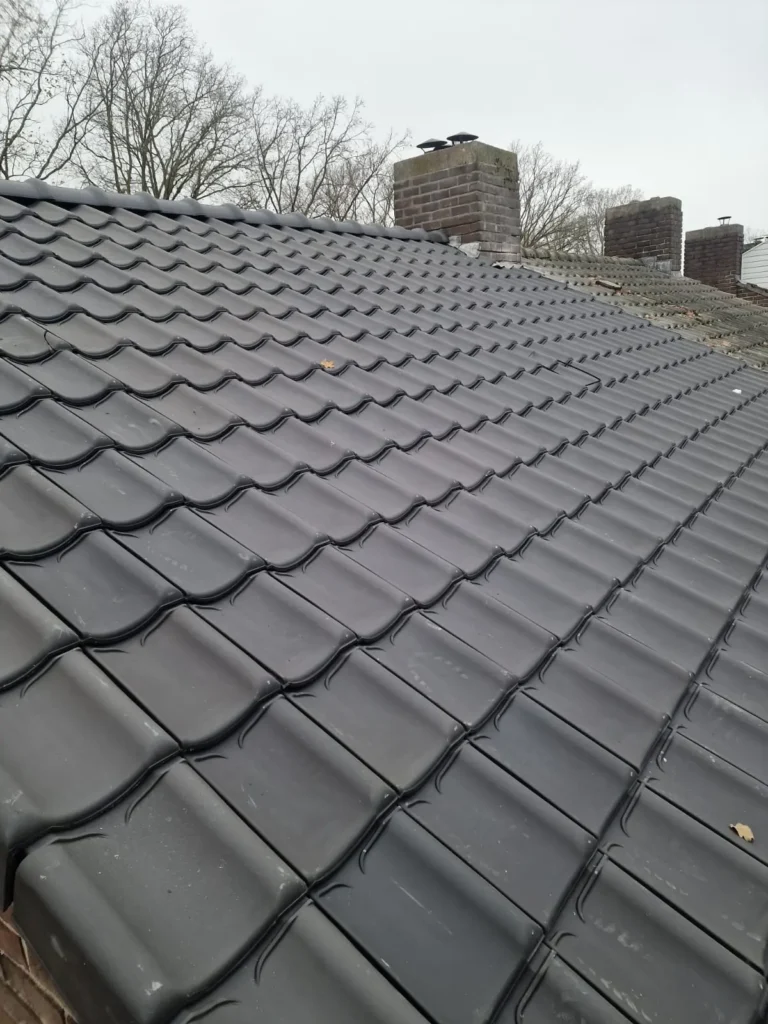
With relaying, the tiles come off, the tiling battens, counter battens and membrane are renewed and the same tiles go back on. It is the most economical way to give a roof decades more life, but it needs tiles that survive being taken off and put back.
With porous tiles, a large share breaks in the process, sometimes twenty percent or more. If that model is no longer available, you end up with a roof in two colours or with too few tiles to finish it. A completely new tiled roof is then not the expensive choice but the only one.
Can a coating solve this?
No, and this is exactly the situation in which a coating is offered as the solution. A coating puts a layer over a tile that has lost its density. The water already inside then has a harder time getting out, and the structural weakness of the material does not change.
Why the north side often goes first
On the north side a roof stays damp for longer, because it gets less sun and the water evaporates more slowly. So in frost, those tiles more often contain water than the tiles on the sunny side, and that means more freeze cycles with water in the material.
In practice I come across roofs where the south side is still fine and the north side is porous. The question then is whether you replace one roof slope or both, and that is a trade-off between the cost now and a visible colour difference between two sides of the same house.
Frequently asked questions about porous roof tiles