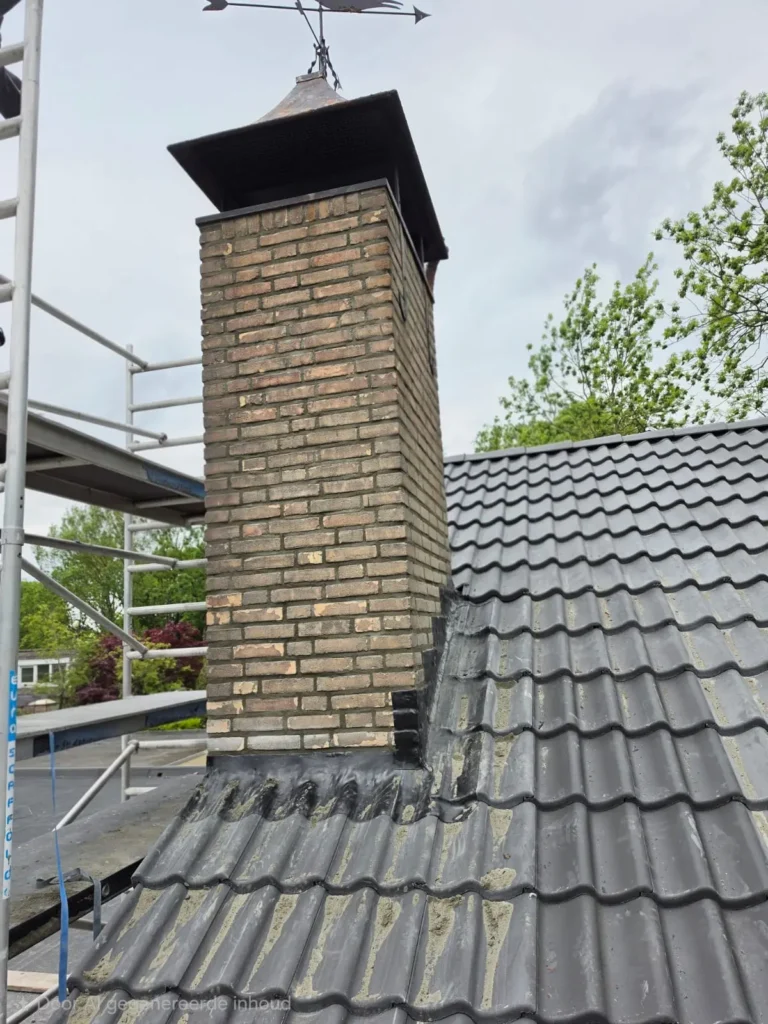
Of all the brickwork on a house, the chimney above the roof has the hardest time. It is exposed to wind on all sides, gets rain from every direction, and there is no overhang or roof edge to protect it. So that brickwork ages faster than the facade of the same house.
And when the joints give up, the chimney lets water through even though there is nothing wrong with the lead.
How to assess the condition
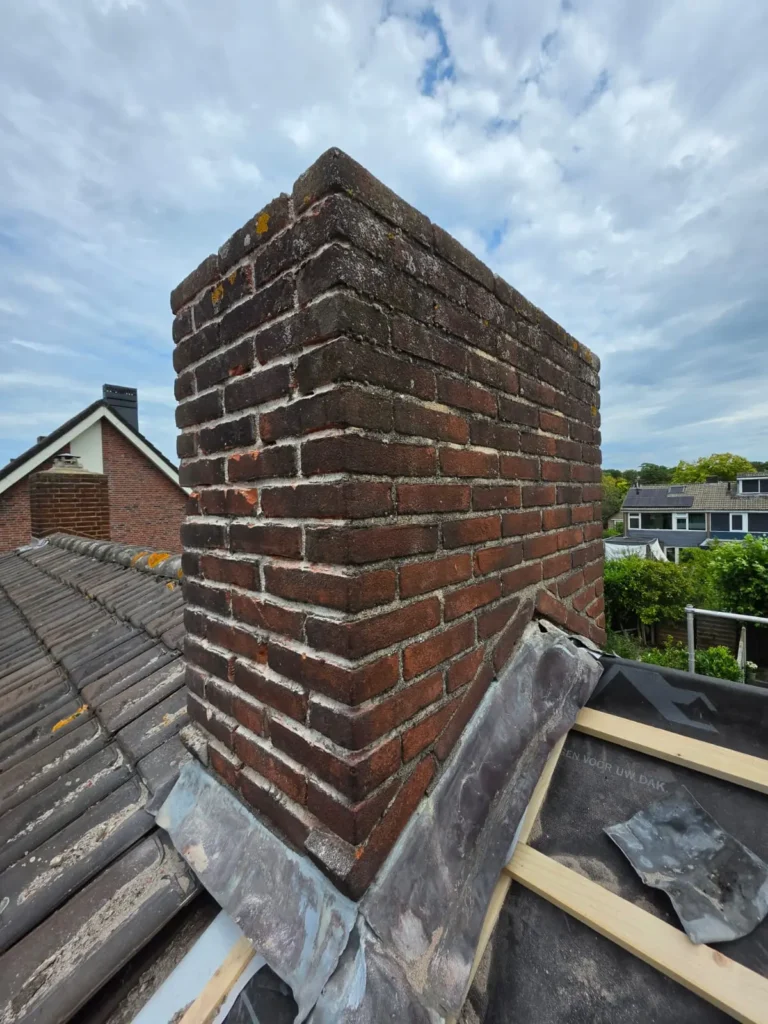
Scratch with a screwdriver. Sound pointing is hard and does not give. Sandy pointing crumbles and you can easily scrape material out with a point. That means water can get in too.
Check whether the joints are recessed. A joint that has worn away and sits deeper than the brick holds water instead of shedding it.
Look for open joints. Holes and small cracks in the pointing, especially on the side that gets the most driving rain. In our region that is usually the south-west side.
Watch for white deposits. Salt deposits mean that moisture is moving through the brickwork and drying out again on the outside. See
white deposits on the chimney.
“If you can pull the mortar out with a screwdriver, so can the rain. Only the rain does not stop.”
Fouad, owner of Astrodak Service
What repairing involves
The old mortar is raked out down to sound material, the brickwork is cleaned and it is repointed with a mortar that suits the brick. That last point is more important than it seems: a mortar that is too hard on a soft brick makes the brick do the moving instead of the joint, and then the brick crumbles.
So old, soft brickwork needs a softer mortar. That is skilled work and one of the reasons not to go for the cheapest option here.
Not sure about the right approach?
I would rather come and look at your roof with my colleagues first than come up with a solution from a distance. During the free inspection you hear what is really needed, even if that is less than you thought.
When repointing is no longer enough
When the bricks themselves crumble, when the chimney is leaning, when cracks run through the bricks rather than the joints, or when the top has been damaged by frost. Then the brickwork itself has reached the end, and repointing is a sticking plaster on a problem that goes deeper.
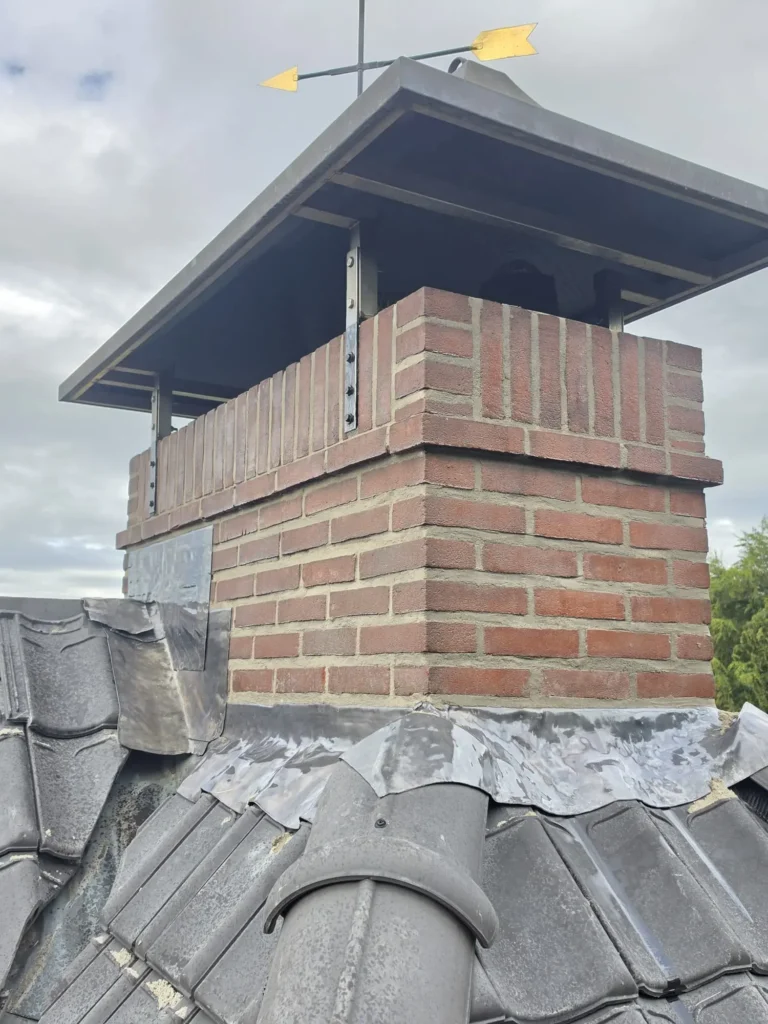
In that case the chimney is taken down above the roof and rebuilt, with new lead and a new cap. That is a bigger job, and it is the only one that will solve anything at that point.
Water-repellent treatment: when to use it and when not
A water-repellent treatment makes sound brickwork water-repellent and can reduce penetrating damp. It works, on one condition: the brickwork and the joints must be in good order. On sandy joints or porous brick you trap moisture in instead of keeping it out, and then the problem gets bigger.
Why a mortar that is too hard does damage
In old brickwork the brick is softer than in new builds, and then the mortar should be softer than the brick. That way the joint takes up the movement and the moisture and the brick stays intact. If a modern, hard mortar is used, that stress shifts to the brick.
The result is that the bricks start to flake instead of the joint, and that cannot be repaired. On the chimney of an older house, the choice of mortar is therefore not a detail. Ask about it, and be critical of a contractor who has no answer.
Frequently asked questions about chimney pointing