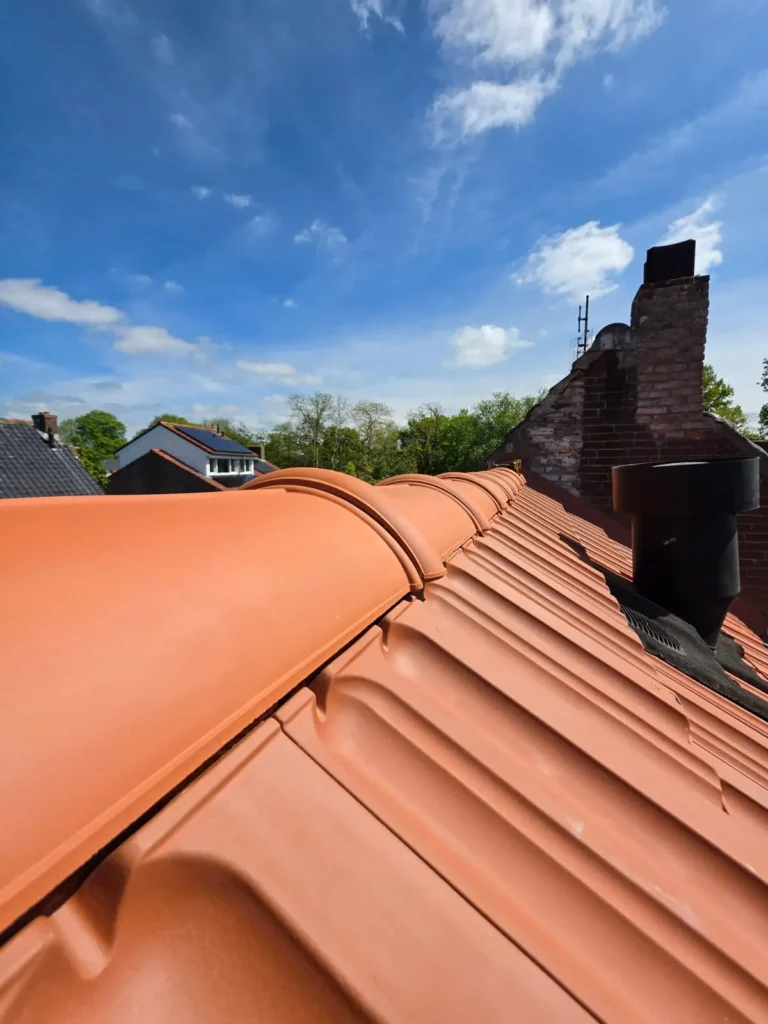
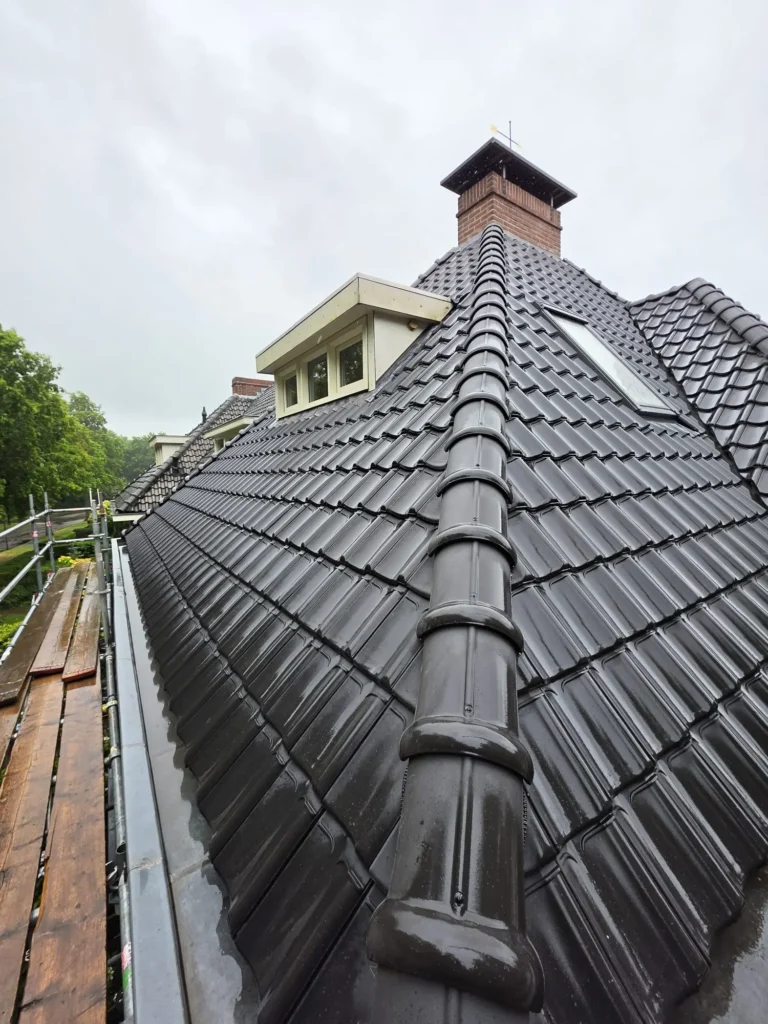
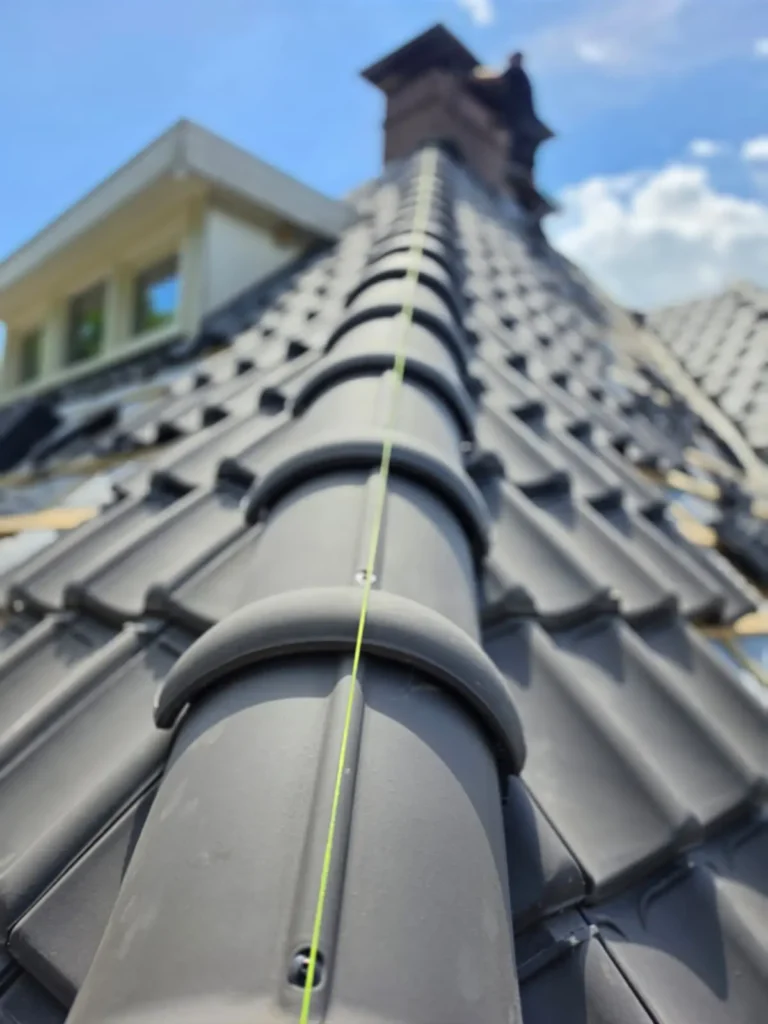
Ridge tiles are the heaviest loose parts on your roof, and they sit at the highest point. As long as they are secure, that is no problem at all. As soon as one comes loose, it is two things: an opening where water can get in and a heavy tile that can fall.
How to spot it from the ground
Check whether the line is straight. Ridge tiles should sit in one straight line. A ridge tile that is slightly tilted or shifted is loose. You can see this clearly from the street if you look for it.
Look in the gutter. Bits of mortar or grit come down from the ridge. That is proof the mortar underneath is coming loose.
Watch the end ridge tile. The ridge tile at the end of the ridge takes the most strain and is often the first to go. See
end ridge tile and hip.
“A ridge tile weighs a few kilos and sits ten metres up. That is not something to leave for a season.”
Fouad, owner of Astrodak Service
What a loose ridge tile does
Structurally: in wind, water and powder snow are pushed under the ridge tile, onto the ridge beam and the roof boarding. That leaves a damp trail in the attic over a greater length than you would expect, because the water runs along the ridge beam. See
damp patches along the ridge.
Practically: it can come off. That happens in autumn storms, and then a heavy tile comes down onto a drive, a car, a patio or a path. That is why I count this among the more urgent small defects.
One loose ridge tile
rarely on its own
the mortar is the same age
After a storm
check the ridge first
check
A leak? Do not let it spread.
A leak you leave for a season usually costs ten times as much in follow-on damage. Call or send a message: you will get an answer today, from me personally, not from a scheduler.
Why re-bedding one is rarely enough
If one ridge tile is loose because of crumbling mortar, the mortar under the other ridge tiles is exactly the same age and has had exactly the same weather. Re-bedding one ridge tile is then a repair for today and a return visit in the years to come.
On a ridge where the mortar has clearly reached the end of its life, I therefore advise redoing the whole ridge. That costs more, and it is done once instead of every year. On a ridge that is otherwise in good condition and where one ridge tile has been loosened by a storm, re-bedding is exactly the right choice.
What you should not do yourself
Go up on the roof to put it back. A ridge tile sits at the highest point, you have to walk across the roof slope to get there, and it is a heavy, slippery thing to hold on a slope. This is one of the few roof jobs where I really say: have this done.
What you can do: if the ridge tile has already blown off and is on the ground, put it aside and keep it. Putting the same ridge tile back is better than finding a new one that differs in colour and model.
How we tackle it
For one loose ridge tile on a healthy ridge: re-bed it or clip it, and check the rest of the ridge at the same time so you know where you stand. For a ridge where the mortar is finished: ridge tiles off, old mortar out, and re-laid dry with a ventilated ridge roll. See
wet or dry fixing.
What to do if a ridge tile has come down
Put it aside and keep it, even if it is broken. A whole ridge tile can usually go back, and that is better than finding a new one that differs in model and colour. On an old roof, there is a real chance the model is no longer available.
Then look at where it was and whether the neighbouring ridge tiles are still in place. A gap in the ridge is an opening where water gets in with the next shower, and that is why this is not a job to leave until spring.
Frequently asked questions about loose ridge tiles