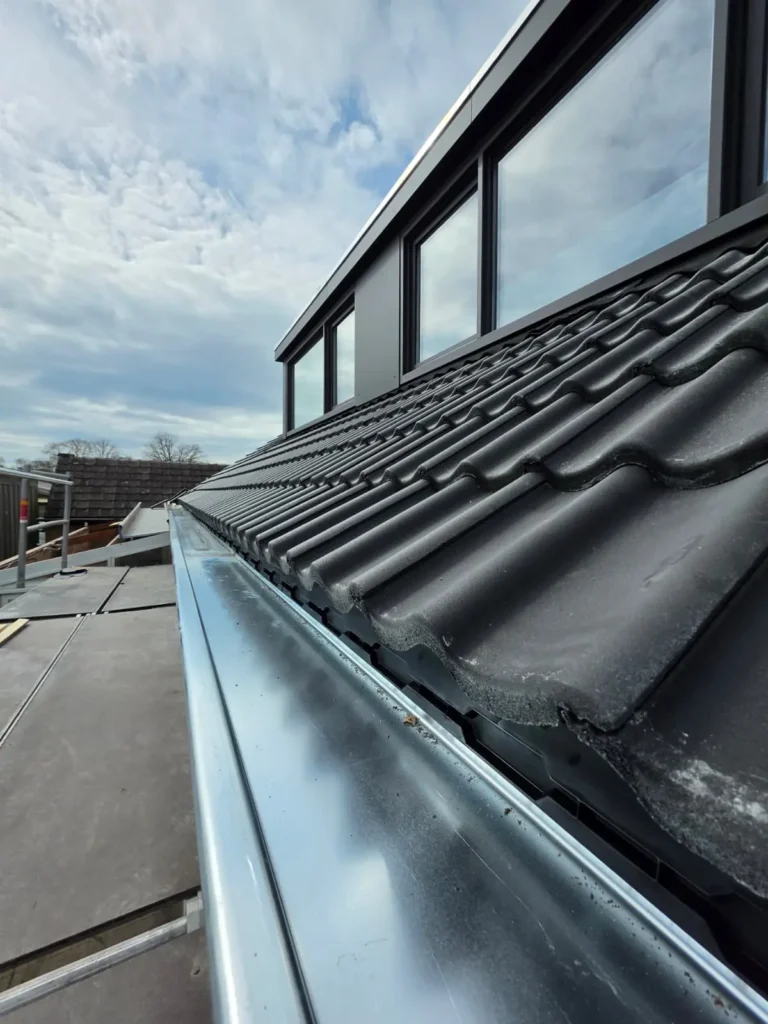
The opening under the bottom row of tiles is there for a reason: that is where the air comes in that flows under the tiles up to the ridge and keeps the roof dry. For a bird, that same opening is an invitation.
Bird guards close that opening to animals and keep it open to air. That sounds simple, and it is exactly where things go wrong.
Why you want it
Nests at the eaves. Starlings and house sparrows like to nest in the space under the tiles. Nesting material holds moisture against the membrane and the roof boarding.
Blocked gutters. Nesting material and feathers end up in the gutter and form a blockage together with leaves. See
an overflowing gutter.
Martens and other animals. An opening big enough for a bird is an entrance for a marten. They do considerably more damage, including to insulation. See
martens and birds in the roof.
Noise. Nesting birds above an attic bedroom are not pleasant company in spring.
“Bird guards must keep animals out and let air in. Block it up and you swap birds for damp.”
Fouad, owner of Astrodak Service
What it must not do
Block the ventilation. This is the most common mistake: the opening at the eaves is sealed with foam, insulation or a solid strip. Then the bird is out, but the moisture in the roof can no longer escape, and that is a considerably bigger problem.
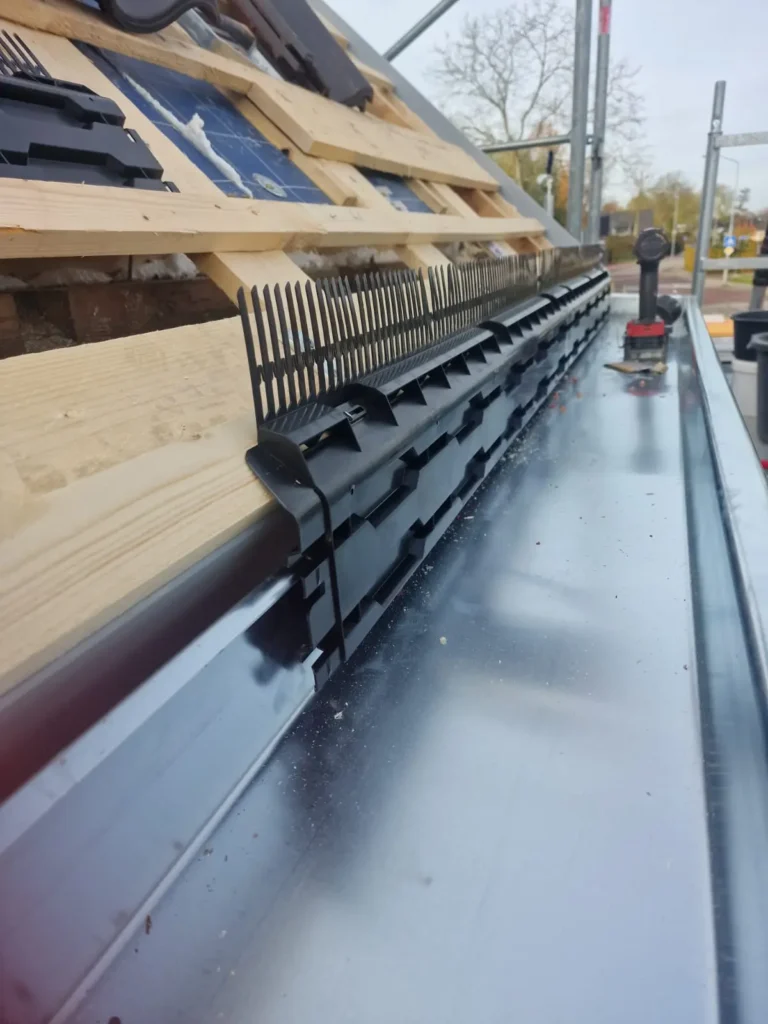
A good bird guard is a comb, a grille or a bird stop with openings that are too small for animals and big enough for air. See
insulating and ventilating.
Good guard
closed to animals
open to air
Have it checked before it becomes a job
Most of the damage I repair was still a small fix a year earlier. Have your roof checked with no obligation and you will know exactly where you stand.
Which types there are
Bird stop. A timber or plastic batten with holes or teeth that follows the shape of the tile. The classic solution on a tiled roof and neat in appearance.
Plastic or aluminium comb. A flexible comb clamped between tile and batten that follows the wave of the tile. Quick to fit, even afterwards, and keeps the air passage open.
Grille or mesh. For unusual tile shapes or eaves that are not standard. Works well, provided the mesh size is right and it does not clog up.
Ridge roll at the ridge. At the top, a ventilated ridge roll keeps animals out and lets air through. See
wet or dry fixing.
When to fit it
The logical moment is during tile replacement or re-laying, because then the eaves are open anyway and including it costs almost nothing extra. Fitting it afterwards is also possible: with most tiles a comb or bird stop can still be added without opening the roof.
What you do not do: fit guards while there is an active nest. Breeding birds are protected, and you would be shutting the parents out and the young in. Wait until after the breeding season; that is not only kinder but also what the rules require of you.
If there are already animals inside
Then sealing it is the last step, not the first. First it must be certain that nothing is still inside, and with a marten or bats separate rules apply. See
martens and birds in the roof.
Why the ridge is just as important
Bird guards are almost always fitted at the eaves and almost never at the ridge, and that is a missed opportunity. With a ridge in crumbled mortar or with a poor seal, the top is just as much an entrance, and birds find it too.
With a dry-fixed ridge with a ventilated ridge roll, that is taken care of automatically: the roll lets air through and keeps animals out. That is one of the less mentioned advantages of dry fixing. See
wet or dry fixing.
Frequently asked questions about bird guards