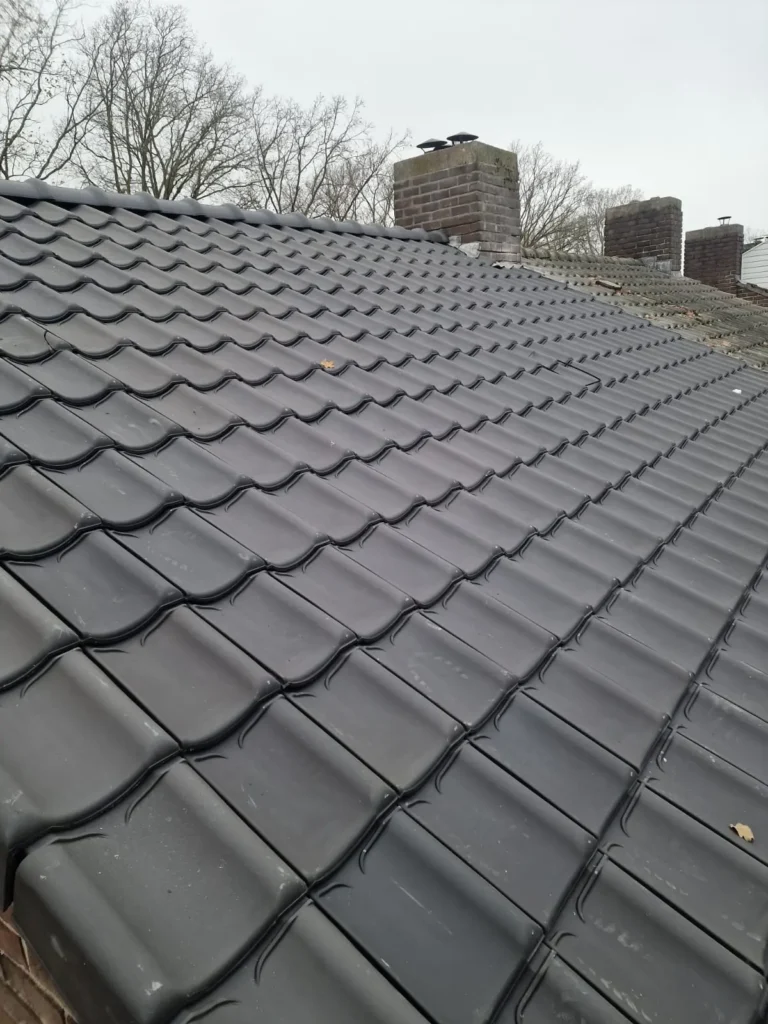
Almost every roof in the Netherlands has moss, and on the north side almost every roof has it after twenty years. That is not a problem. Still, I am regularly called about it, usually because someone has been at the door wanting to remove it.
So the question is not whether there is moss, but whether it is doing anything in your case. There are three situations in which the answer is yes.
When moss is a problem
When it blocks your gutters. Moss comes loose, washes down with the rain and ends up in the gutter. There, together with leaves, it forms a plug that blocks the outlet. This is the most concrete problem. See
an overflowing gutter.
When it grows between the tiles. Thick cushions of moss in the interlock between two tiles can hold back water and disrupt the water flow, especially on a shallow pitch.
When it is everywhere. Moss on the north side is normal. Moss just as thick on the sunny side means the roof is retaining moisture everywhere, and that points to porous tiles. See
porous roof tiles.
When it gets under the tiles. With heavy growth, roots and moisture can get into the interlock and under the tile, which puts strain on the membrane underneath.
“Moss is usually a gutter problem, not a roof problem. Solve it at the gutter and you are rid of ninety percent of the trouble.”
Fouad, owner of Astrodak Service
When you can simply leave it
On a healthy ceramic roof where the moss is mainly on the north side and the gutters stay clear, there is no structural reason to do anything. Moss does not eat its way through a fired clay tile. It is a matter of how you want your house to look, and that is a question of taste.
What I do advise: keep the gutters and the downpipes clear and have someone check once a year that no cushions of moss have formed between the tiles. That takes minutes and prevents the real problem.
North side only
normal
keep gutters clear
Equally thick everywhere
a warning sign
have the tiles checked
Have it checked before it becomes a job
Most of the damage I repair was still a small fix a year earlier. Have your roof checked with no obligation and you will know exactly where you stand.
How to have it removed safely
Not with high pressure. This is the most important rule. A high-pressure jet strips the top layer off the tile and forces water under the tiles. See
roof tiles and the pressure washer.
By hand or with low pressure. Remove it carefully, with a soft brush or with low pressure and plenty of water. Slower, and the roof stays intact.
With a product that can run off. There are moss killers that make the moss die off, after which it washes away with the rain. Pay attention to what ends up in your garden and in the sewer.
Work from the top down. And always check the gutter and the outlet afterwards, because all the loosened moss is now there.
Why not every doorstep seller is a good idea
Roof cleaning is often sold on the doorstep in spring, often with a pressure washer and sometimes combined with a coating. On a roof with weathered tiles, that is exactly the wrong treatment: the roof looks better that afternoon and is structurally worse off than before.
What moss tells you about your roof
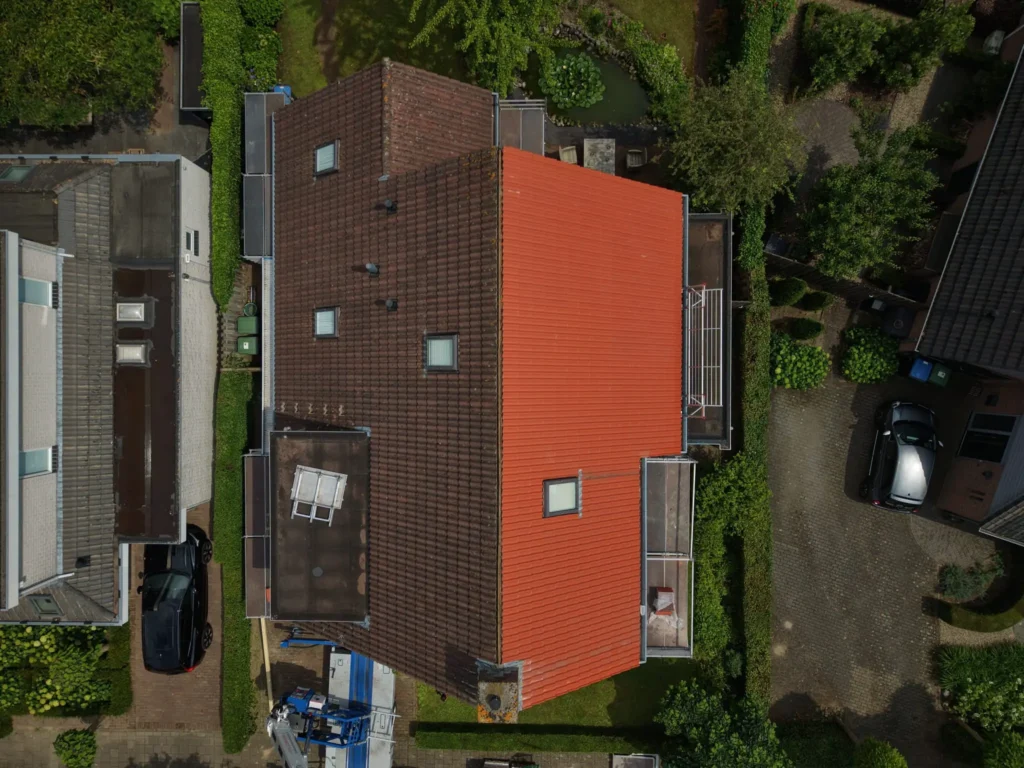
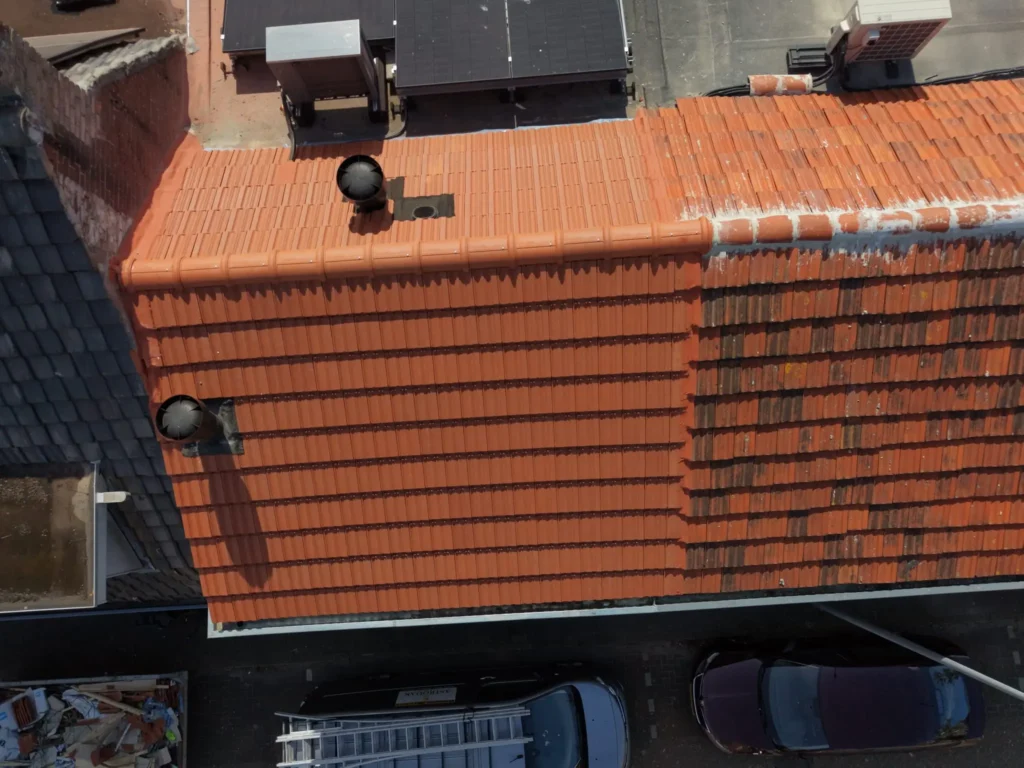
Apart from whether it needs to go, moss is a free diagnosis. If it is only on the north side and in the interlocks, that is the normal situation for a roof that stays damp for longer there. If it is equally thick over the whole roof, including the sunny side, the tiles themselves are retaining moisture.
That last case is worth having looked at further, because it is the forerunner of frost damage. In that case the conversation is no longer about moss but about the condition of the tiles. See
porous roof tiles.
Frequently asked questions about moss on the roof