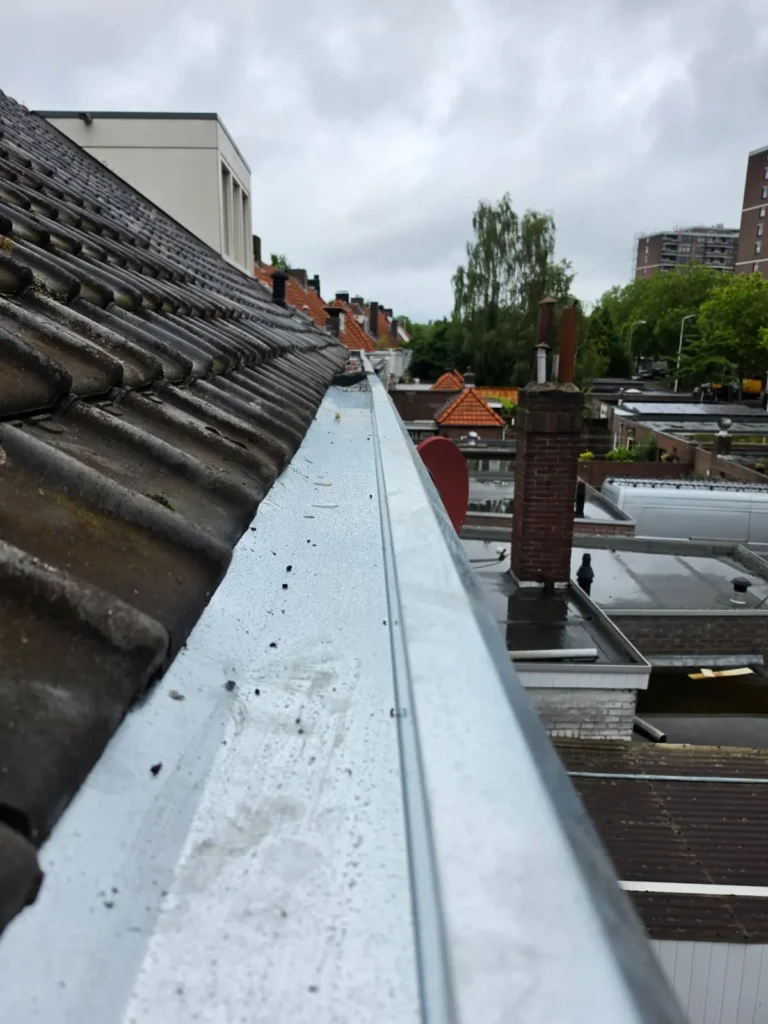
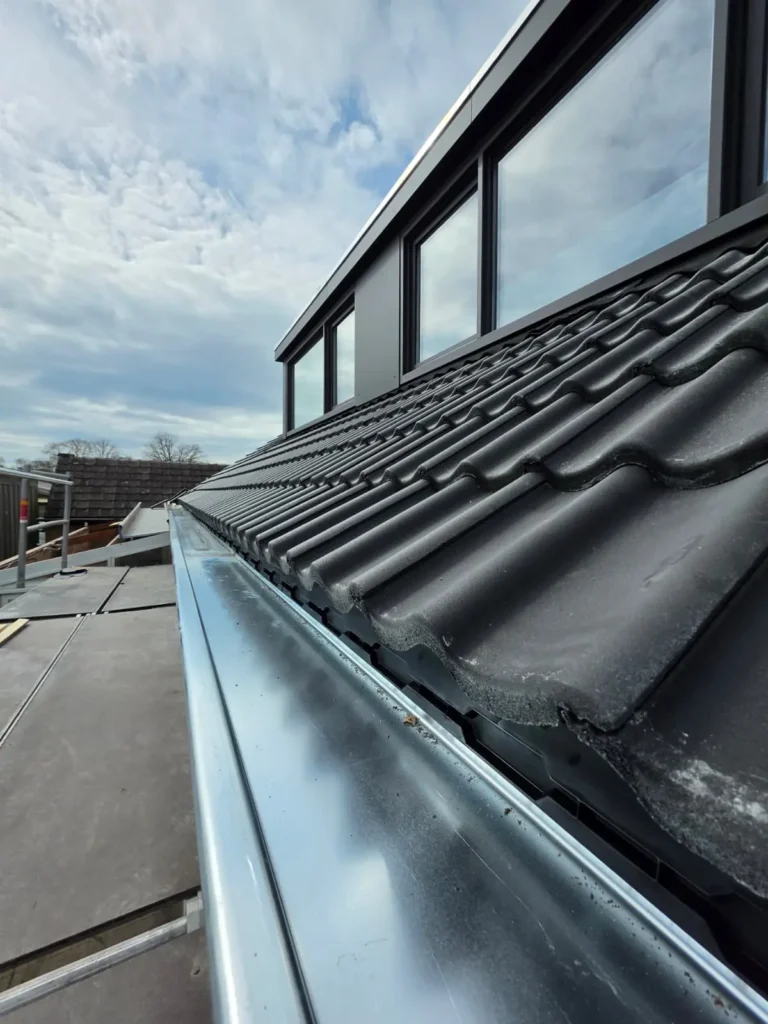
You usually notice a blocked downpipe indirectly: the gutter overflows, water is left standing in it after a shower, or something sloshes in the pipe without any water coming out. And in frost, a full pipe can burst.
The good news is that the blockage is almost always in a place you can reach.
Where the blockage usually is
At the top by the outlet. Where the gutter joins the pipe, the opening suddenly narrows. That is where leaves get caught. This is the most common spot and the easiest to deal with.
At the first bend. Below the gutter, the pipe often bends towards the wall. Anything that got past the outlet stays in that bend.
At a reducer. Where a wide pipe joins a narrower one, or at a connector. Every change in size is a place where something can get stuck.
At the bottom by the ground connection. The point where the pipe goes into the ground or ends at a drain. Leaf sludge can build up here over the years, and that is a trickier job.
“Nine times out of ten you pull the blockage out at the top by hand. For the tenth you need a drain spring.”
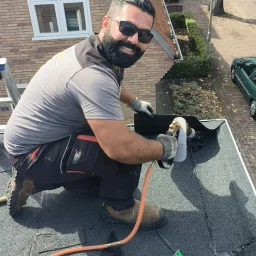
Fouad, owner of Astrodak Service
How to deal with it
Start at the top. Take out the leaf guard or the wire basket, look into the opening and remove what you can grab by hand or with pliers. Then flush from the top with a garden hose and listen to whether it runs through.
If the water stays put, a flexible drain spring or a long plastic strip works best. Push from the top and turn carefully; forcing it can damage an old PVC pipe or a zinc pipe. Be extra careful with a zinc downpipe, because the material is thin.
At the bottom
sometimes
drain spring or unblocker
Have it checked before it becomes a job
Most of the damage I repair was still a small fix a year earlier. Have your roof checked with no obligation and you will know exactly where you stand.
If it still does not drain after unblocking
Then it is not in the pipe but further along. The downpipe ends at a drain, the combined sewer or a soakaway in the garden, and the blockage may be there. That is no longer roofing work but a drainage question.
With a soakaway or a gravel-filled infiltration crate in the garden, the bottom can silt up after years. In prolonged rain it then does not empty quickly enough and the water rises back up the pipe. It is a cause that often goes unnoticed for a long time.
What to do afterwards to prevent it
Empty the gutter twice a year. What does not get into the gutter does not get into the pipe either. See
cleaning gutters.
A vent or overflow. With a pipe that blocks more often, an overflow on the gutter can stop water getting in at the eaves.
When to call us
If the top of the pipe cannot be reached without a ladder at height, if it does not drain after unblocking, or if the pipe is damaged and leaks down the wall. You often see the latter as a vertical green streak on the brickwork.
Why a green streak on the wall means something
A vertical green or dark streak on the brickwork below or next to a downpipe means that water runs down the outside there instead of inside. That can be a leaking seam or joint, or a pipe that has cracked in the frost and closes up again in summer.
That is more than a cosmetic flaw. Water that runs down one spot of the wall for years soaks into the brickwork and can cause damp patches inside. With a streak that comes back every year, it is worth having the pipe checked at that height.
Frequently asked questions about a blocked downpipe