Figures like a ten or fifteen-year guarantee appear on many roofing quotes, and they sound reassuring. The question that should follow is rarely asked: a guarantee on what exactly, and from whom?
That is not legal hair-splitting. It is the difference between a promise you can use and a line in a PDF.
Three types of guarantee that get mixed up
Guarantee on the work. The workmanship: was it laid, connected and finished correctly. This is the guarantee the roofer gives himself, and you turn to him for it.
Manufacturer's guarantee on the material. On the tiles, the membrane or the roof covering. It runs through the manufacturer and usually only applies if the material was installed according to their instructions.
Guarantee on watertightness. The most comprehensive and the least often given. It says not only that the work was done properly but that the roof stays watertight.
A guarantee fund or insured guarantee. Through a third party, so the cover remains if the company ceases to exist. That is exactly the risk an ordinary company guarantee does not cover.
“A guarantee from a company that no longer exists in five years is a nice number and nothing more.”
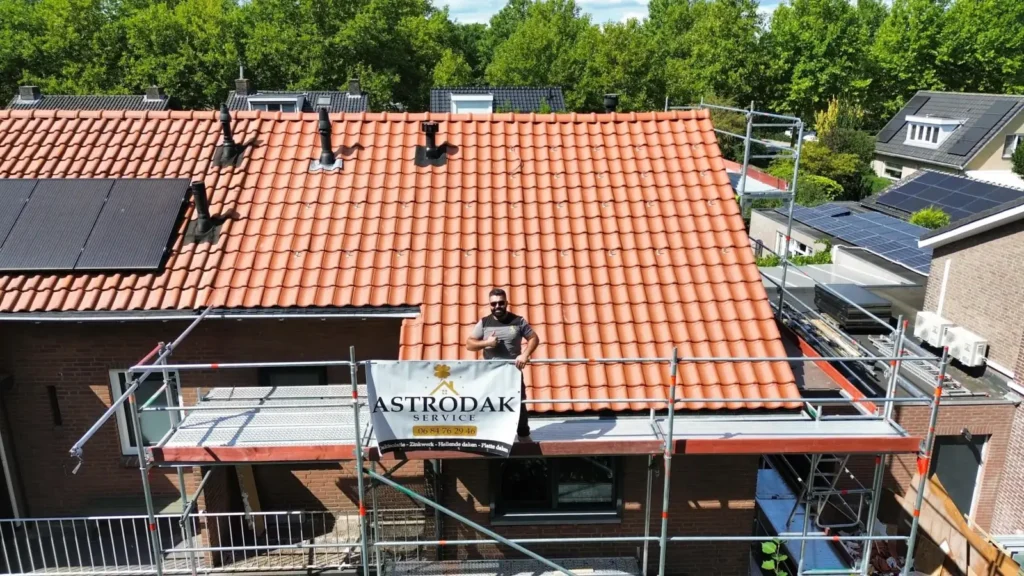
Fouad, owner of Astrodak Service
What is excluded as standard
Almost every guarantee on roof work excludes a few things, and that is reasonable as long as it is clearly stated beforehand. Storms and extreme weather above a certain wind force, damage by third parties such as an aerial or solar panel installer who has been on the roof, and the consequences of overdue maintenance.
That last one is where it causes friction in practice. A guarantee on a flat roof can lapse if the outlets have not been cleared for years, because then the load is different from what the roof was made for. See
the roof maintenance checklist.
On the work
with the roofer
accountable
On material
with the manufacturer
via instructions
Not sure about the right approach?
I would rather come and look at your roof with my colleagues first than come up with a solution from a distance. During the free inspection you hear what is really needed, even if that is less than you thought.
The questions to ask
What does the guarantee cover? Work, material, watertightness or a combination. Ask explicitly and have it included in the quote.
Who do I turn to? The company that sent the quote, or the party that actually did the work? With resold work, that is a real difference. See
choosing a roofer.
What do I have to do myself to keep it valid? Usually normal maintenance, such as keeping gutters clear. Ask whether there is a requirement attached and whether you need to be able to prove it.
What happens if I have a complaint? Will someone come and look, within what period, and who decides whether it is covered by the guarantee?
Why the invoice and the photos matter
A guarantee is an agreement, and agreements are proven on paper. Keep the quote, the invoice and the handover photos in one place. With a complaint in five years, that is the difference between a conversation and an argument.
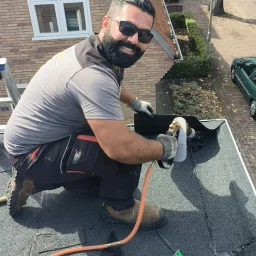
For every job we supply photos of the work in progress, including the parts that are no longer visible after handover. For you that is proof it was done, and for us it is the reason we dare to give a guarantee.
What we give
100% guarantee on our work, plus the manufacturer's guarantee on the materials used. You come to me and not to a service desk, and that is possible because we do the work ourselves.
What to keep and where
Put three things together in one folder, digital or paper: the quote with the description of the work, the invoice, and the photos of the work being done. Add the annual maintenance reports if you have them.
That is your file, and it is exactly what you need for a complaint in seven years, for an insurer after damage, and when selling the house. A buyer who can see what was done to the roof and when asks far fewer questions.
Frequently asked questions about guarantees