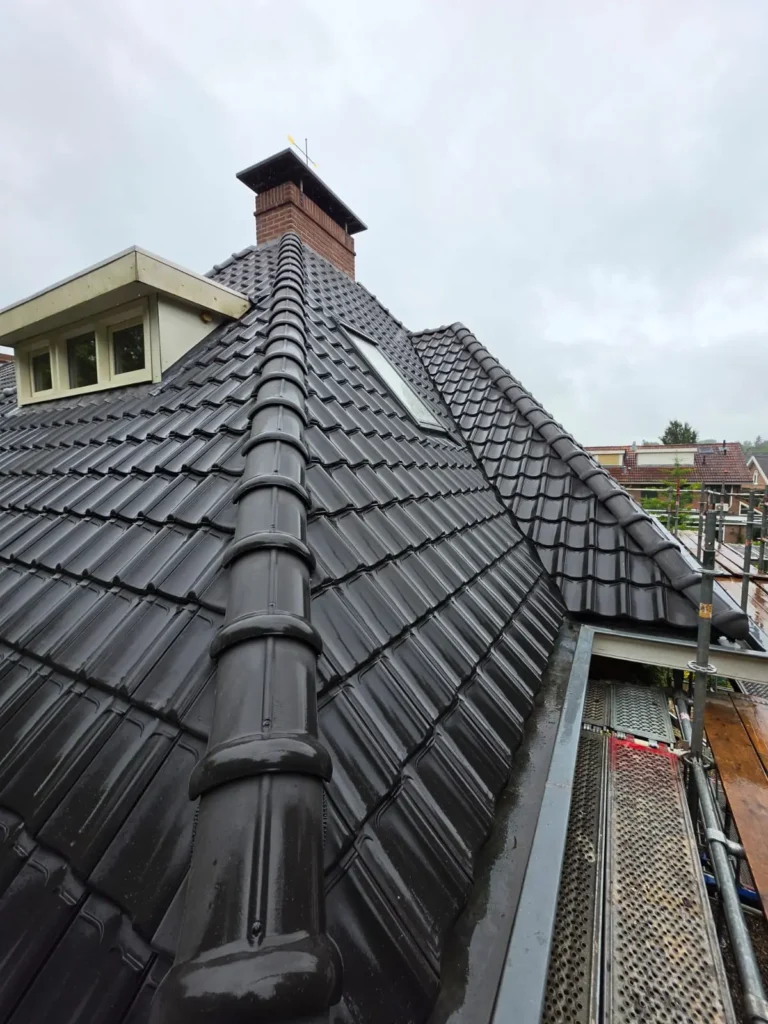
Insulating and ventilating feel like opposites: you want to keep the heat in and let air through at the same time. That seems illogical, but it is about two different places. You keep the heat in on the warm side of the insulation. The ventilation is on the cold side, outside the insulation layer.
If that separation is right, it works. If the ventilation is blocked to fit in a bit more insulation, it goes wrong.
What the air gap does
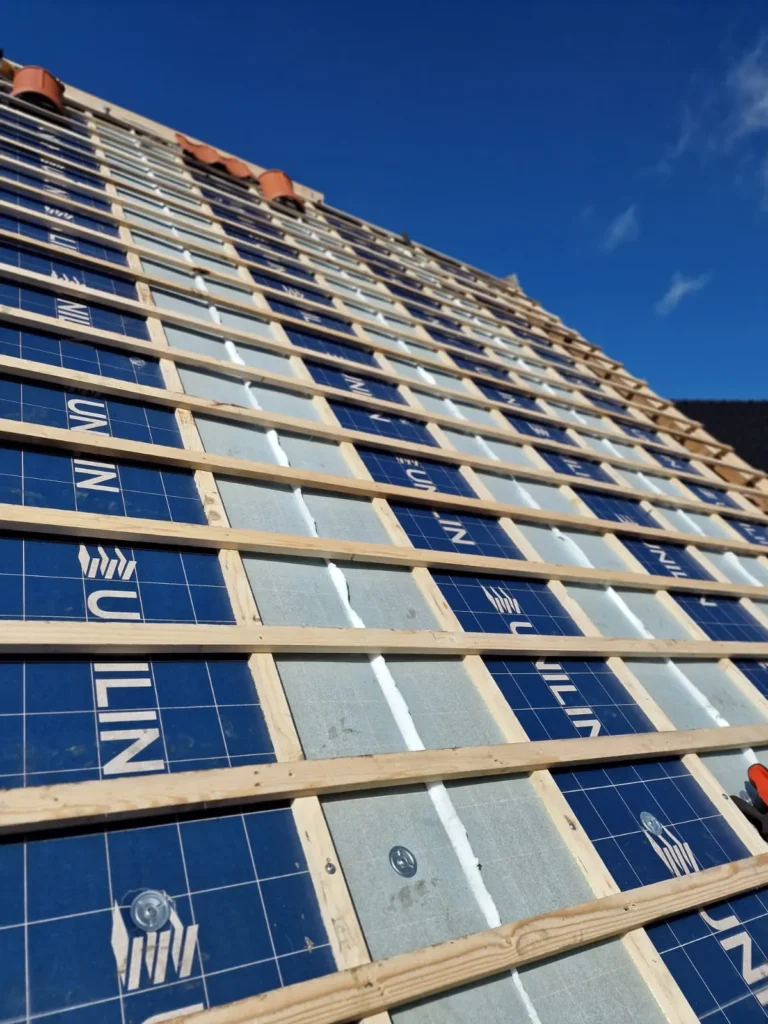
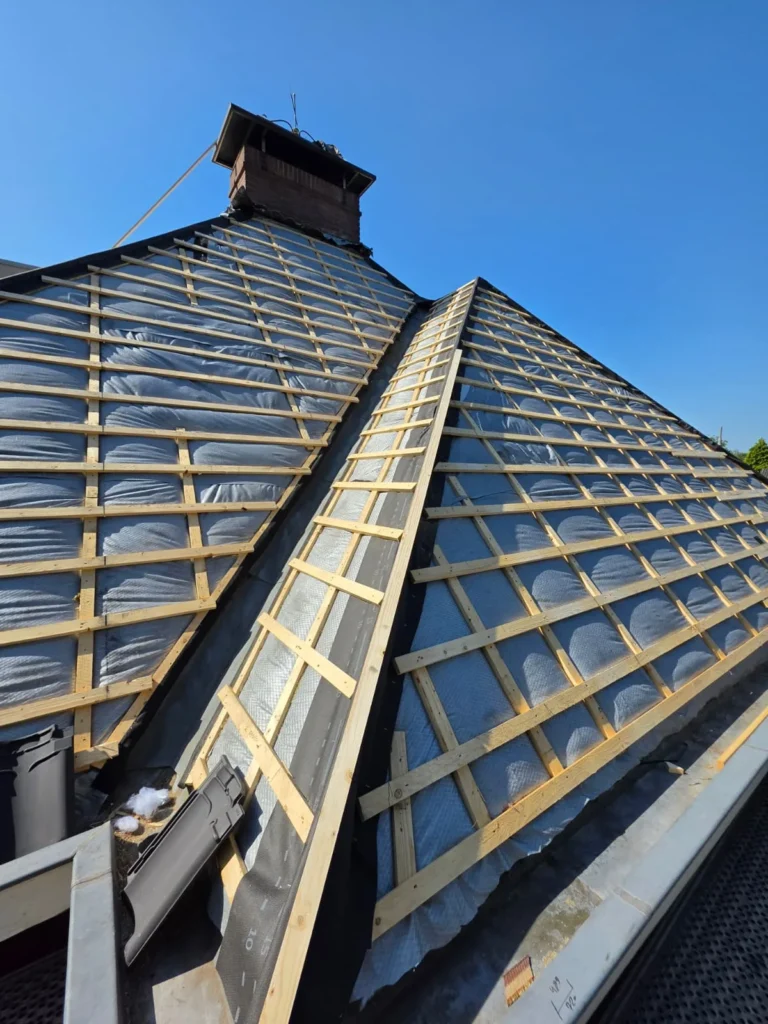
Between the insulation and the outside of the roof there should be a gap that air can move through. That gap carries away the small amount of moisture that always gets into a structure, however good the membrane is. Air comes in at the roof base, flows up along the rafters and leaves the roof at the ridge.
Where it gets blocked in practice
At the roof base. The openings above the gutter are stuffed with insulation to prevent cold bridges, or closed off with bird guards that don't let air through. Then no air gets in any more. See
bird guards.
At the ridge. A ridge bedded in mortar without a ventilation opening seals off the top. With a dry-fix ridge roll, that opening stays open. See
wet or dry fixing.
Between the insulation and the boarding. Insulation that is too thick for the space between the rafters gets pushed against the boarding and closes the gap. This is the most common mistake when insulating from the inside.
At roof windows and dormers. Every interruption blocks the airflow from bottom to top. Air has to be able to get around them.
“Every centimetre of insulation you push into the ventilation gap costs you more than it gains.”
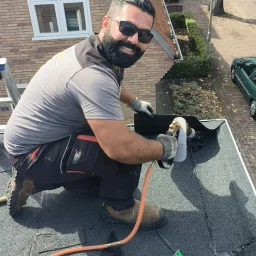
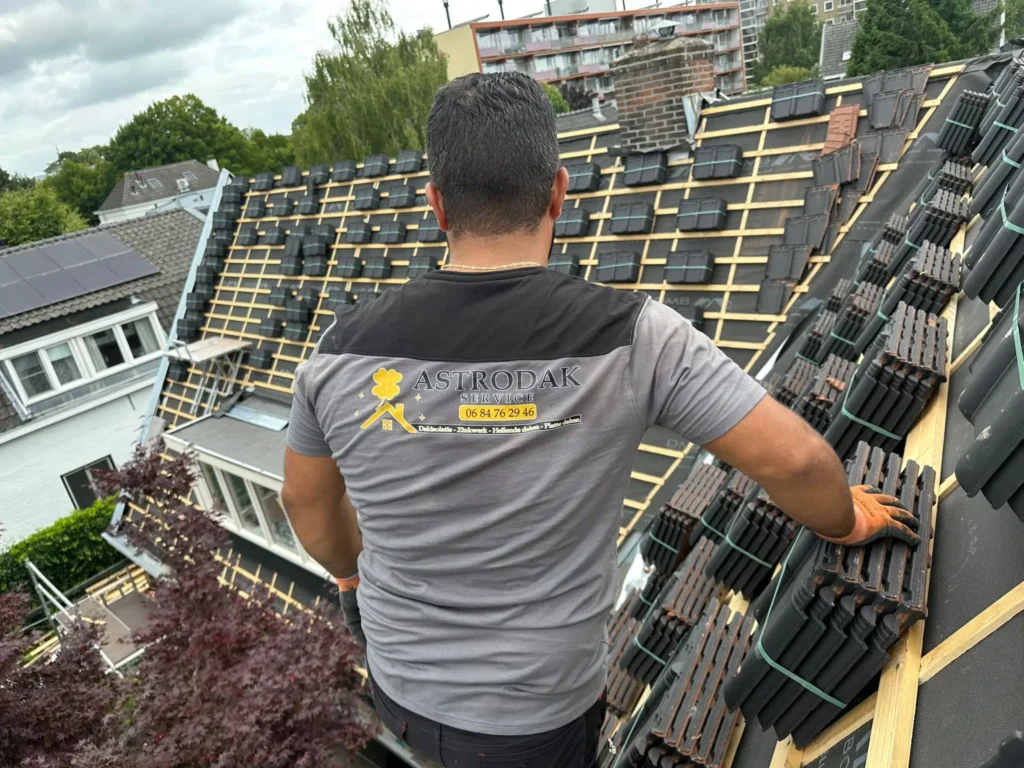
Fouad, owner of Astrodak Service
Warm side
vapour-retarding
airtight
What does insulating get you in your own house?
The benefit depends on the roof structure, the current insulation and how you use the space. I work it out for you in concrete terms during the inspection, including the grant you are entitled to.
When a ventilated gap isn't needed
Some build-ups are made as a warm roof, where the insulation lies fully against the structure and there is no air gap. That works, but only if the vapour control layer on the inside is truly airtight and the outside is vapour-open enough to dry out.
That is a build-up you choose deliberately and carry out carefully, not something you end up with because the gap has become blocked. On a flat roof this is the usual situation, because there is no ventilated space. See
insulating a flat roof and
the vapour control layer.
What you can check
Go into the attic with a torch to the roof base, where the roof meets the outside wall. If you can see light or feel air movement anywhere, air is getting through. If it is completely blocked with insulation or foam, that is something to look into.
How to check it after completion
Go into the attic to the roof base and feel whether there is air movement, ideally on a day with some wind. See whether you can spot daylight anywhere along the edge at the ventilation opening. And smell: an insulated attic that smells musty has a problem you can still solve now.
Do that check in the first year after an insulation job and every year after that. Moisture in a roof build-up works slowly, and it is considerably cheaper to find it in year one than in year seven, when the timber underneath has been damaged.
Frequently asked questions about ventilation with roof insulation