If I had to pick one part of an insulation job that makes the difference between a roof that stays good for thirty years and a roof that grows mould in five, it is this one. And it is also the part you can never see again after handover.
That is an unfortunate combination, because it means you have to trust that it was done properly without being able to check it.
What the layer does
Indoor air contains moisture. From cooking, showering, laundry and the people in the house. Warm air holds much more moisture than cold air. As long as that air stays inside, there is no problem.
If that warm, humid air gets into the roof structure, it cools against the cold roof boarding and releases its moisture there. In a place with no airflow and therefore no drying. The vapour control layer sits on the warm side of the insulation and stops exactly that air.
Where the gaps are
At the wall plate. Where the roof meets the outer wall. Hard to reach, and therefore the place where the membrane is most often not sealed neatly.
Around roof windows. The membrane has to run all the way round the window and be sealed to the frame. Often it is cut here and not sealed. See
condensation on a roof window.
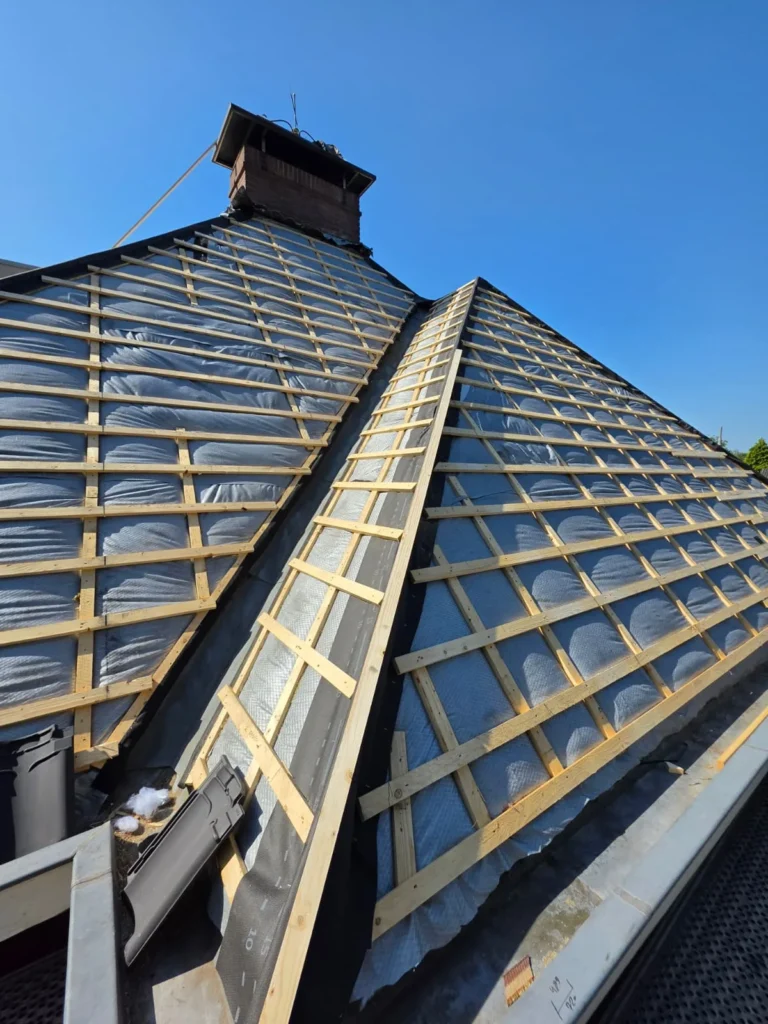
At the ridge. The joint at the top, where two roof slopes meet and the membrane from both sides has to join.
At wiring and penetrations. Every spotlight, cable or pipe through the membrane is a hole. It should be sealed with tape or a grommet, and in practice it often is not.
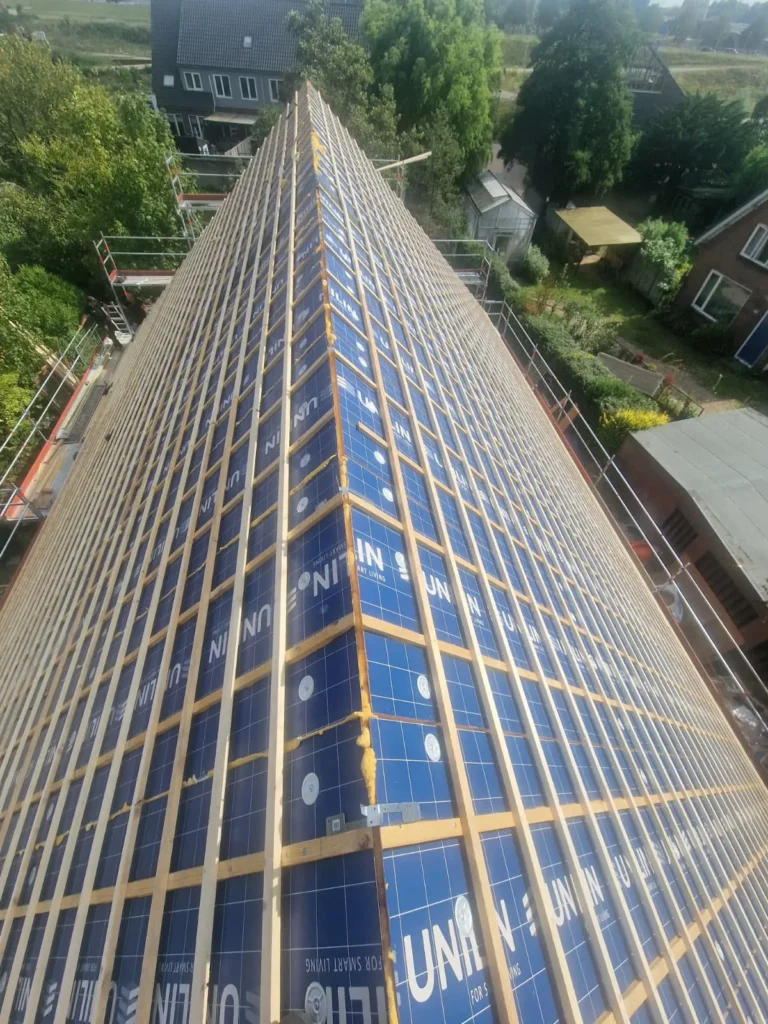
At the seams. Overlaps must be sealed with the right tape. Ordinary DIY-store tape comes loose after a few years.
“An insulation layer with a leaky membrane still insulates. It is just that the moisture then condenses in a place where nobody looks.”
Fouad, owner of Astrodak Service
Membrane airtight
moisture stays inside
structure dry
Membrane with gaps
moisture in the roof
mould and rot
Not sure about the right approach?
I would rather come and look at your roof with my colleagues first than come up with a solution from a distance. During the free inspection you hear what is really needed, even if that is less than you thought.
Why this goes wrong more often when insulating from the inside
Because it is hard to get at. When insulating between the rafters, the membrane has to be sealed in a cramped space around timber, along a wall plate and around every interruption, while your head is against the roof. When insulating from the outside, the membrane lies on the roof boarding and you stand on it. That is a world of difference in how workable it is.
The rule to remember
Vapour-tight on the inside, vapour-open on the outside. The structure must be able to dry outwards and be sealed on the inside. If that is reversed, for example because of a vapour-tight layer on the outside, you trap moisture in the build-up.
That is also why an old, vapour-tight membrane under the tiles combined with new insulation from the inside sometimes causes problems. So an insulation job should always include the question of what is currently under the tiles. See
insulating and ventilating.
What you can ask
Ask which type of membrane is used, which tape seals the seams, and how the joints at the wall plate and around roof windows are made. A good answer names those places. An answer that only talks about insulation thickness is about the wrong half of the work.
Why spotlights in an insulated roof are tricky
Every recessed spotlight in a sloping ceiling is a hole in the vapour control layer and usually a hole in the insulation too. That is exactly what you do not want, and it is one of the most common causes of condensation in an insulated attic.
If you want spotlights, you need an airtight housing that keeps the membrane continuous. That costs a little more per spotlight, and it saves you having to remove the finish in five years to repair moisture damage. Discuss this before the insulation, not after.
Frequently asked questions about the vapour control layer