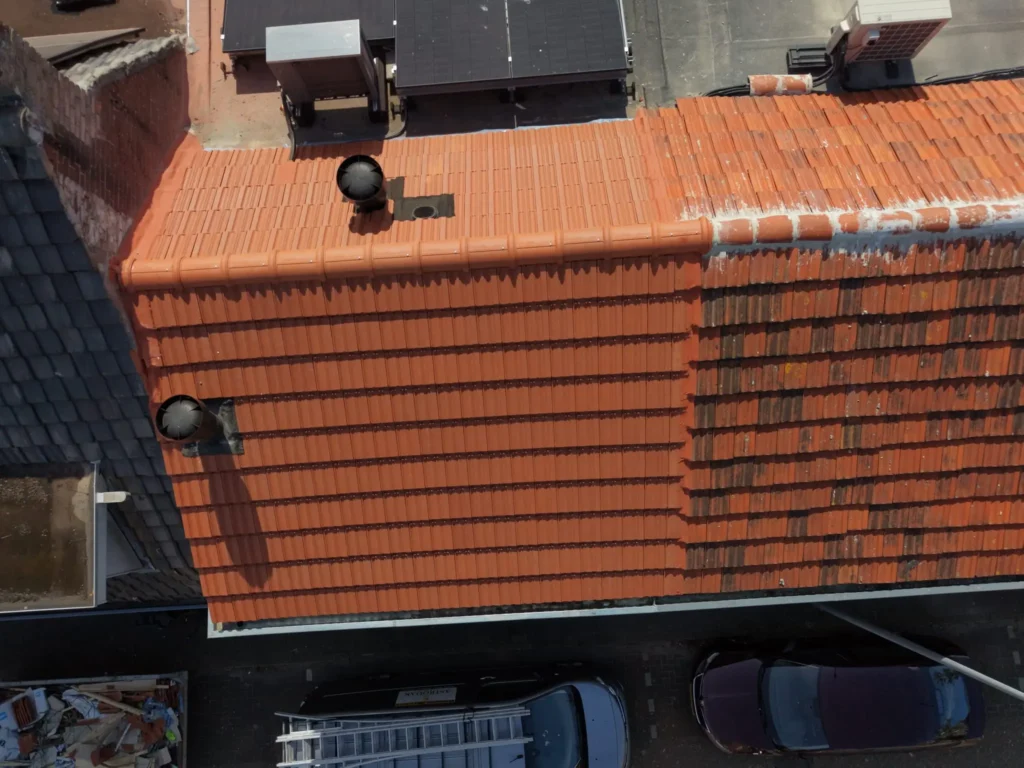
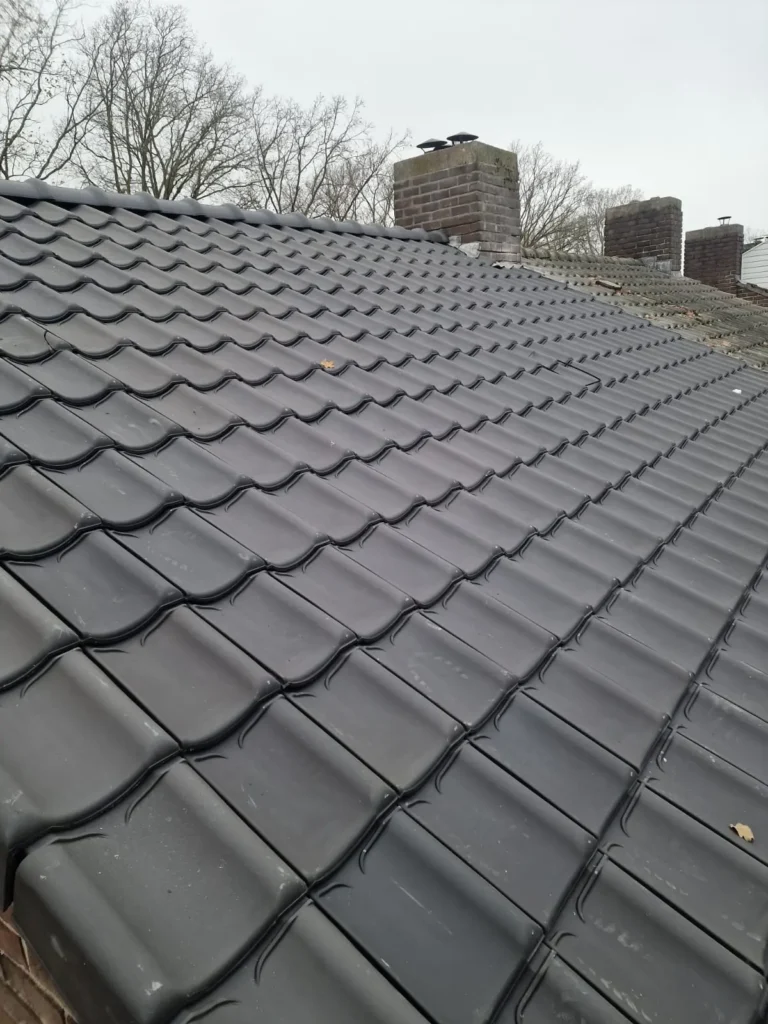
Under your roof tiles there is a layer of timber: boards or sheets lying on the rafters, to which the membrane, the counter battens and the tiling battens are fixed. That is the roof boarding, and it is the base the rest of the roof rests on.
It is also the part you cannot see as long as the roof is closed, and that is exactly why it so often causes surprises.
Where the roof boarding gets affected first
Around the chimney. Where the lead started to fail years ago, the timber next to it was the first to get damp. Visible from inside as a stain. See
a leaking chimney.
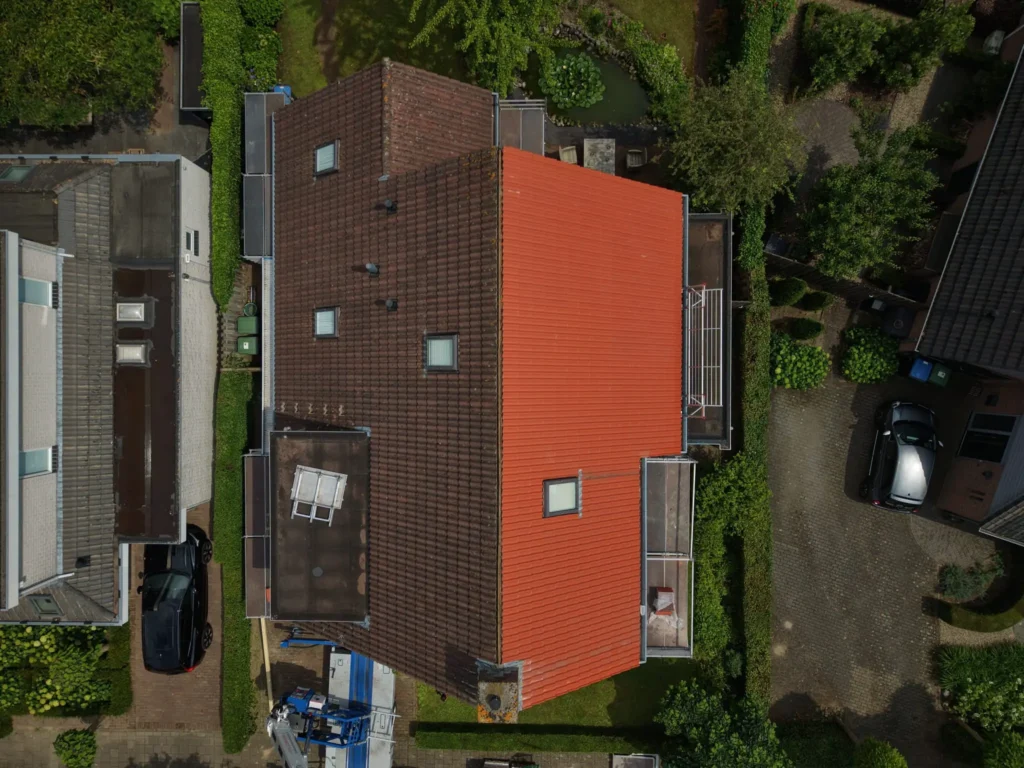
In and under the valley gutter. Two roof slopes meeting means all the water in one place. A valley gutter that is too narrow or full of sludge makes the timber underneath rot. See
valley gutter leaks.
At the eaves. Where the membrane runs out into the gutter. If it does not continue properly or the gutter has leaked for years, the bottom section of roof boarding is permanently wet.
At roof windows and dormers. Every break in the roof slope is a junction that will age one day, and the timber around it is the first to get moisture.
“I cannot tell you in advance how much roof boarding is bad. I can tell you in advance where I am going to look and what it costs per sheet.”
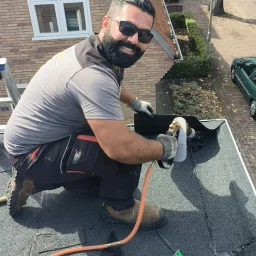
Fouad, owner of Astrodak Service
How to assess the condition
From inside in the attic, with a lamp and a screwdriver. Look for stains, dark patches and white lime streaks on the timber, and then push the screwdriver against those spots. Sound timber is hard and does not give. Affected timber is soft and the tip goes in without much force.
Not sure about the right approach?
I would rather come and look at your roof with my colleagues first than come up with a solution from a distance. During the free inspection you hear what is really needed, even if that is less than you thought.
Why this is the biggest source of extra work
Because nobody, me included, can say with certainty how much roof boarding is bad before the roof is open. What is possible: checking the suspect spots in the attic, estimating what is likely from the age and the build-up, and agreeing in advance what it costs per sheet or per square metre if it turns out worse.
What replacing involves
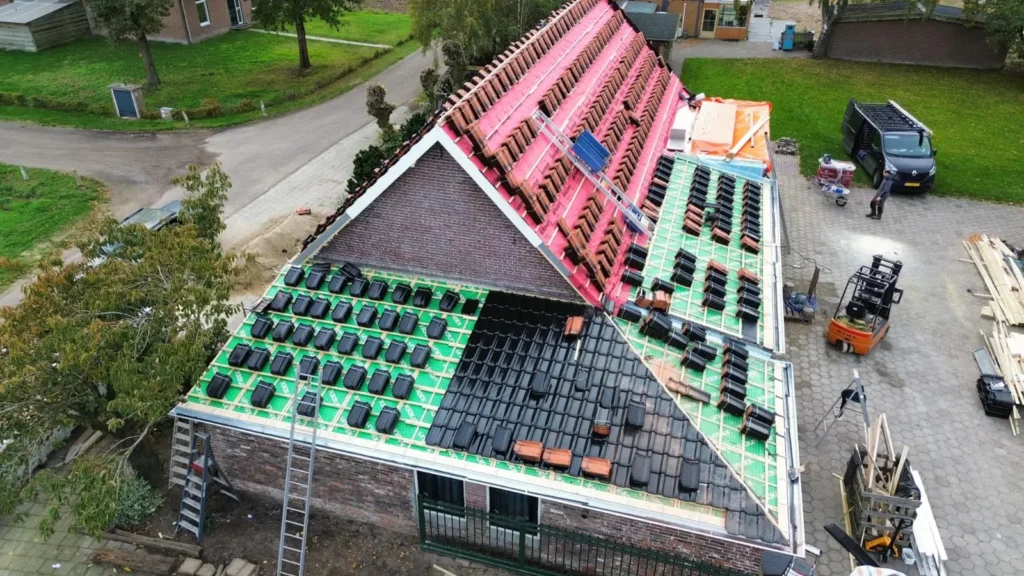
The affected boards or sheets are removed back to sound timber, and new roof boarding is fitted to size, usually the same material as the rest. For larger areas, sheet material is used. Then the membrane, counter battens and battens go on, and only then the tiles.
If a rafter or a wall plate is affected rather than just the roof boarding, it is structural work and the load-bearing capacity has to be looked at first. That is a different process from ordinary roofing work, and we say so. See
our page about roof renovation.
Boards or sheet material
With a roof that has boarding of separate planks, local repairs are usually done with boards of the same thickness, so the surface stays level. For a larger area or a completely new roof boarding, sheet material is often used, which goes down faster and gives a flatter surface.
Both work, but the transition between the two needs attention: a sheet next to thinner boards creates an unevenness, and then the tiling battens do not lie flat. That is a detail that rarely appears on the quote and that you can see in the result.
Frequently asked questions about roof boarding