With a ridge renovation, this is the choice that matters most for how long it lasts, and at the same time the choice that is talked about least. The quote often just says repair ridge.
I almost always dry fix, and not because it is new but because the reasons are good.
Why mortar gives up
It does not move with the roof. A roof slope expands and contracts with the temperature, and the ridge is exactly where two slopes work against each other. Mortar is a hard, rigid material and cannot follow that movement.
It is fully exposed to wind and weather. High up on the roof there is no protection at all. Frost, heat, driving rain: mortar gets the maximum up there.
Roots do not help. Moss and plant growth between the ridge tiles penetrate the mortar and speed up the crumbling.
It blocks the ventilation. A ridge fully bedded in mortar closes off the top of the airflow that keeps the roof dry. See
insulating and ventilating.
“Mortar is a rigid material in the place where a roof moves most. That could never last long.”
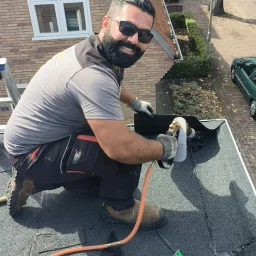
Fouad, owner of Astrodak Service
How dry fixing works
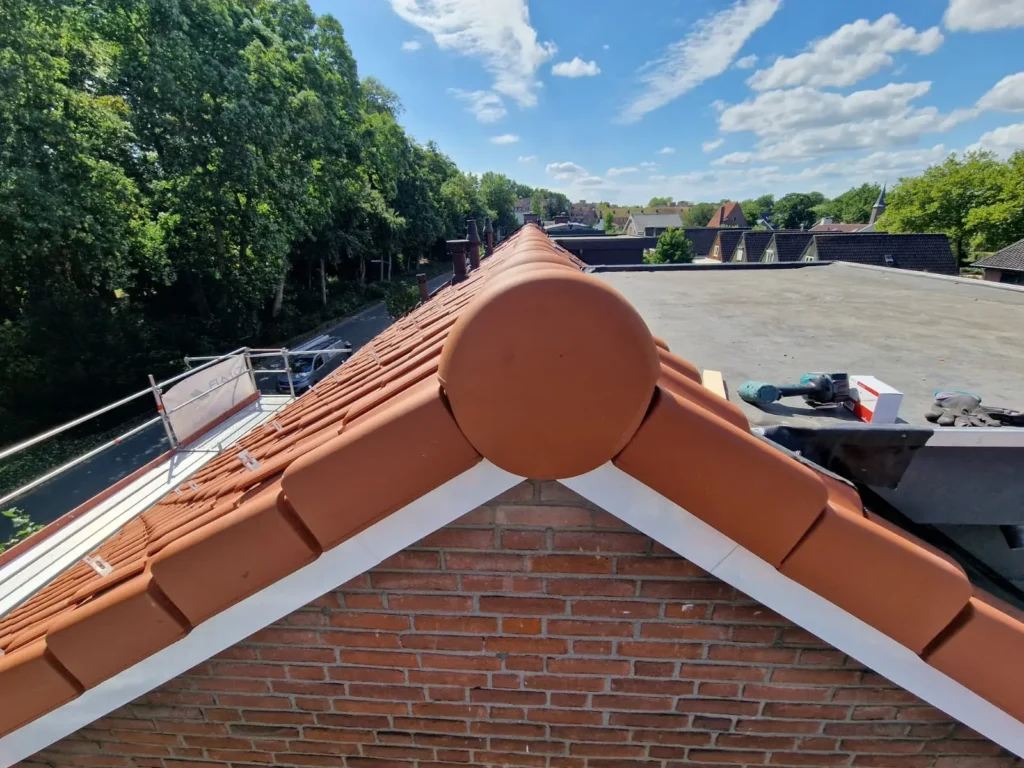
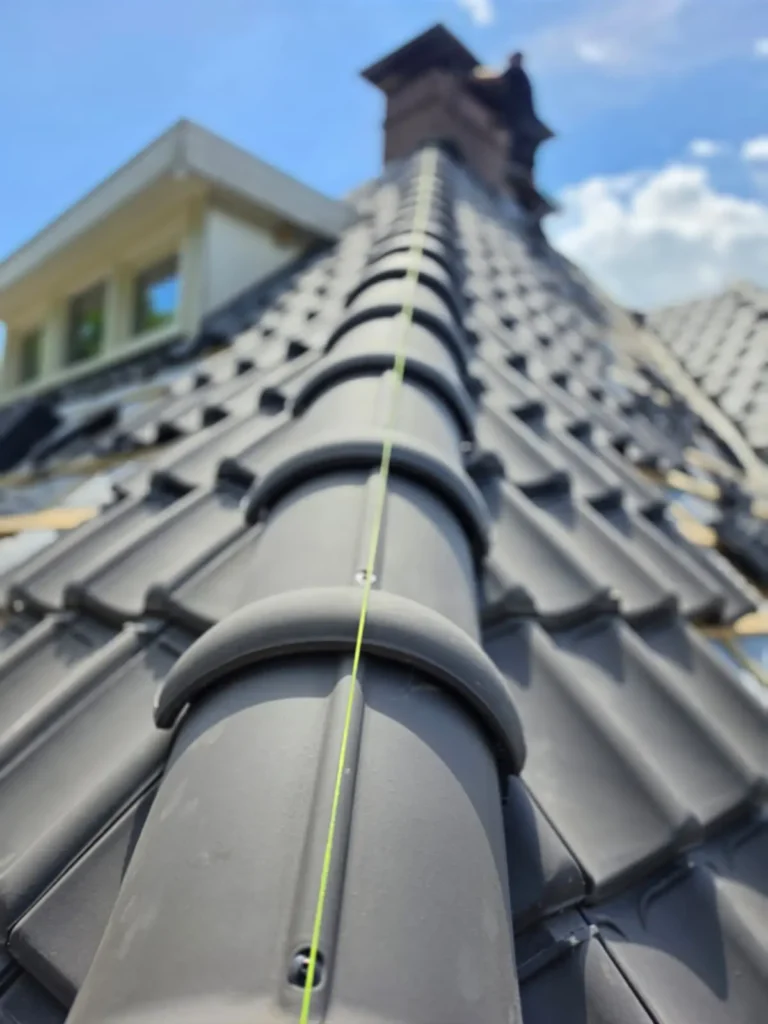
A ventilated ridge roll goes on the ridge beam or ridge board: a self-adhesive strip with a ribbed or pleated edge that follows the profile of the tile and moulds itself to it. The ridge tiles are then fixed to it with screws or clips, each one separately.
The result: each ridge tile can move a little independently, the edge seals against the tiles without being rigid, and air can still pass between the ribs. Exactly the three things mortar does not deliver.
Dry
moves with the roof
lets air through
Not sure about the right approach?
I would rather come and look at your roof with my colleagues first than come up with a solution from a distance. During the free inspection you hear what is really needed, even if that is less than you thought.
What to look out for
The roll has to suit your tile. There are different profiles for pantiles, flat tiles and special shapes. A universal roll on a deep profile does not seal properly.
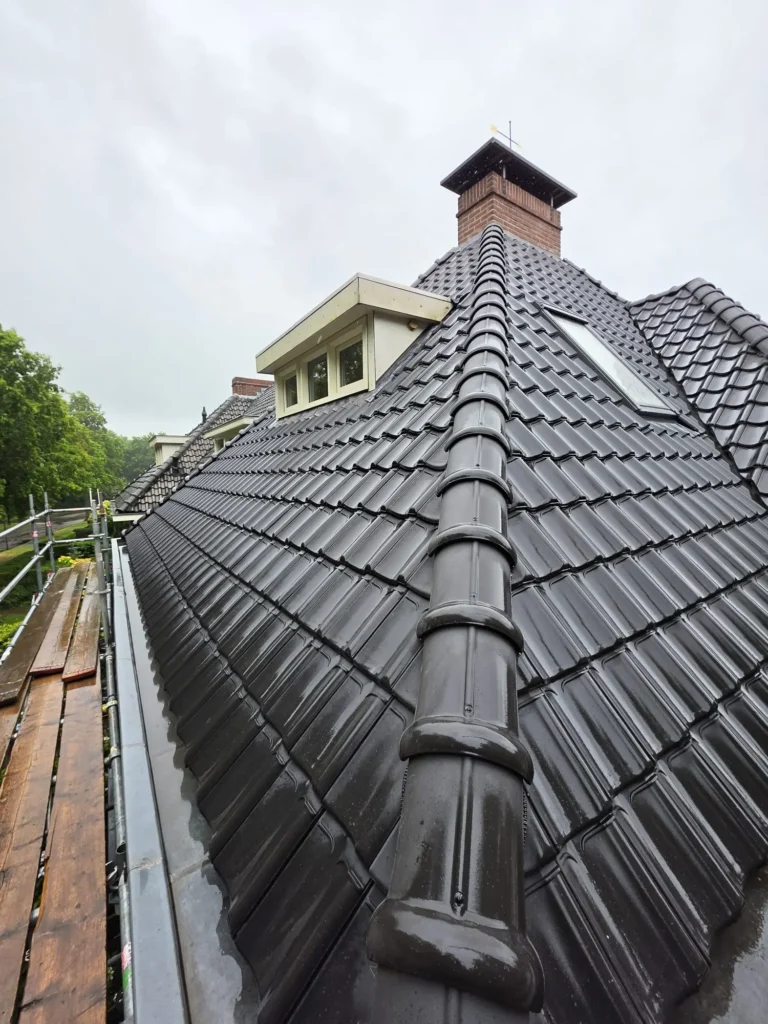
The colour. Rolls come in colours that match the tile. A black roll under red ridge tiles stands out from the street.
Fixing the ridge tiles. Every ridge tile should be fixed, not just the first and the last. Clips or screws for each one.
The end ridge tile. The end of the ridge is the point under most strain and needs its own solution. See
end ridge tile and hip.
Is mortar never right any more?
On a listed building or in a conservation area, mortar may be required because the appearance has to stay as it was. That is a legitimate reason and then we do it that way, with a good mortar and knowing that it will be due again in a few decades.
Also, when repairing a few loose ridge tiles on a roof that is otherwise bedded in mortar and will last a number of years yet, re-bedding with mortar is sometimes the practical choice. But for a ridge that is being completely redone, we choose dry fixing.
What it means in practice
Mortar cannot be laid in frost, so a ridge in mortar is a job that gets postponed in winter. Dry fixing can be done all year round, even when it is cold, provided it is dry and not too windy. That is a real advantage for a ridge that cannot wait.
Why every ridge tile should be fixed separately
On a dry fixed ridge, the ridge tiles are fixed one by one with clips or screws. That seems excessive, and it is exactly what makes the ridge windproof. A row of ridge tiles where only the first and the last are fixed will not hold in strong wind.
So ask about it, because you can no longer see it on a finished ridge. A ridge that looks neat but where half of the ridge tiles have not been fixed is a ridge that is one storm away from a problem. See
loose ridge tiles.
Frequently asked questions about ridge tiles