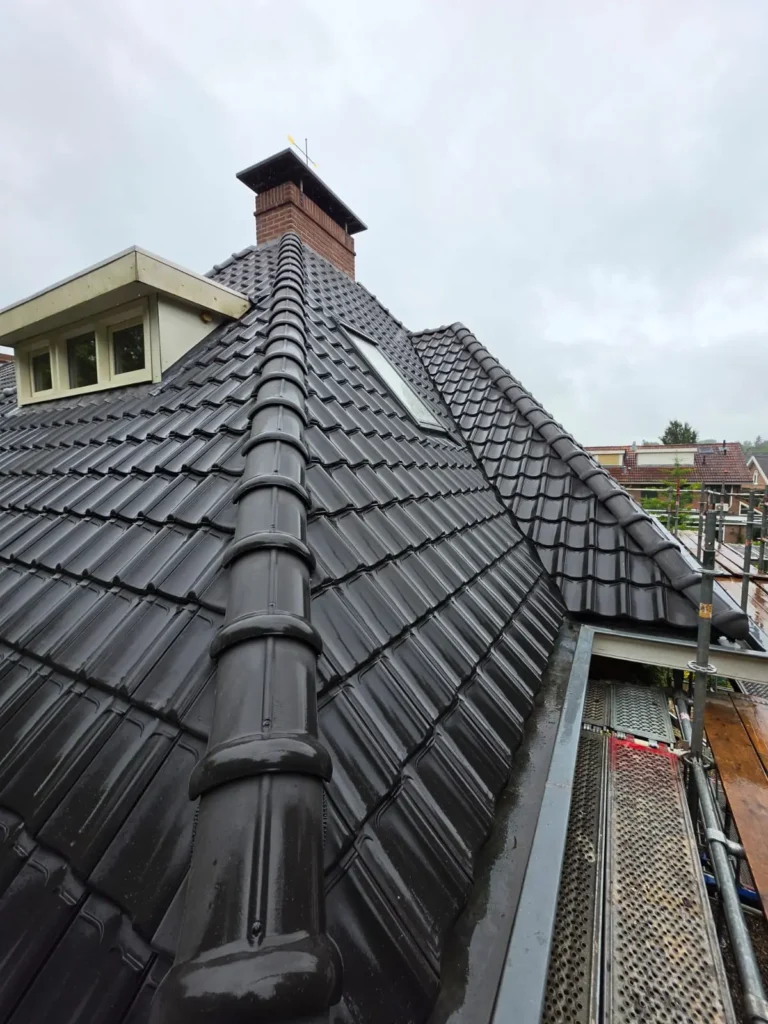
With a pitched roof you really do have this choice, and the outcome depends less on technique than on timing. Is your roof going to be replaced within a few years anyway? Then the choice has actually already been made.
Below is what both mean, and the pitfalls I come across most in practice.
Insulating from inside
Cheaper and quicker. The roof stays closed, no scaffolding is needed and no covering has to come off. With an attic you are going to finish anyway, this is often the logical route.
You lose space. A layer of insulation with a finish takes up space, and with a low roof that is noticeable. The sloping wall comes towards you.
Cold bridges at the rafters. Insulation between the rafters means the timber itself is not insulated. Heat escapes there. An extra layer in front of the rafters solves this, which again costs space.
Insulating from outside
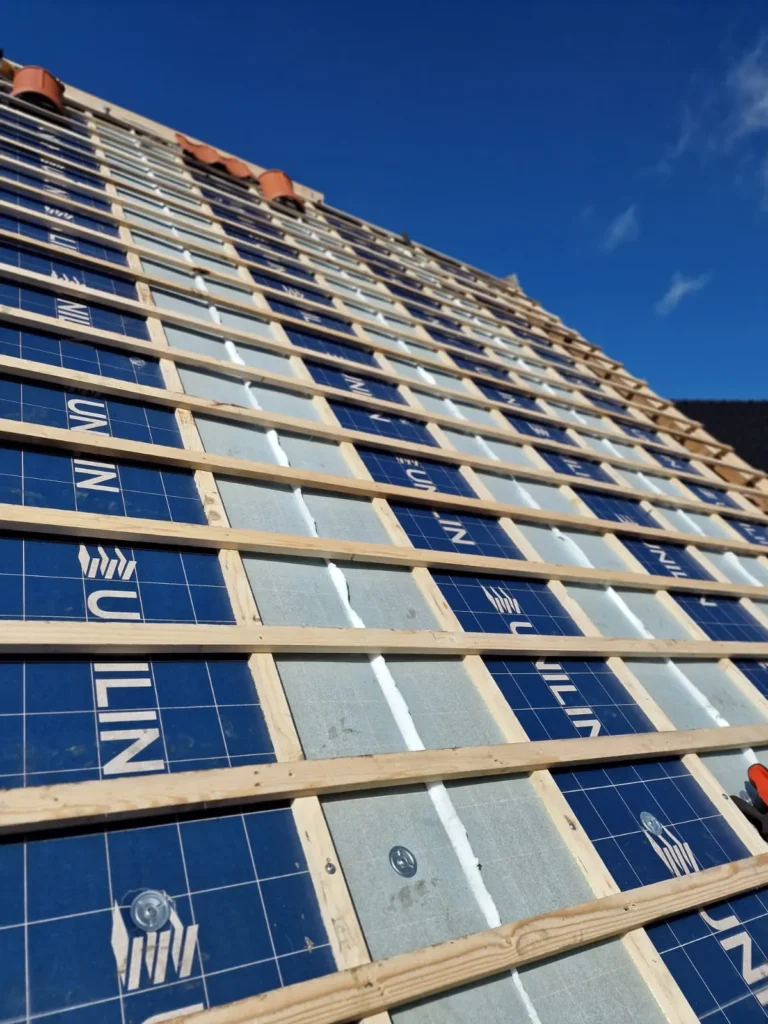
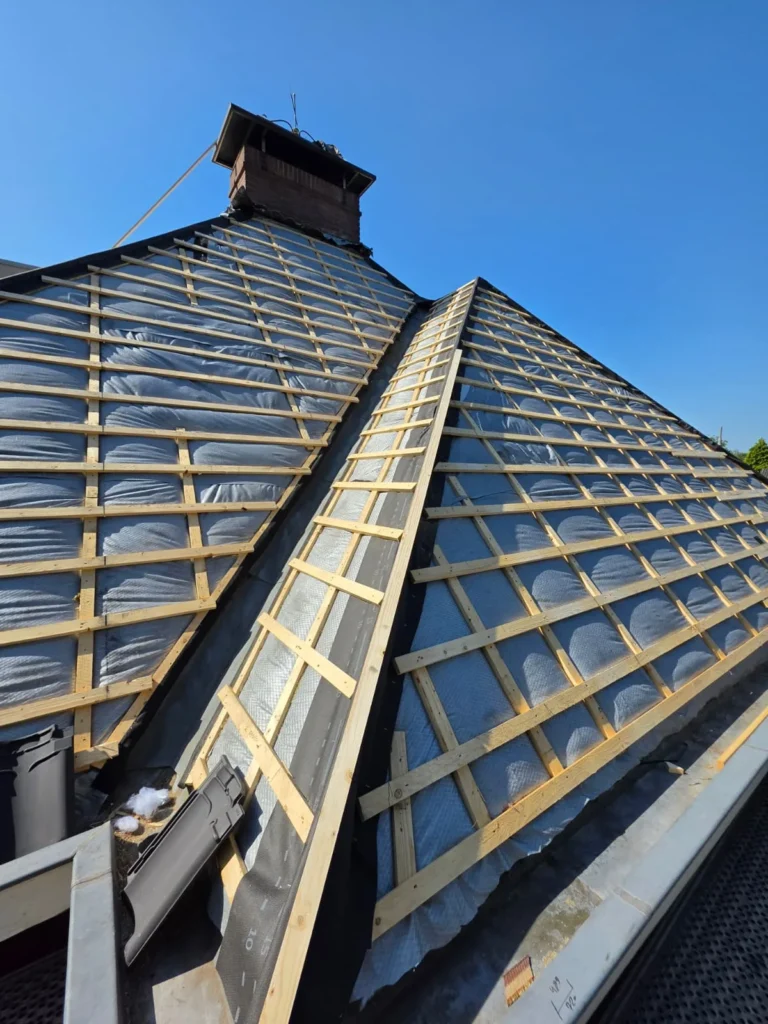
A continuous layer. The insulation covers the whole roof slope, including over the rafters. No cold bridges, no weak spots at the timber.
You keep the space inside. The full height remains and the roof structure stays visible on the inside. With an attic you use as living space, that makes a considerable difference to how it feels.
Nothing needs to happen inside. You can carry on living in the house without anyone working in the attic. See
sarking and
prefab roof panels.
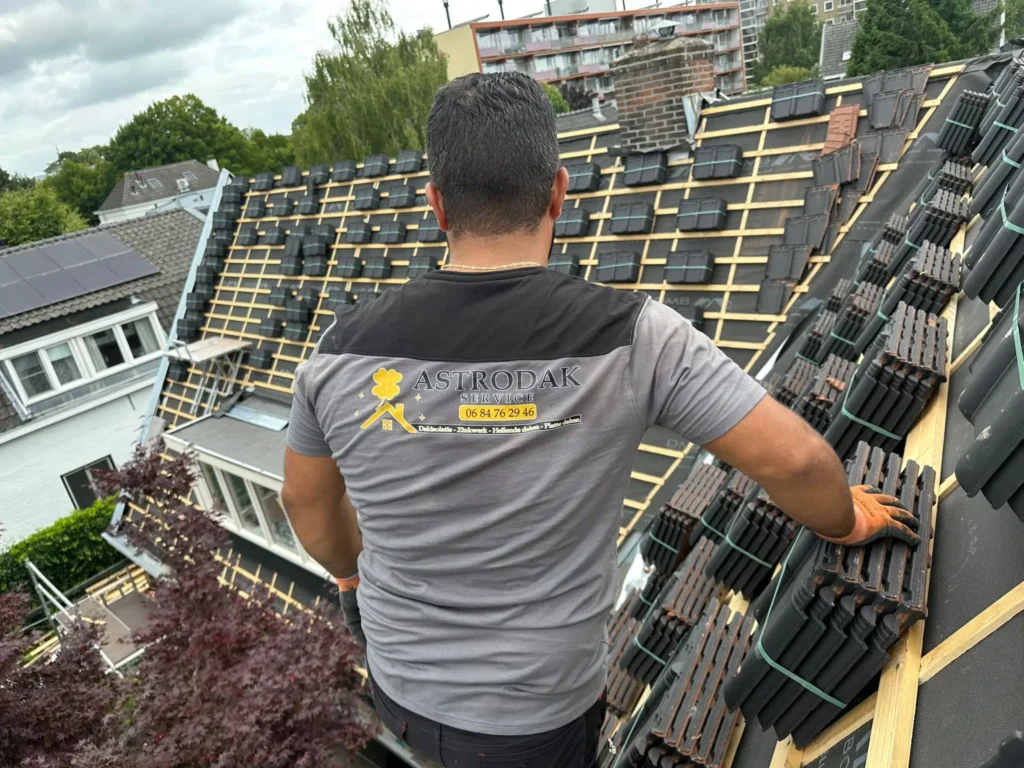
The roof has to come off. And that is the big cost. That is why this is almost always the choice for a roof that is being replaced anyway, and rarely a separate job.
“In terms of building physics, insulating from outside is the better solution. Insulating from inside is perfectly fine too, as long as the membrane is right.”
Fouad, owner of Astrodak Service
From outside
better result
roof has to come off
What does insulating get you in your own house?
The benefit depends on the roof structure, the current insulation and how you use the space. I work it out for you in concrete terms during the inspection, including the grant you are entitled to.
The question that decides the choice
How old is your roof covering? With tiles, battens and membrane of thirty years or older, the roof will be opened within ten years anyway. Then insulating from inside is money you partly throw away in a few years, because during the replacement you could have done it from outside for the extra cost of the insulation material.
If your roof is still young, say fifteen years, then insulating from inside is actually the sensible choice. You get the comfort and the savings now, and the covering is only replaced when it is really due.
What has to be done right when insulating from inside
Three things, in this order of importance. The vapour control layer must be airtight all the way through, including around roof windows, along the wall plate and at the ridge. Every gap is a place where moisture gets into the structure.
The ventilation gap between the insulation and the roof boarding must stay open, so moisture can dry out. Insulation pressed against the roof boarding closes that gap, and that is one of the most common mistakes. And the openings at the eaves must not be blocked. See
insulating and ventilating.
What we usually recommend
For a roof at the end of its life: from outside, during the replacement. For a young roof and an attic you want to start using: from inside, with a lot of attention to the membrane. And for an unused, unheated attic: neither, but insulating the attic floor for a fraction of the cost.
What the age of your roof decides
There is one question that almost always answers this choice: how old are the tiling battens and the membrane? At thirty years or older the roof will be opened within ten years anyway, and then you insulate from outside during that replacement for the extra cost of the material.
With a fifteen-year-old roof it is different. You would have to remove the covering early to insulate from outside, and that is a considerable cost for nothing. Insulating from inside is then the sensible choice, with a lot of attention to airtightness.
Frequently asked questions about insulating from inside or outside