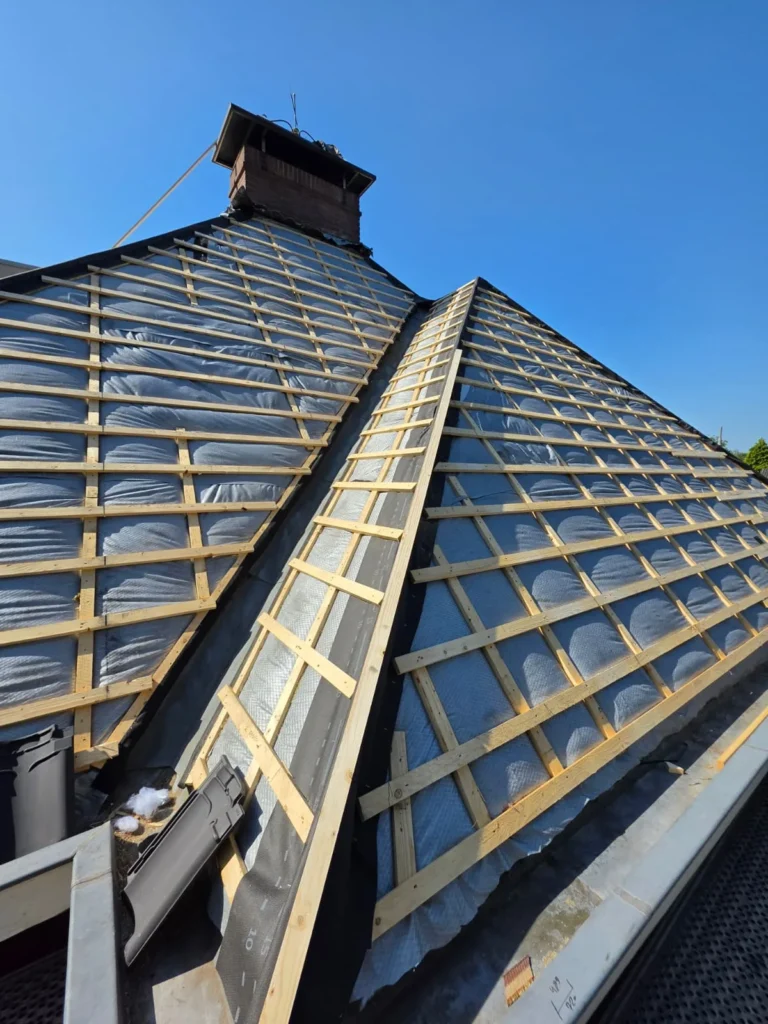
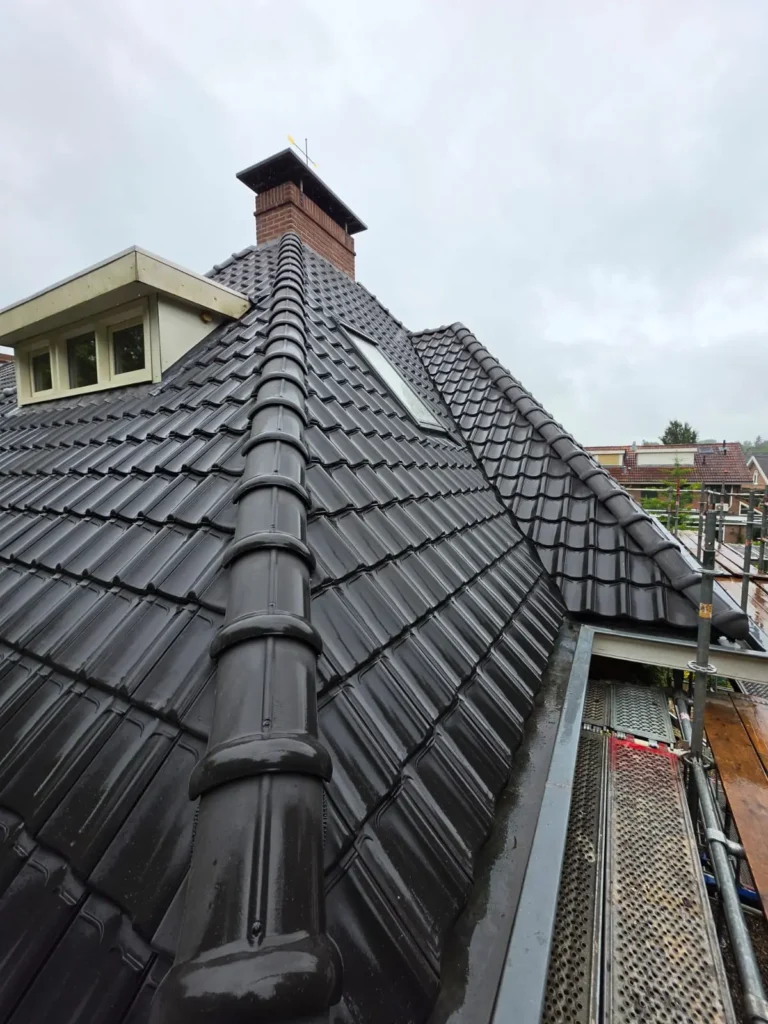
In practice, the choice of material often comes down to where the insulation goes and how much thickness you have. The differences in insulation value per centimetre are real, but on a roof insulated from the outside, a few centimetres more or less rarely makes the difference.
The materials you come across most
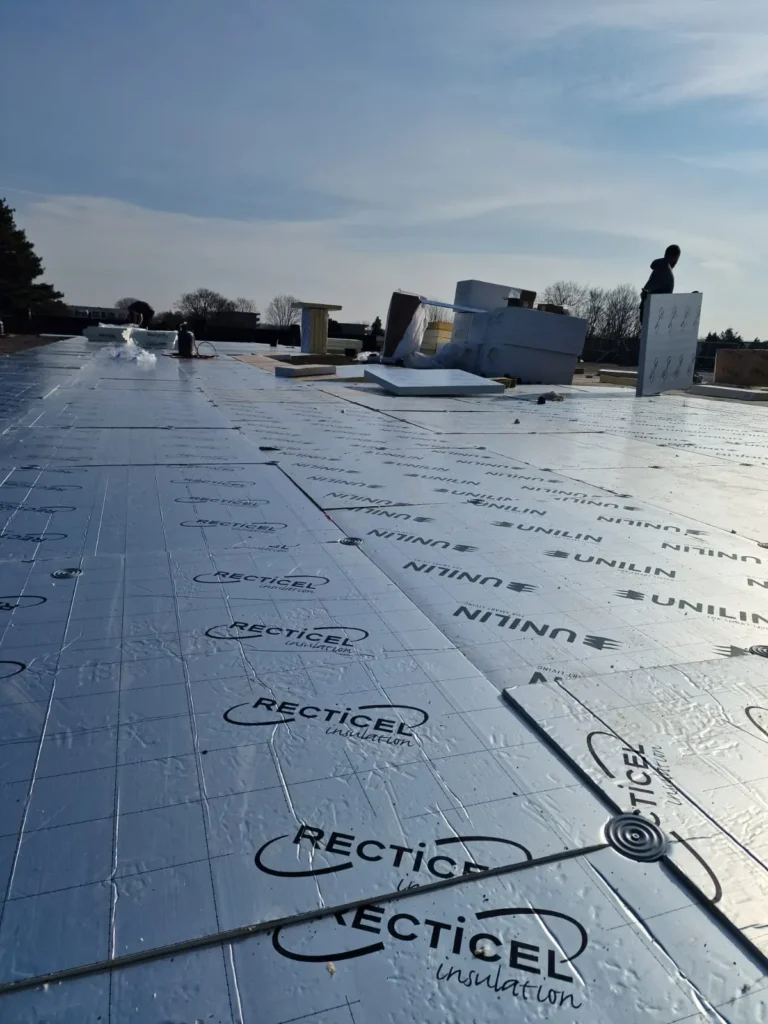
PIR and PUR. Rigid plastic boards with a very low lambda, so a lot of insulation per centimetre. The standard when insulating from the outside and on flat roofs, because you achieve a high value with limited build-up height. Absorbs very little water itself.
Mineral wool. Glass wool and rock wool. Fills irregular spaces well, so it is handy between rafters that are not all the same width. Fire-safe and good for sound. Drawback: it slumps when it gets wet and does not regain its shape. See
wet insulation.
EPS. The familiar white foam. Affordable, light and dimensionally stable, widely used on flat roofs. Less insulating per centimetre than PIR, so you need more thickness.
Bio-based: wood fibre, hemp, sheep's wool. They buffer moisture and release it again, which is beneficial in a build-up that can dry out. Better summer comfort thanks to the higher heat storage. Qualifies for an extra ISDE grant.
“On a flat roof you choose by thickness, on a pitched roof by how irregular the space between the rafters is.”
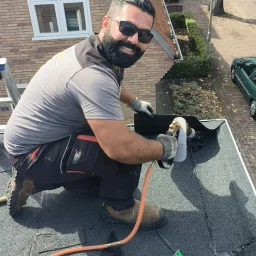
Fouad, owner of Astrodak Service
What to look out for when choosing
How much thickness do you have? With a low roof or a flat roof with limited upstand height, a low lambda is decisive, and then you end up with PIR.
Is the space regular? In old roofs, rafters are rarely exactly the same width. Wool follows that size; rigid boards have to be cut to size and fitted tightly.
Can the build-up dry out? In a build-up that can dry out to one side, bio-based materials work well. In a vapour-tight build-up, such as a flat roof, a material that absorbs little water is better.
Summer comfort. Materials with a higher heat storage keep the heat out for longer. With an attic used as a bedroom, that is a real argument. See
an attic that is too hot.
PIR
least thickness
highest value
What does insulating get you in your own house?
The benefit depends on the roof structure, the current insulation and how you use the space. I work it out for you in concrete terms during the inspection, including the grant you are entitled to.
What matters more than the material
The workmanship. An average material fitted airtight and without gaps performs better than an excellent material with openings in between. Heat and moisture look for the weakest spot, and that is never the middle of a board but always the seam, the edge or the penetration.
That is why, on an insulation job, I pay more attention to the junctions than to the choice of material: at the wall plate, along the ridge, around roof windows and at the vapour control layer. See
the vapour control layer.
And the grant condition
For the ISDE, the installed material must achieve an Rd value of at least 3.5 m²K/W. For PIR that means a layer of about twelve centimetres, and more for mineral wool, because its lambda is higher. With bio-based material, five euros per square metre extra is added to the grant amount.
Fire safety and sound
Two properties that are rarely taken into account and are sometimes decisive. Mineral wool is non-combustible, and with an attic housing a central heating boiler, a tumble dryer or a party wall, that is a real argument. Rigid plastic boards are not, and they come with their own requirements and finishes.
For sound, mineral wool and bio-based materials perform considerably better than rigid boards. With a bedroom in the attic under a tiled roof, where rain and hail can be heard, that is a difference you notice every night.
Frequently asked questions about insulation materials