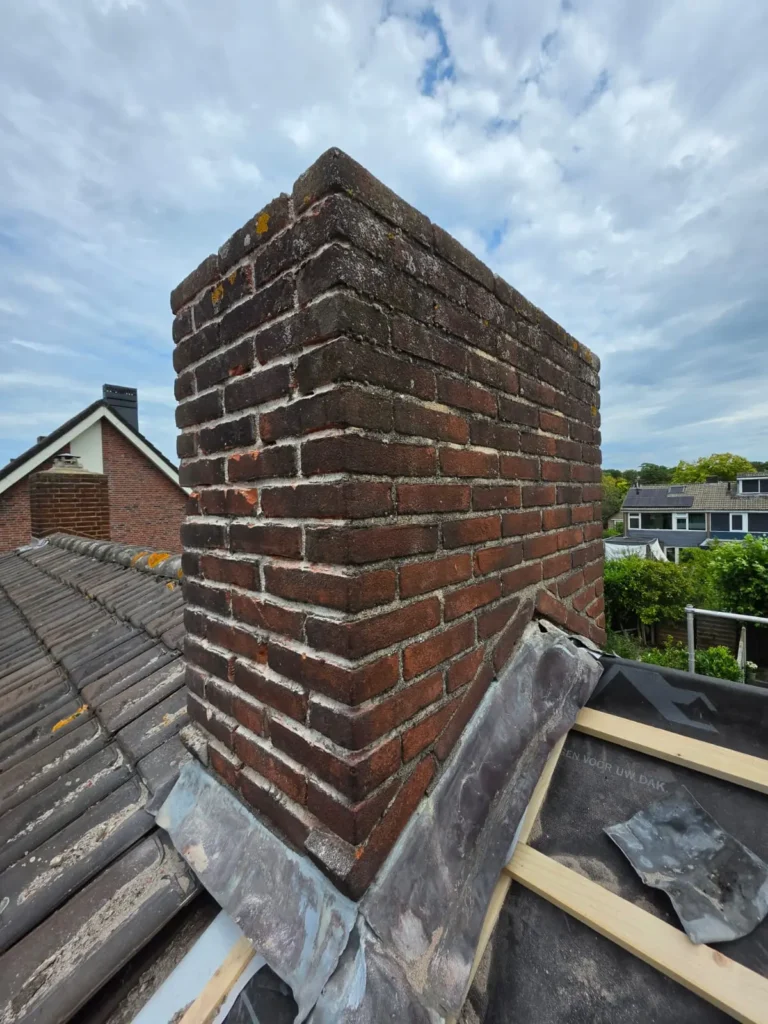
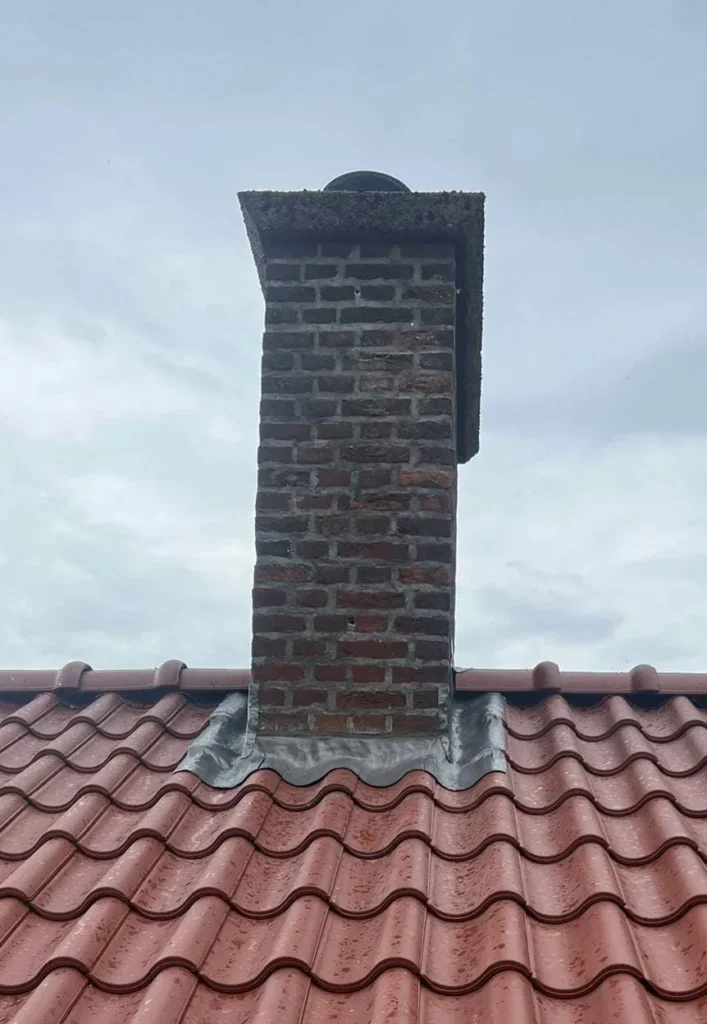
White, powdery or crystalline stains on a chimney look like mould or peeling paint. They are neither. They are salts in the brick and mortar that have been carried out by moisture.
The process is simple: water soaks into the brickwork, dissolves salts, reaches the surface, evaporates and leaves the salts behind. So the stain is not the problem. The stain is the message that moisture is getting through.
What it tells you
Moisture is moving through the brickwork. That usually means sandy joints, porous brick or a missing cap on top. See
repairing pointing.
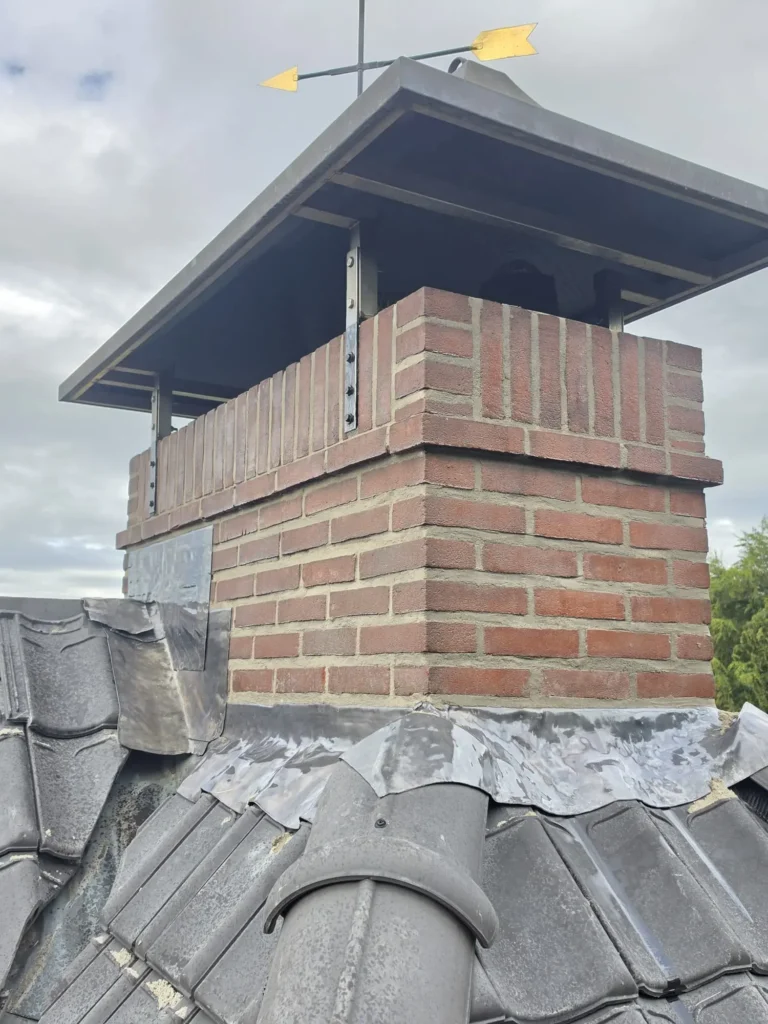
The top is the suspect. Rain that falls into the flue or sits on an unprotected top course gets into the brickwork from above. A cowl or capping plate often solves that. See
fitting a chimney cowl.
There is a frost risk. Damp brickwork that freezes loses material. The top bricks of a chimney are the most vulnerable to this.
There may be something inside too. Salt deposits on the chimney inside the attic mean the moisture is coming all the way through. Then there is more going on than a cosmetic mark.
“The white stain is not your problem. It is just telling you that water is getting where it should not be.”
Fouad, owner of Astrodak Service
How to remove it
Dry brushing with a stiff, non-metal brush works best. With water, the salts dissolve again and soak back into the brick, only to come out again later. So keep it dry, and sweep up the material that falls off.
There are special cleaners for it, but on a chimney above the roof they are rarely needed. What is needed is to remove the cause, otherwise it will be back next year.
The cause
moisture
joints and capping
Not sure about the right approach?
I would rather come and look at your roof with my colleagues first than come up with a solution from a distance. During the free inspection you hear what is really needed, even if that is less than you thought.
Why cleaning alone does not work
As long as moisture is moving through the brickwork, salts will keep coming with it. There is a finite amount of salt in a chimney, so in theory it stops at some point, but in practice that takes years, and in those years the moisture is the real problem.
That moisture attacks the pointing, causes frost damage to the top bricks and can cause damp patches on the inside in the attic. See
a leaking chimney.
The approach in the right order
First the top: is there a capping or cowl, and is it in good condition? Then the pointing: rake out and repoint where it is sandy. After that, if needed, a water-repellent treatment to make sound brickwork shed water. And only at the very end, brush off the stains dry.
The difference with saltpetre inside
White deposits on the outside of a chimney are usually harmless lime or salt deposits. If white, fluffy deposits appear on the chimney on the inside, in the attic or in a room, that is a stronger signal: the moisture is coming all the way through the brickwork.
With a chimney that has been used for fires, there may also be soot salts bleeding through, and they cause stains that do not go away when painted over. That is a separate problem that needs a special treatment, and sealing the flue is part of the solution.
Frequently asked questions about white deposits