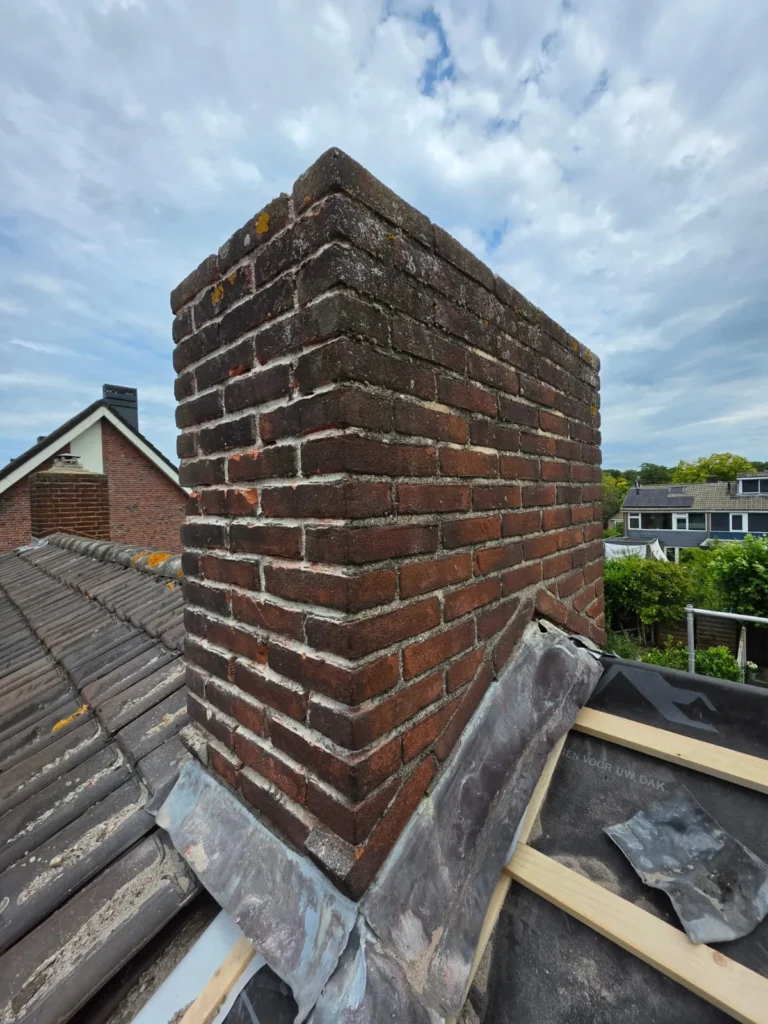
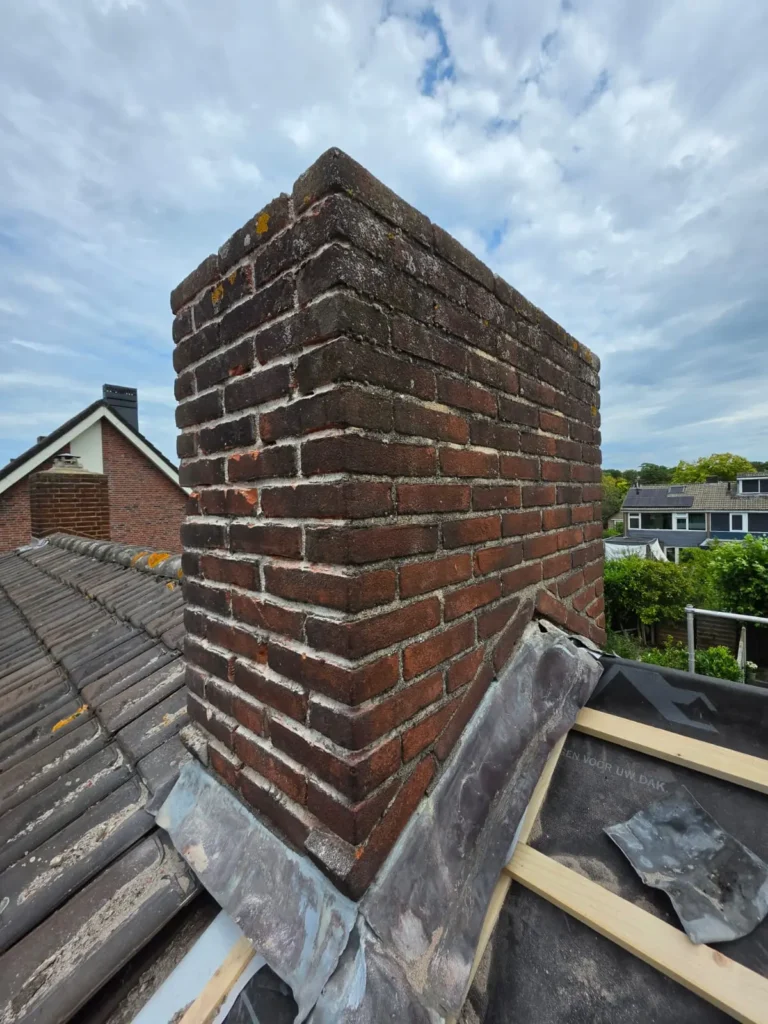
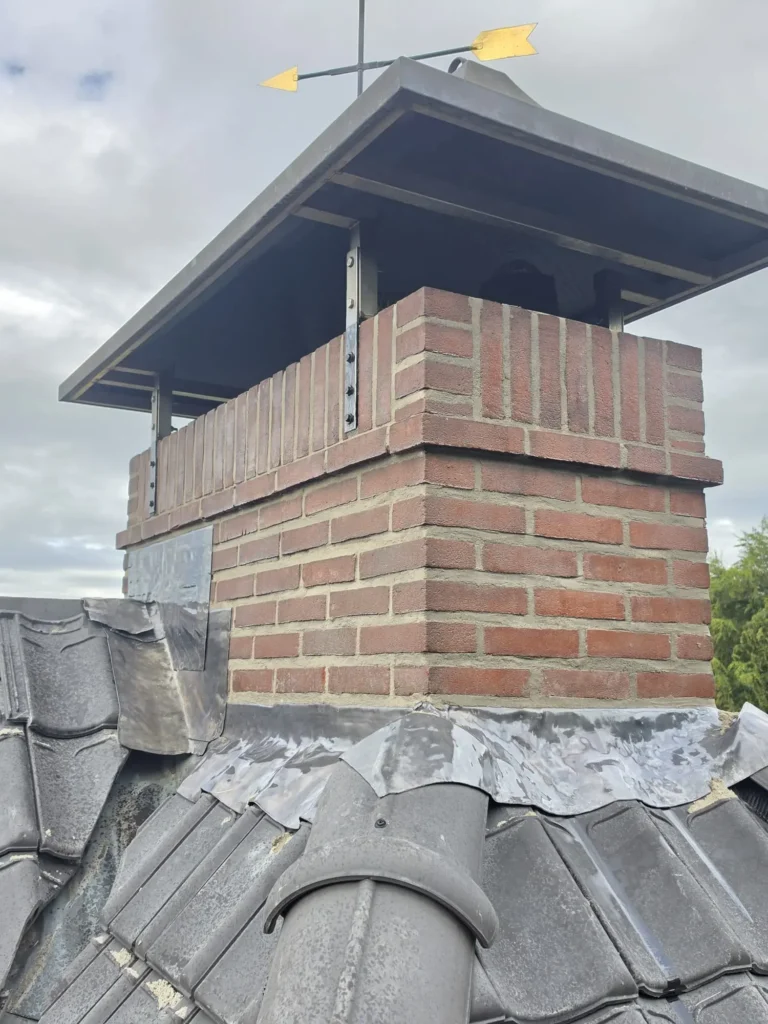
On a pitched roof, the chimney is the place where water most often gets in. That is no coincidence and it is no proof of poor building. It is because three materials come together there: brickwork, lead and roof covering, each with its own expansion and its own ageing.
And all the water from the roof above runs around it. So every transition is both a joint and a gutter.
How to tell whether it is the lead or the brick
Straight away during rain. If the stain in the attic appears during or just after a shower, the water is coming in along a joint. That is almost always the lead work.
Hours to days later. Then the brick has become soaked and the moisture is slowly working its way through the brickwork. That points to sandy pointing or porous brick.
Only in wind from one direction. Driving rain against one side gets under a flashing with too little overlap. See
leaks in driving rain.
Damp even in dry weather. Then something else is going on: condensation in the flue, or a chimney that is getting moisture from the inside.
“Nine out of ten chimney leaks are a lead problem. And with the tenth, the lead is not right either.”
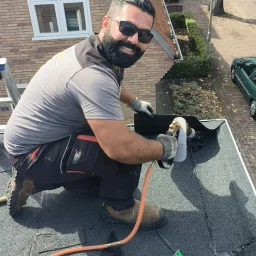
Fouad, owner of Astrodak Service
Why lead fails after years
Lead moves with temperature: it expands in the sun and shrinks in the cold, and it does that every day. A lead flashing that was made too long or is fixed on both sides cannot absorb that movement and cracks at the bend. That is the classic cause, and it is not bad workmanship from back then, it is how the material behaves over decades.
What you can see from the ground or from a roof window: lead that is lifting, a small crack at the bend, or lead that has come out of the joint. See
replacing lead flashing.
Days later
brickwork
penetrating damp
A leak? Do not let it spread.
A leak you leave for a season usually costs ten times as much in follow-on damage. Call or send a message: you will get an answer today, from me personally, not from a scheduler.
The four places around a chimney
The top. Where all the water from the roof above the chimney runs past. This is the most heavily loaded side and the place where good workmanship matters most.
The sides. Stepped lead worked in to follow the rows of tiles. This is where it goes wrong if the overlap is too small.
The bottom. The water that has run down the sides comes together here and has to carry on over the tiles.
The joint in the brickwork. Where the lead is worked into the brick. If that joint turns sandy, water gets behind the lead.
What the repair usually involves
The tiles around it come off, the old lead comes out, new lead with generous overlaps is worked into a raked-out joint, and the tiles go back. That is precision work where the overlaps and how the lead can absorb movement are what count, and it is usually a one-day job.
Why the chimney is often the first to need work
On a thirty-year-old roof, the lead around the chimney is usually the oldest working part still in place. Tiles can last a hundred years, battens thirty to fifty, and lead under strain considerably less.
That explains why a roof that still looks fine from the ground can still leak at the chimney. It is not the roof that is worn out, it is the detail with the shortest lifespan that has had its day. And that is good news, because repairing a detail is not a renovation.
Frequently asked questions about a leaking chimney