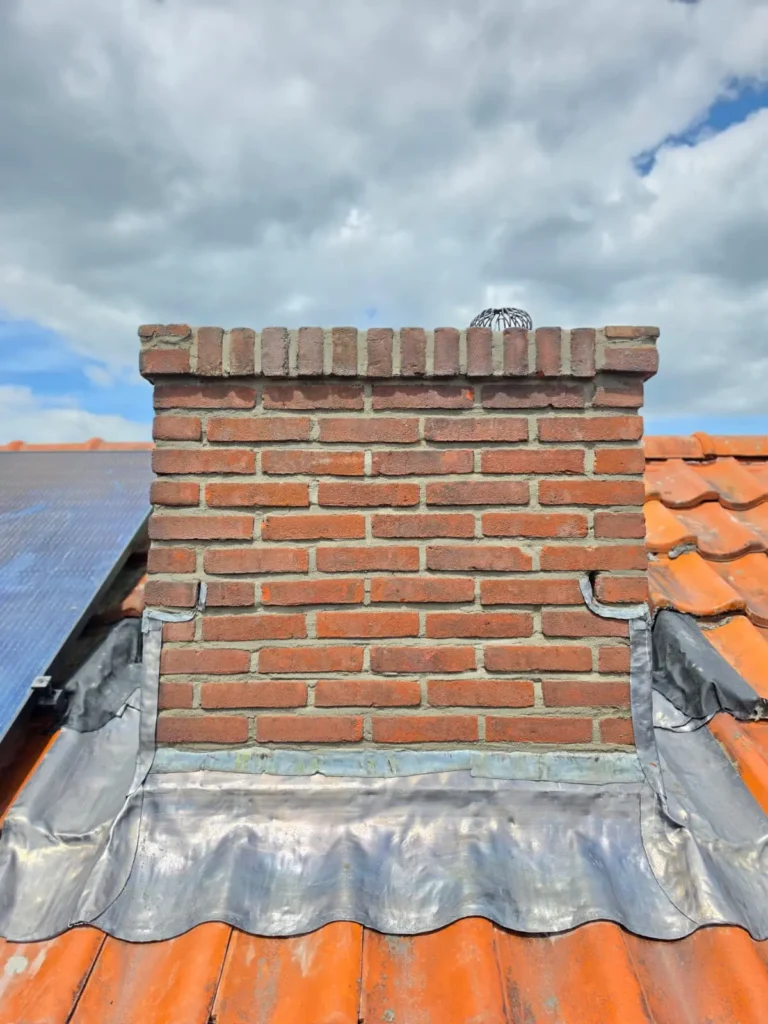
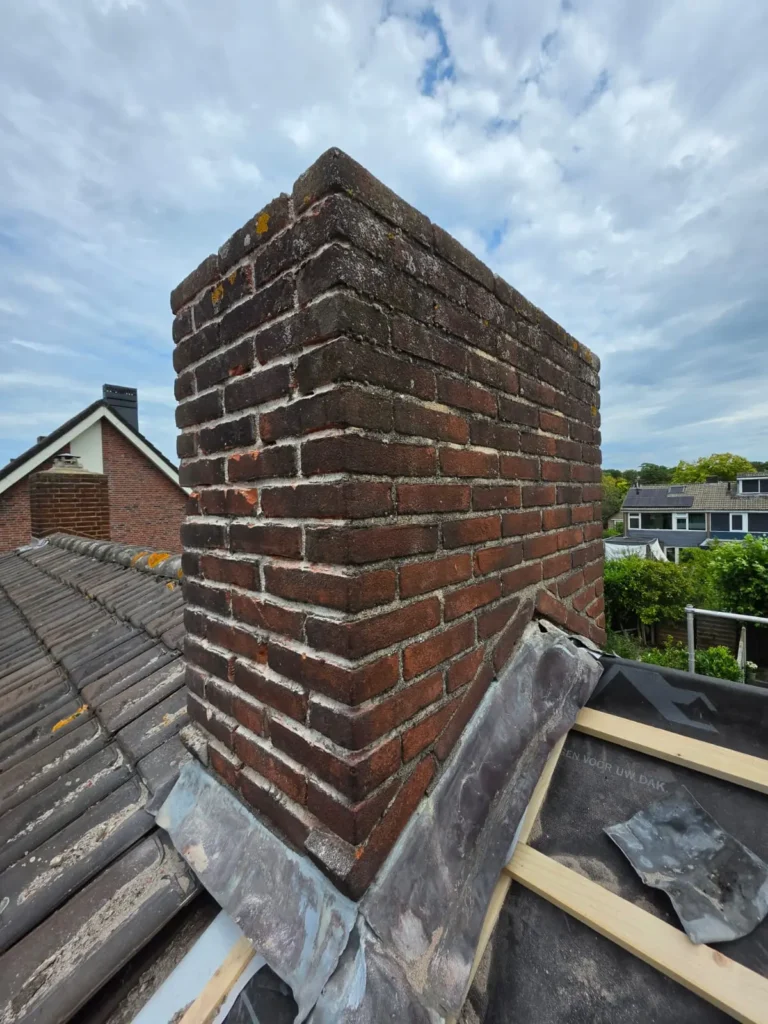
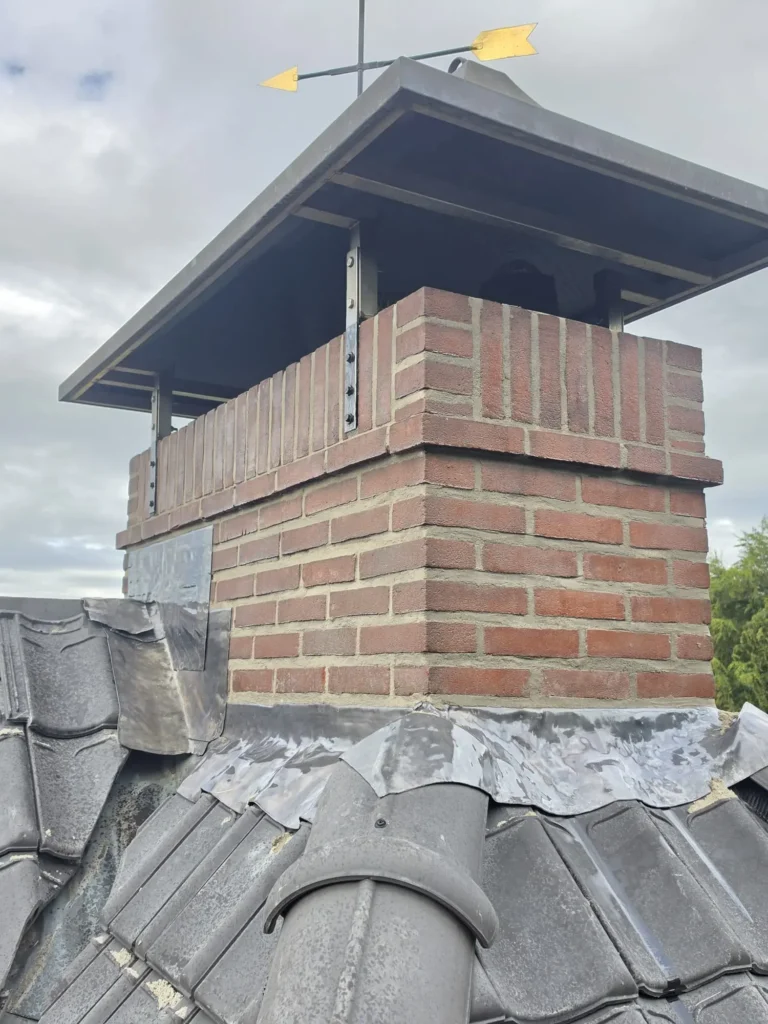
A chimney that stands open on top of your roof is a hole into the house. Rain falls in, birds nest in it, and the top course of bricks gets water from above and from the sides. That is exactly where frost damage starts.
A cap largely solves that, and it is one of the simplest jobs on a roof. There are a few points to watch, though.
What a cap does
Rain out of the flue. Water that falls into a flue reaches the brickwork from the inside and, in a flue in use, the soot deposits as well. That causes damp coming through to the inside and sometimes an unpleasant smell.
Birds and martens out. An open flue is an attractive nesting spot. A nest in the chimney is a blockage and, in a flue in use, a real safety risk. See
martens and birds in the roof.
Protection of the top. The top bricks and the capping take the hardest beating. A cap keeps most of the water off them and extends the life of the brickwork.
Less rain getting in during storms. In driving rain, water comes sideways into an open flue. A cap of the right size keeps that out.
“An open, unused flue is a hole in your roof with a neatly bricked edge around it.”
Fouad, owner of Astrodak Service
With a flue that is in use
Then the choice is less free. A cap must not obstruct the escape of flue gases, and the type of appliance determines what is allowed. An open fire or a solid fuel stove has different requirements from a room-sealed appliance or a high-efficiency boiler with its own concentric flue.
If in doubt, this is a question for the installer or a chimney sweep with the right certification, and not something a roofer decides alone. What we do is put the brickwork, the lead and the capping in order; we match the choice of cap to what is underneath.
Unused flue
cap
almost always worthwhile
Flue in use
match it
to the appliance
Not sure about the right approach?
I would rather come and look at your roof with my colleagues first than come up with a solution from a distance. During the free inspection you hear what is really needed, even if that is less than you thought.
Types of cap
Concrete capping slab. A slab on blocks above the flue. Robust, low maintenance, suits a brick chimney well and protects the whole top.
Metal rain cap. A stainless steel or aluminium cap with a grille. Lighter, easier to fit and available in shapes that suit a flue in use.
Bird guard or mesh. Only against animals, not against rain. Sometimes enough for a flue that has to stay open for ventilation reasons.
Sealing it completely. For a flue that will never be used again. Make sure the flue no longer has a ventilation function; a small opening is often sensible so that the flue can dry out.
Why you should combine this with other work
Fitting a cap is an hour's job, but someone has to be able to reach the chimney safely. Setting that up costs more than the cap. If there is scaffolding up for a tile replacement, a ridge renovation or a lead job, adding the cap costs relatively little.
What a cap does to the draught
With a flue in use, a cap can affect the draught. A cap that sits too low above the opening or has too little free area slows the escape of flue gases. With an open fire or a solid fuel stove, that is not a theoretical point.
That is why, with a flue in use, we always agree the cap with the installer or a certified chimney sweep. We take care of the brickwork, the lead and the fixing; the choice of model follows from what is underneath.
Frequently asked questions about chimney caps