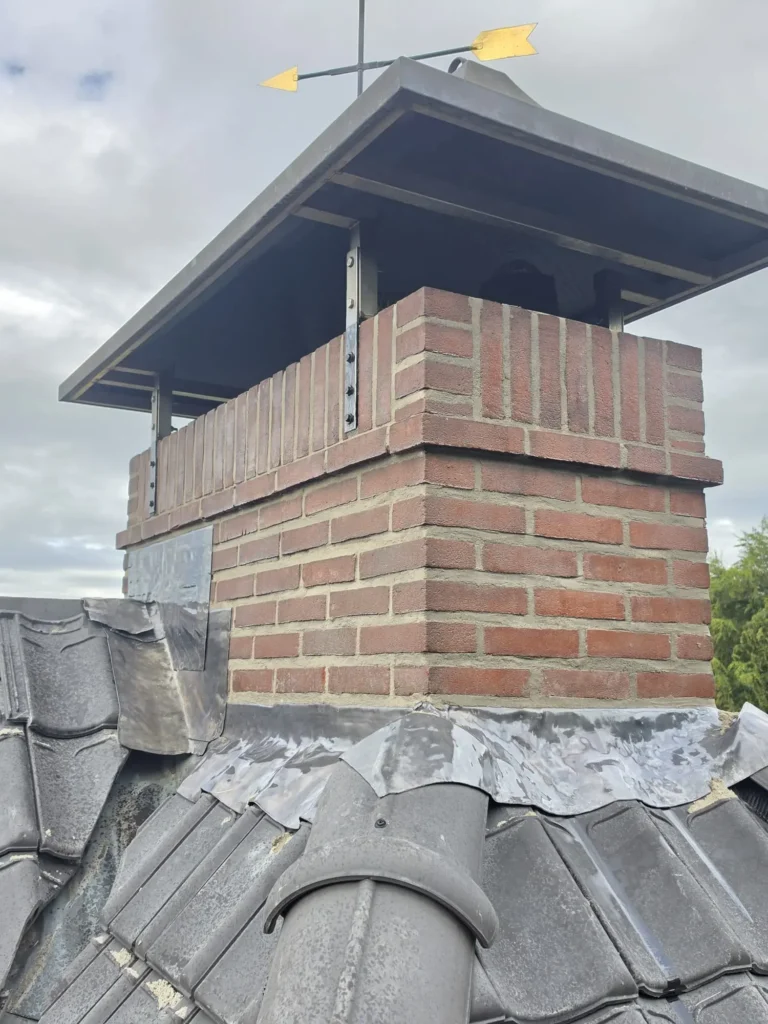
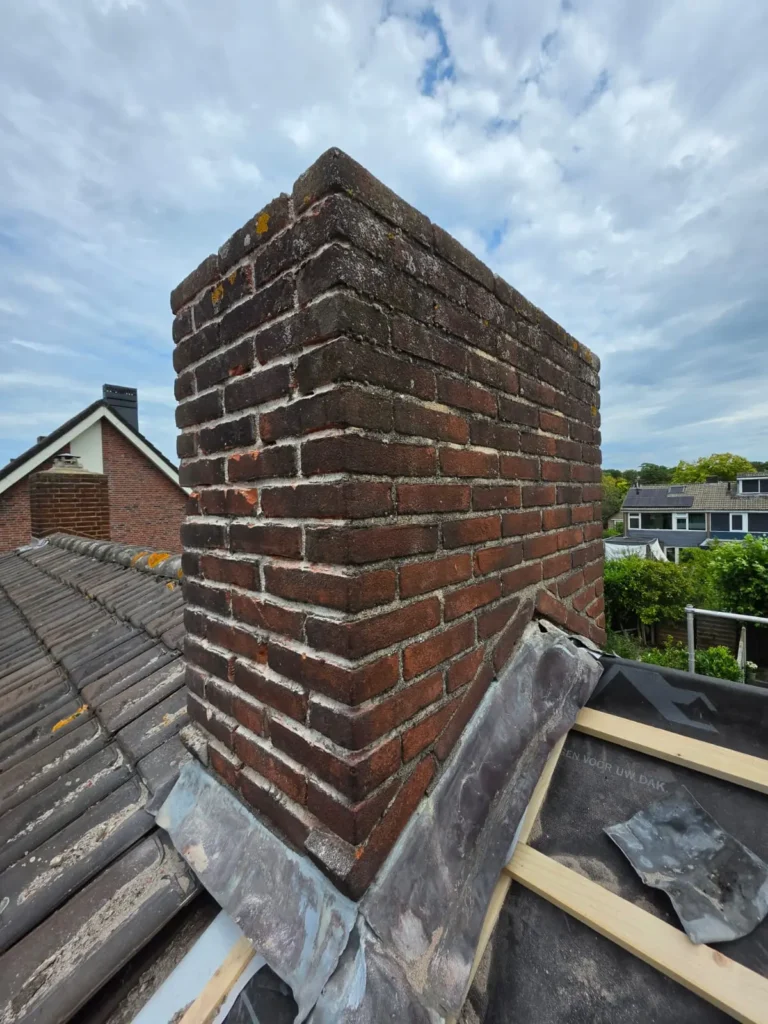
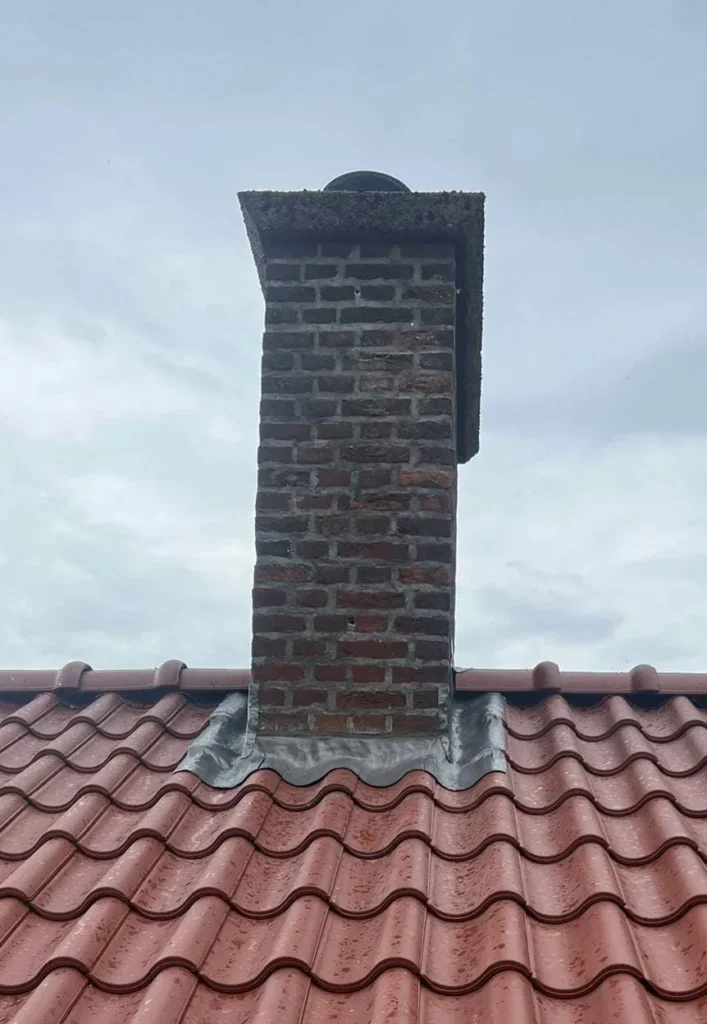
In this region there are many chimneys on roofs that nothing is connected to any more. The stove has gone, the fireplace has been sealed up, the boiler has its own flue through the wall or the roof. What remains is brickwork that needs maintenance and a junction that will leak one day.
Removing it is then a sensible choice, and it is a manageable job. There are a few things you will want to know first, though.
What to find out beforehand
Is there really nothing connected to it? Even a flue that is no longer used for smoke can still serve as a ventilation duct for a bathroom, kitchen or crawl space. That has to be checked before anything is taken down.
What role does the chimney play in the structure? In some houses a brick chimney runs all the way down to the foundations and has a load-bearing or stabilising function. Taking it down above the roof is then not a problem, but going further down is.
Is your home in a protected village conservation area? In parts of Vught and other villages in the region, the appearance of the roof is protected. Removing a chimney is then not automatically exempt from a permit. See
permits for roofing work.
What do you want inside? If the chimney is visible in the attic, you can leave it standing there or remove it inside as well. The latter is a separate job with plastering and finishing.
“Before a single brick comes off, I want to know what that flue still does. A sealed-up ventilation duct creates a different problem.”
Fouad, owner of Astrodak Service
How it should be closed up
The chimney is taken down to below the roof surface, usually to just below the boarding. The hole in the roof is then filled with new rafters or framing where needed, new boarding that joins the existing boarding, membrane that overlaps into the existing membrane, and then counter battens, tiling battens and tiles.
From the outside, the result should not stand out. The tiles are the same and the rows run through. On a weathered roof there will be a colour difference with the new tiles, and that is the main cosmetic consideration. Spare tiles from an earlier job are worth their weight in gold here.
Taken down to
below the boarding
and closed up
Flue below
sealed or
left to ventilate
Not sure about the right approach?
I would rather come and look at your roof with my colleagues first than come up with a solution from a distance. During the free inspection you hear what is really needed, even if that is less than you thought.
What happens to the flue below
The part that stays in the house is capped at the top. Sealing it completely is not always wise, because a flue that gets no air at all can hold moisture, and that soaks into the brickwork and the plaster inside.
A small, protected opening is often the best solution: no rain getting in, but still able to dry out. We discuss that on site, because it depends on whether the flue is damp and where it comes out inside.
Why this is a job to combine
Someone has to get to the chimney, and the roof is opened up locally. Setting that up is a considerable part of the cost. If there is scaffolding up anyway for a tile replacement, a ridge renovation or a lead job, this is the moment.
What changes inside
When the chimney is removed above the roof, the part inside the house usually stays. That is the cheapest option, but it is not always the most satisfying one, because you are left with a shaft that does nothing and takes up space in the attic.
If you want that gone too, it is a separate job with demolition work inside, plastering and finishing, and sometimes a structural assessment if the brickwork runs down to the foundations. That is a renovation rather than a roofing job, but it is the moment to think about it.
Frequently asked questions about removing a chimney