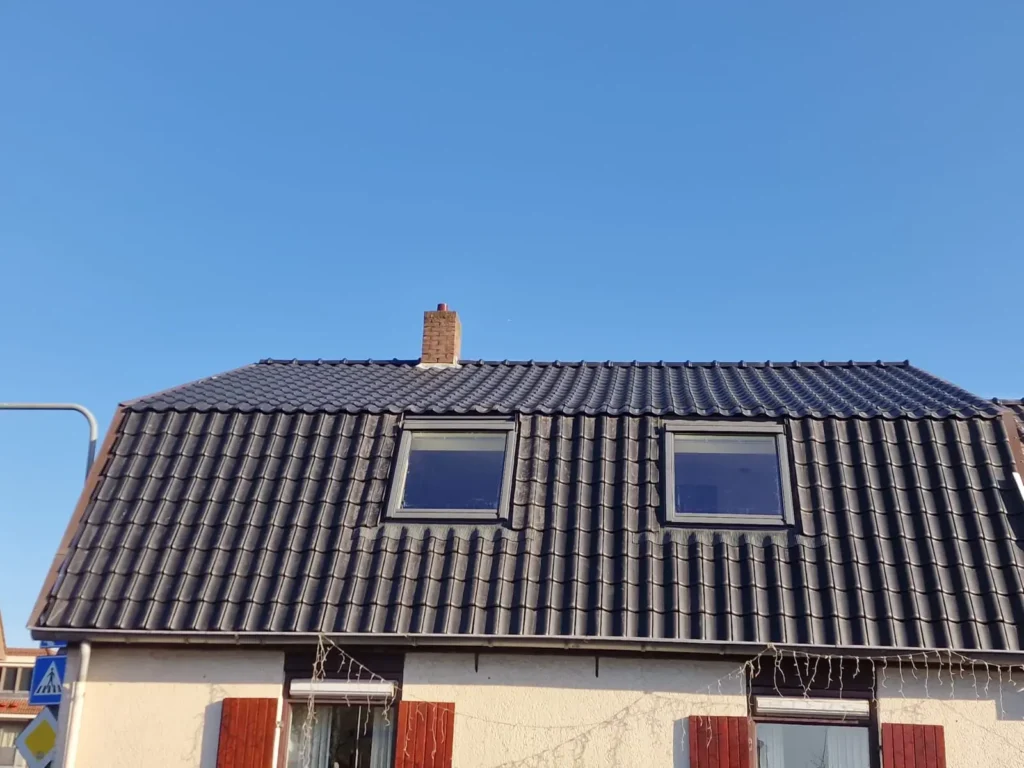
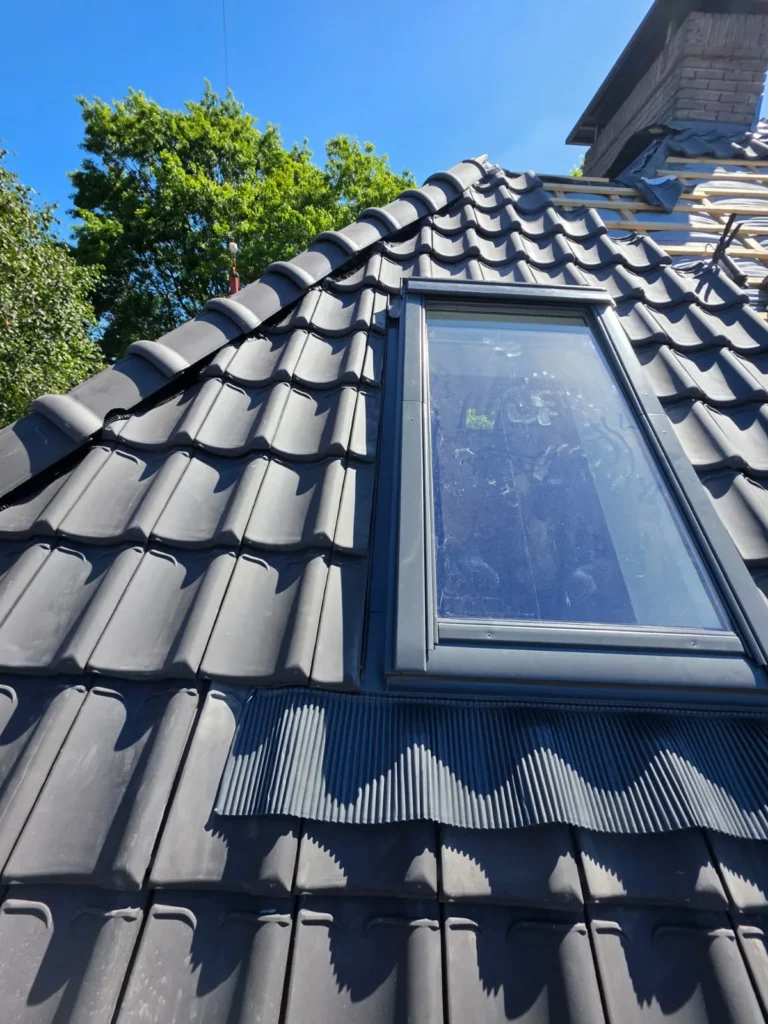
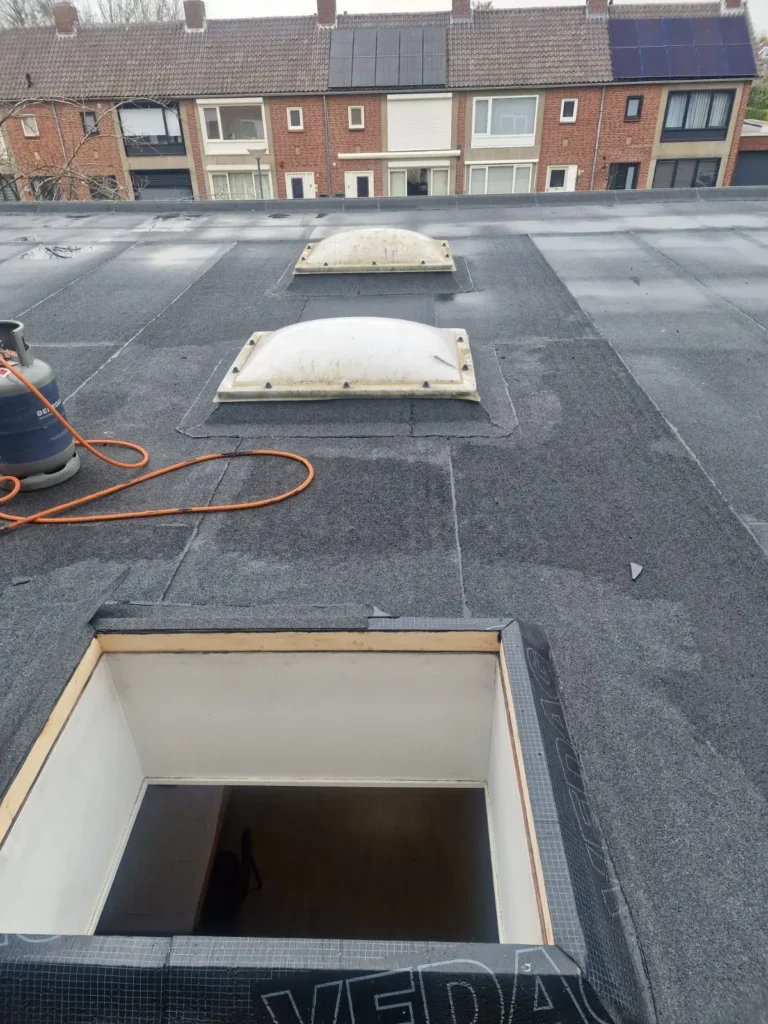
A roof window is almost always the coldest surface in an attic room, because glass insulates less than an insulated roof surface and it faces straight up at the cold night sky. Moist indoor air that reaches it releases its moisture.
That is physics, not a defect. But there is one variant that is a defect, and you want to be able to tell the difference.
Three kinds of condensation
On the inside of the pane. You can wipe it away. This is the ordinary variant: too much moisture in the air and too little airflow along the glass. Usually not a defect, but it is a signal.
Between the panes. You cannot wipe it away, because it is inside the glazing unit. That means the seal of the double glazing has failed. The glass no longer insulates and replacement is the only solution. See
when a roof window needs replacing.
On the outside of the pane. On a clear morning after a cold night. This is actually a sign that your glass insulates well, because so little heat gets through that the outer surface drops below the dew point.
On the reveal around the window. Moisture or mould on the finish around the window points to a cold bridge: the insulation does not run through properly around the frame. See
the vapour control layer.
“Condensation on the outside means your glass is good. Condensation between the glass means it has had its day.”
Fouad, owner of Astrodak Service
What to do about the ordinary variant
Ventilate. A trickle vent in the window slightly open, or the window open for a few minutes. In an attic bedroom, ventilating at night is the most effective measure.
Reduce the source of moisture. Drying laundry in the attic is the most common cause I come across. A shower without good extraction also sends its moisture to the highest room.
Let warm air flow along the glass. A radiator under or next to the window and an angled reveal help. Curtains that hang down to the sill actually block that airflow.
Keep the hatch or stair door closed. Warm, moist air from the house rises to the coldest room, and that is exactly where your roof window is. See
condensation or leak.
On the pane
ventilation
and moisture source
Not sure about the right approach?
I would rather come and look at your roof with my colleagues first than come up with a solution from a distance. During the free inspection you hear what is really needed, even if that is less than you thought.
When it is not condensation
If water runs in along the frame when it rains, rather than droplets forming on the glass when it is cold, it is a leak and not condensation. The cause is then in the flashing, the connection to the tiles or the window's locking mechanism.
You can tell the difference by the timing: condensation goes with cold, a leak goes with rain. See
tracing a leak.
What we look at
With recurring condensation on the reveal around the window, we look at the insulation and the membrane around the frame, because that is almost always where the cause lies. It can be fixed without replacing the window, provided the window itself is still in good condition.
With condensation between the glass, the conversation is shorter: the glass has had its day. If the window is otherwise sound, sometimes just the pane can be replaced; with an old window, a completely new window is usually the wiser choice. See the
page on roof windows.
Why curtains can make condensation worse
A curtain or roller blind that hangs down to the sill blocks the airflow along the glass. The air behind the curtain cools down further as a result and the moisture condenses right there, between the curtain and the pane, where you do not see it and where it does not dry.
With recurring condensation, that is the first thing to change: leave a gap at the bottom or use a curtain that does not seal completely. It is a free adjustment and it solves a surprising share of cases.
Frequently asked questions about condensation on roof windows