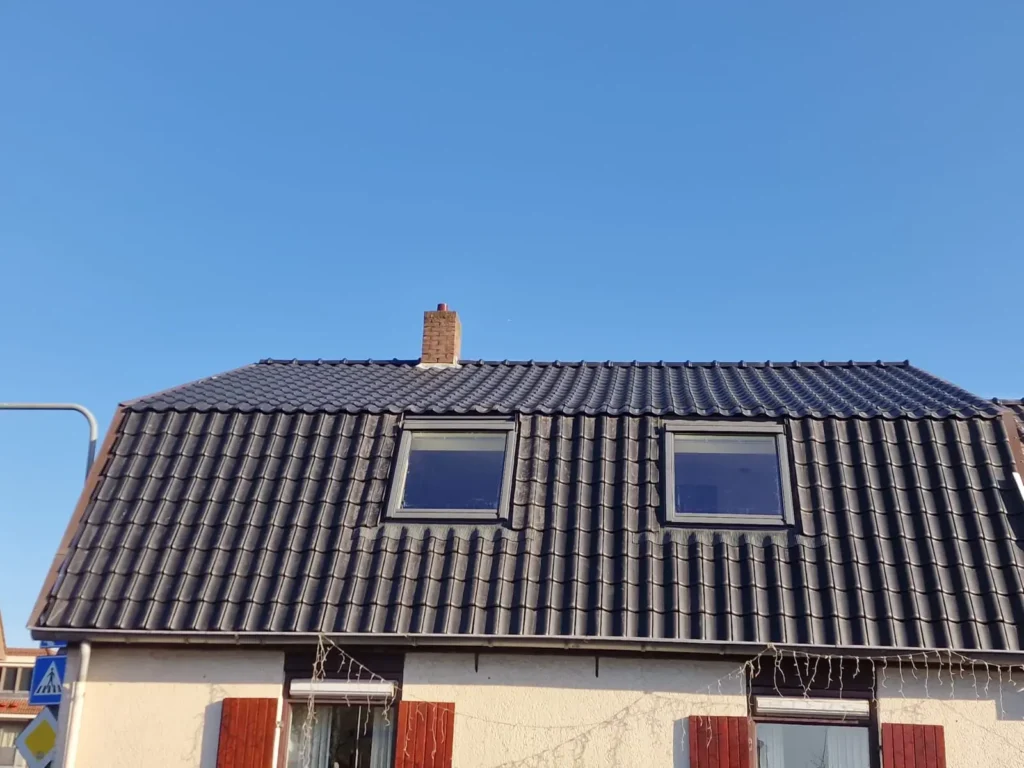
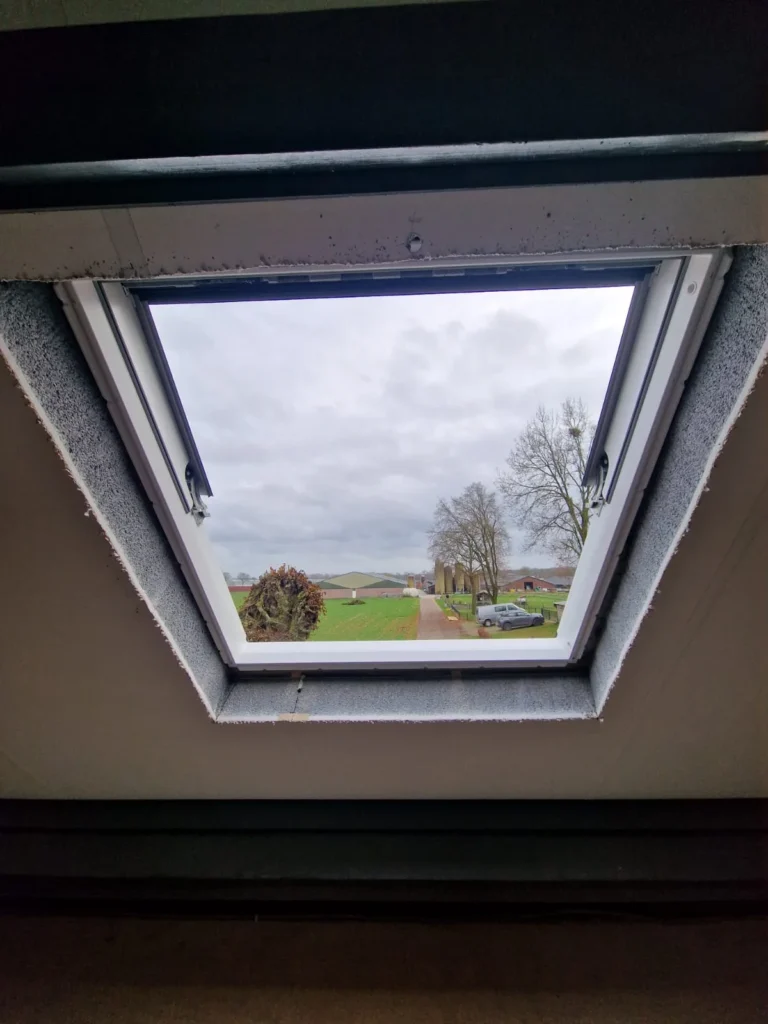
A roof window is one of the few parts of a roof you can easily reach yourself, from inside. And it is one of the parts that benefits most from a little attention.
The round below takes half an hour per window, and the difference between a window that gets this and one that does not is considerable.
The yearly round
Clean the seals. The seal around the window collects dust, pollen and grime. Dirty seals close less well and harden faster. Wiping with a damp cloth is enough; do not use harsh cleaning products.
The glass on the outside. With a centre-pivot window you can turn the window right round and lock it, so you can reach the outside from indoors. First check in the manual how that works for your model.
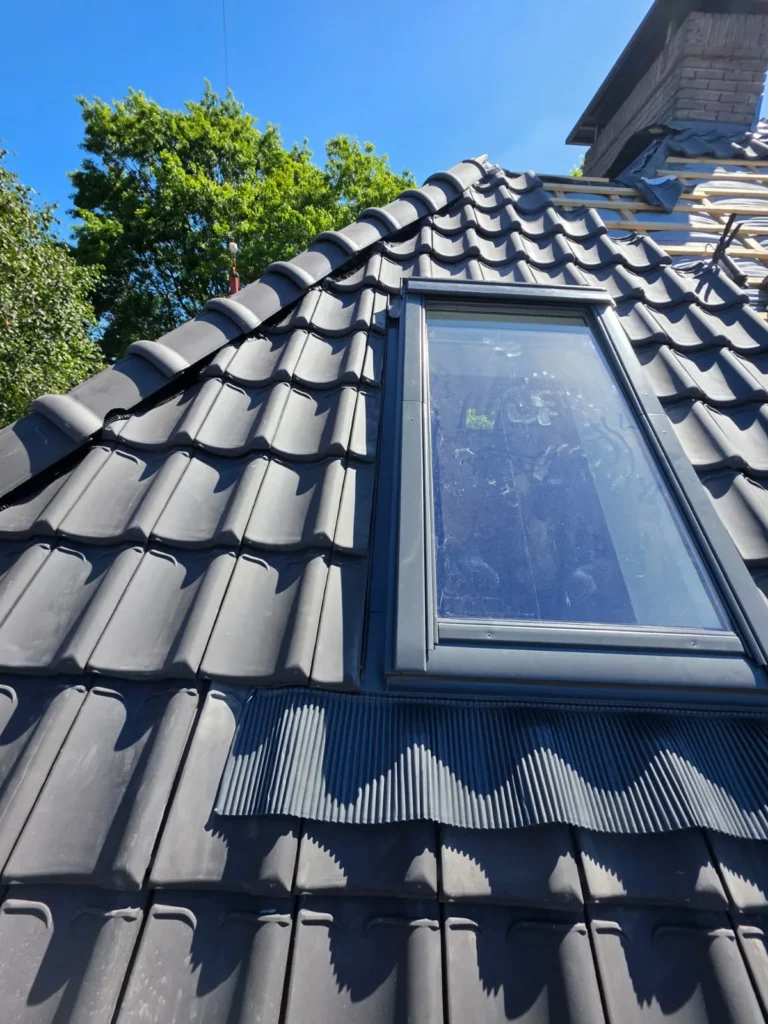
The gutter above the window. Above a roof window there is a flashing piece that leads the water around the window. Leaves collect there, and a blocked flashing lets water get behind the window. This is the point that is most often forgotten.
Operate the hinges and locking mechanism. A window that stays closed for years will seize up. Opening it a few times a year keeps it moving freely; only lubricate with what the manufacturer specifies.
“The flashing piece above the window is the part nobody knows about and the one that causes the most leaks.”
Fouad, owner of Astrodak Service
The filter you may have
Many roof windows have a ventilation flap at the top with a foam filter inside. That filter clogs up after a few years and then the ventilation no longer works. That is one of the causes of recurring condensation in the attic.
The filter is removable and can be tapped clean or replaced. With a window that has recurring condensation, this is the first place to look. See
condensation on a roof window.
Have it checked before it becomes a job
Most of the damage I repair was still a small fix a year earlier. Have your roof checked with no obligation and you will know exactly where you stand.
What not to do
High pressure on the window or the flashing pieces. The connection around a roof window is made with overlaps and seals, and a pressurised jet can force water behind them and damage a seal. See
roof tiles and the pressure washer.
And no oil or general-purpose lubricant on the seals. That attacks the material and makes them harden faster. For hinges and locking mechanisms, use what the manufacturer specifies and nothing else.
For a window you cannot reach
With a window placed high up or above a stairwell, you cannot do the yearly round yourself. Then it belongs in a maintenance round, together with the gutters and the ridge. It is a few extra minutes and it saves a repair.
Why a window that stays shut breaks sooner
The hinges, springs and locking mechanism of a roof window are made to move. A window that has not been opened for years seizes up: the seals stick to the frame, the locking mechanism comes under tension and the springs lose their action in the position they are in.
Opening it fully and closing it again a few times a year is therefore not maintenance in the classic sense, but it is what keeps the mechanism healthy. For a window above a stairwell that you cannot reach, that belongs in a maintenance round.
Frequently asked questions about roof window maintenance