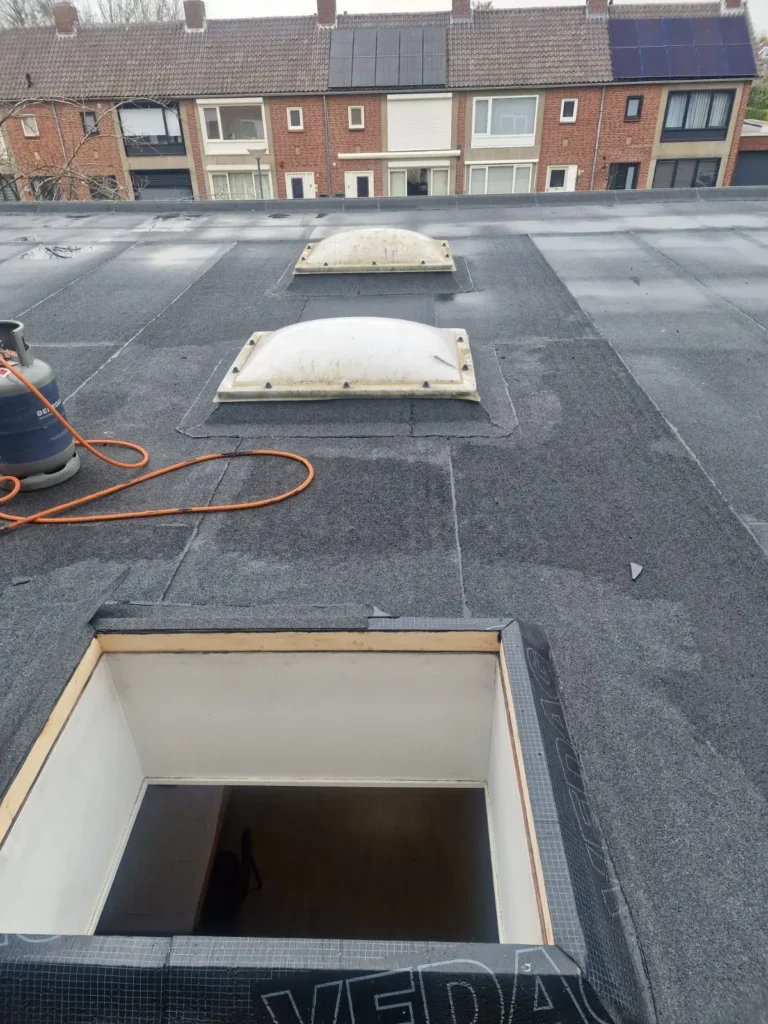
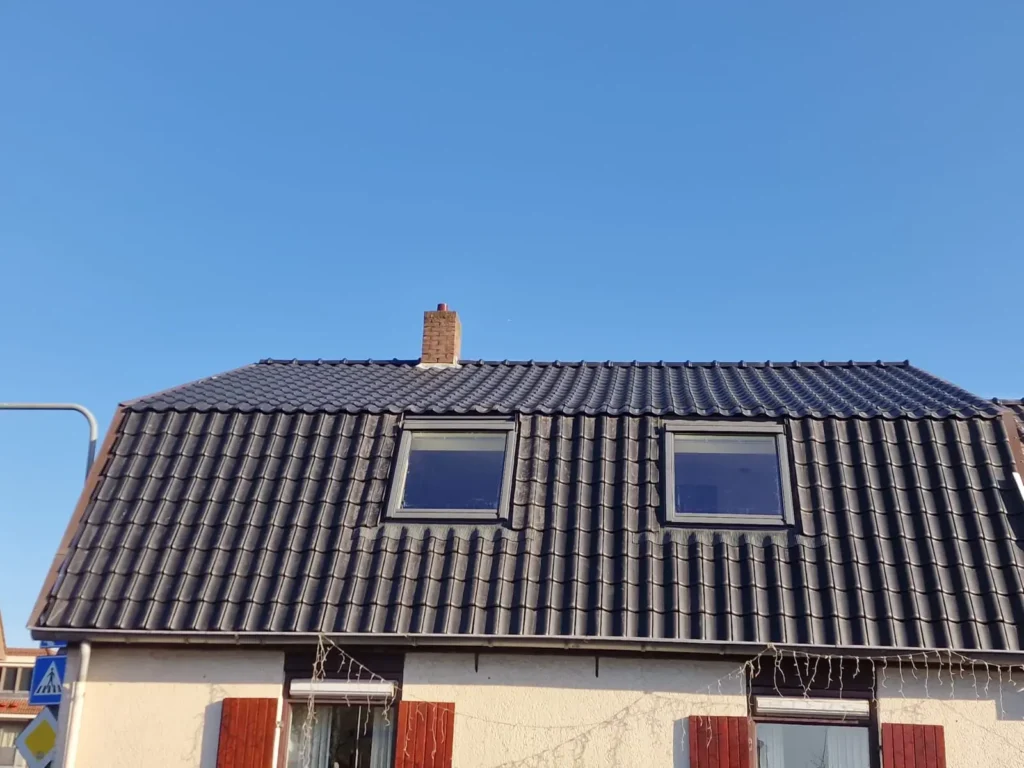
Roof windows from the eighties and nineties are still in the roof of many homes in the region. They work, in the sense that they open and close and no water gets through. And they perform worse on almost every point than what is on sale now.
That is not automatically a reason to replace them. But there are a few clear signs that it is time.
The signs
Condensation between the glass. Misted glass that you cannot clean because it is on the inside of the glazing unit means the double glazing has failed. The glass then no longer insulates and replacement is the only solution.
Soft or rotten wood in the frame. Press a screwdriver against the bottom part of the frame, because that is where the water stands. If it gives, the frame is at the end of its life.
The window sticks or no longer closes. A window that has warped no longer closes onto its seals, and then water and wind get past. With an old window, the hinges and locking parts are often no longer available separately.
Single glazing or old double glazing. Then you lose heat there and in summer you have an oven above your head. See
an attic that is too hot.
“Misted glass that you cannot clean is the clearest sign there is. The glass has had its day.”
Fouad, owner of Astrodak Service
Repair or replace
Repairing makes sense for a window that is otherwise sound: new seals, adjusting the locking mechanism, renewing a flashing piece or repairing the frame locally and repainting it. For a fifteen-year-old window with one problem, that is the right route.
Replacing becomes the logical choice for a window of twenty-five years or older with failed glazing or affected wood. The repair then costs a considerable part of a new window and you are still left with an old window. On top of that, parts for old models are often no longer available.
Not sure about the right approach?
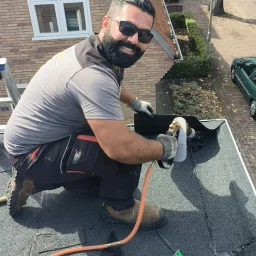
I would rather come and look at your roof with my colleagues first than come up with a solution from a distance. During the free inspection you hear what is really needed, even if that is less than you thought.
What replacing involves in practice
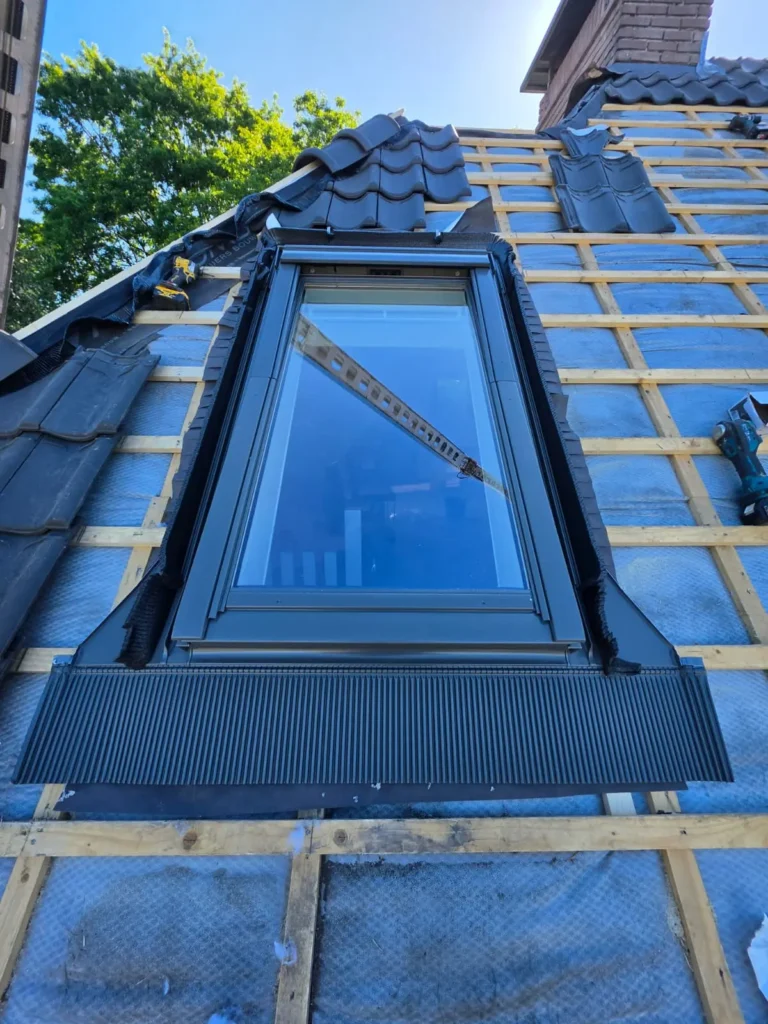
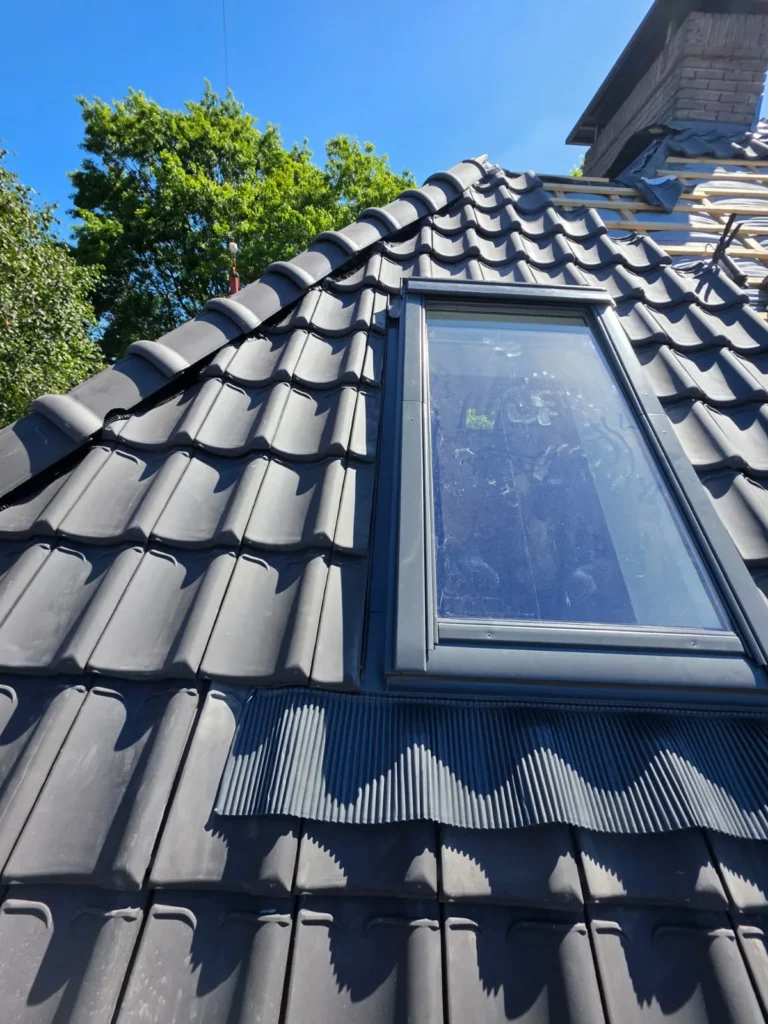
Replacing a window in the same opening is a straightforward job. The old window out, the surrounding tiles off, the new flashing pieces fitted, the new window set in place and the tiles cut to size and put back. Usually half a day.
Important: the new flashing pieces belong with the new window and with your tile type. Reusing old flashing pieces with a new window is one of the ways a neat job still ends up leaking. See
fitting a roof window.
What to take care of at the same time
The insulation around it. The window is out, so this is the only moment you can get at it properly. Insulation tight against the frame and the vapour control layer neatly connected.
The interior finish. A new reveal, finished at an angle so that the light falls into the room and warm air can flow along the glass.
A second window. If you were thinking about it anyway: the set-up is already there and the second is cheaper than the first.
If you have several old windows
Do them all at once. Windows of the same age all come up for replacement within a few years, and you then pay the fixed costs of the job once instead of three times. Besides, three identical new windows look better than a roof with different generations of windows.
What the sill tells you
The bottom rail of the frame is where water stays standing and where rot begins. Press your finger or a screwdriver against the wood there, especially in the corners. If it gives, the frame is at the end of its life and repairing is rarely still sensible.
Also look at the paint on that rail. If it is flaking in several places, water has been getting into the wood for some time. That is the moment to decide: repaint if the wood is sound, replace if it is soft.
Frequently asked questions about replacing a roof window