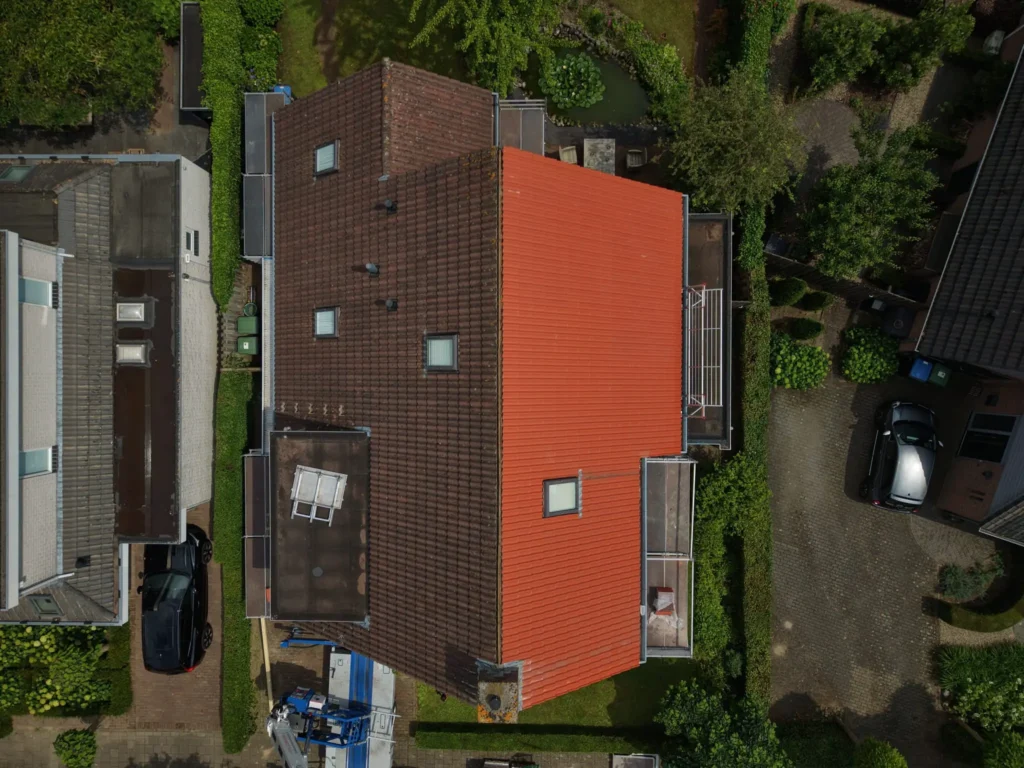
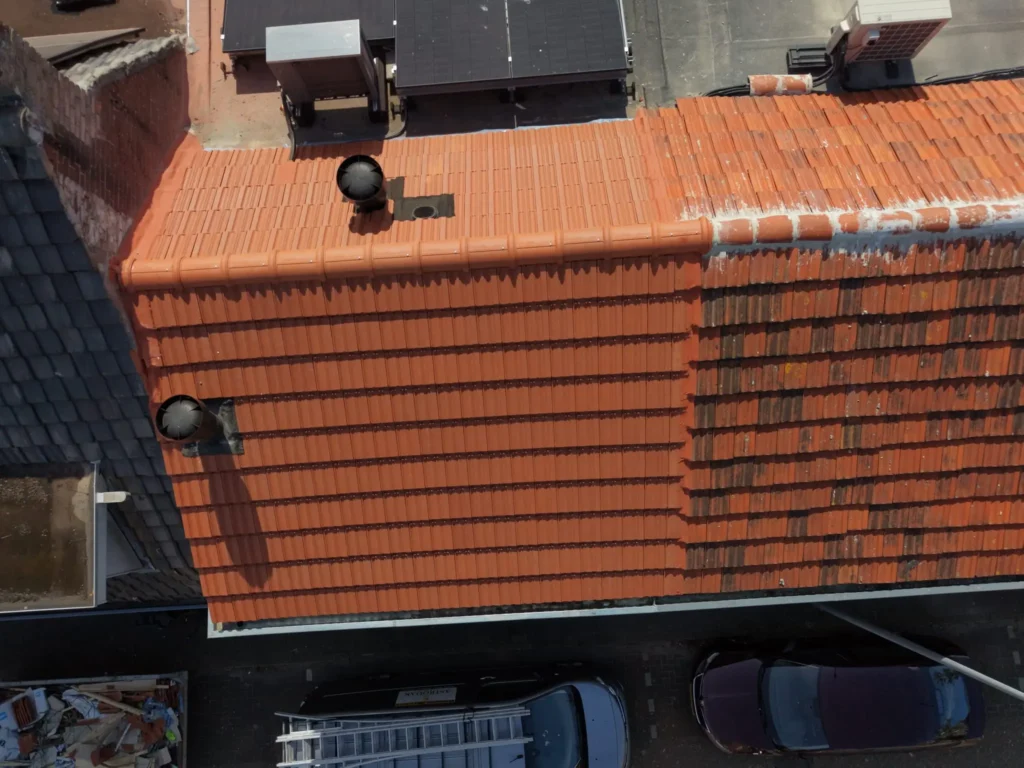
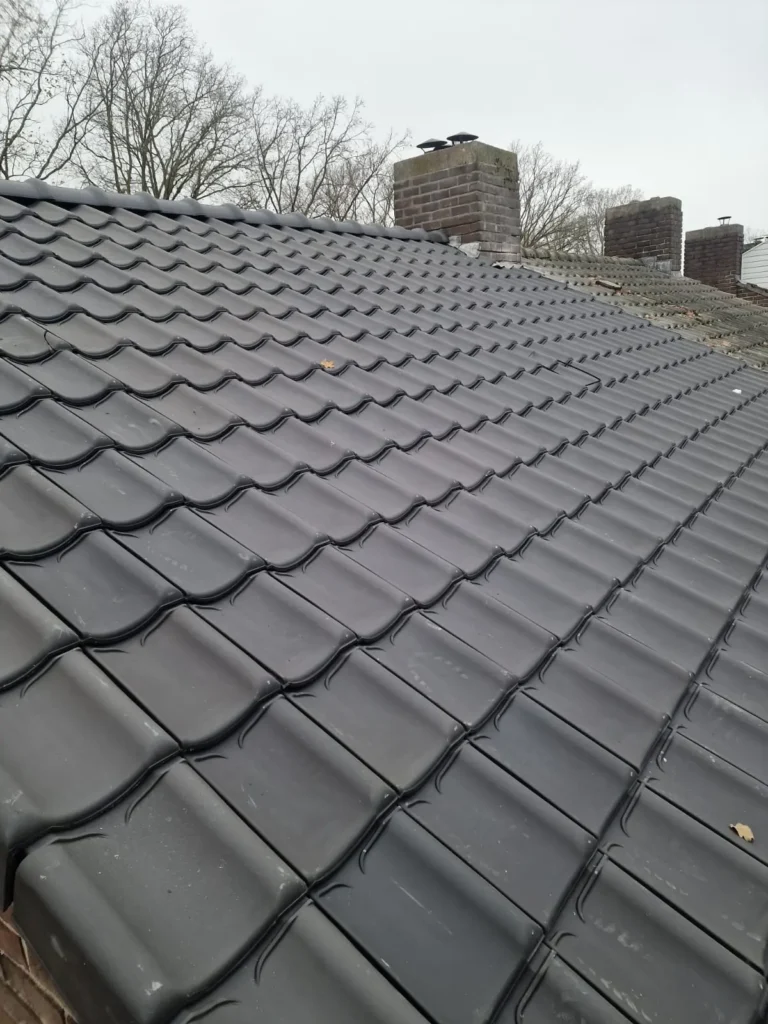
Every spring, vans drive through the neighbourhoods offering to clean your roof. The result is impressive: a roof that was green is red again in an afternoon. I fully understand why people say yes to that.
What I also see are the roofs three to five years later. And that is why I am writing this article.
What a high-pressure jet does to a tile
The top layer disappears. A roof tile has a dense outer skin, and with glazed or engobed tiles that is also where the colour is. Under high pressure that layer goes along with the moss, leaving the porous material underneath exposed.
The tile starts absorbing water. Without that skin the tile takes up moisture. That means frost damage in winter and moss coming back faster than before. See
porous roof tiles.
Water gets under the tiles. A jet of dozens of bars is not rain. The water is forced upwards under the tile and ends up on the membrane and sometimes on the roof boarding.
Mortar and sealant come loose. Ridge tiles bedded in mortar, sealant joints at roof windows and old leadwork are not made for that force. See
loose ridge tiles.
“After a pressure wash the moss is gone, and so is the protection. The moss comes back, the protection does not.”
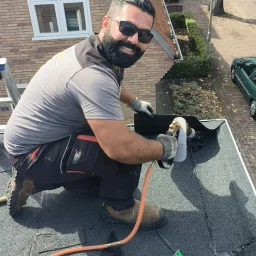
Fouad, owner of Astrodak Service
Why the moss comes back faster
This is the point that surprises people most. A smooth, dense tile gives moss little grip. A tile whose skin has been blasted off is rough and porous, holds moisture and is therefore a better breeding ground than it ever was.
That is why a roof is often green again within two to four years of a pressure wash, and often greener than the first time. What follows is the offer to clean it again, or to coat it. See
roof coating: worth it or not.
High pressure
quick result
lasting damage
Not sure about the right approach?
I would rather come and look at your roof with my colleagues first than come up with a solution from a distance. During the free inspection you hear what is really needed, even if that is less than you thought.
What you can do
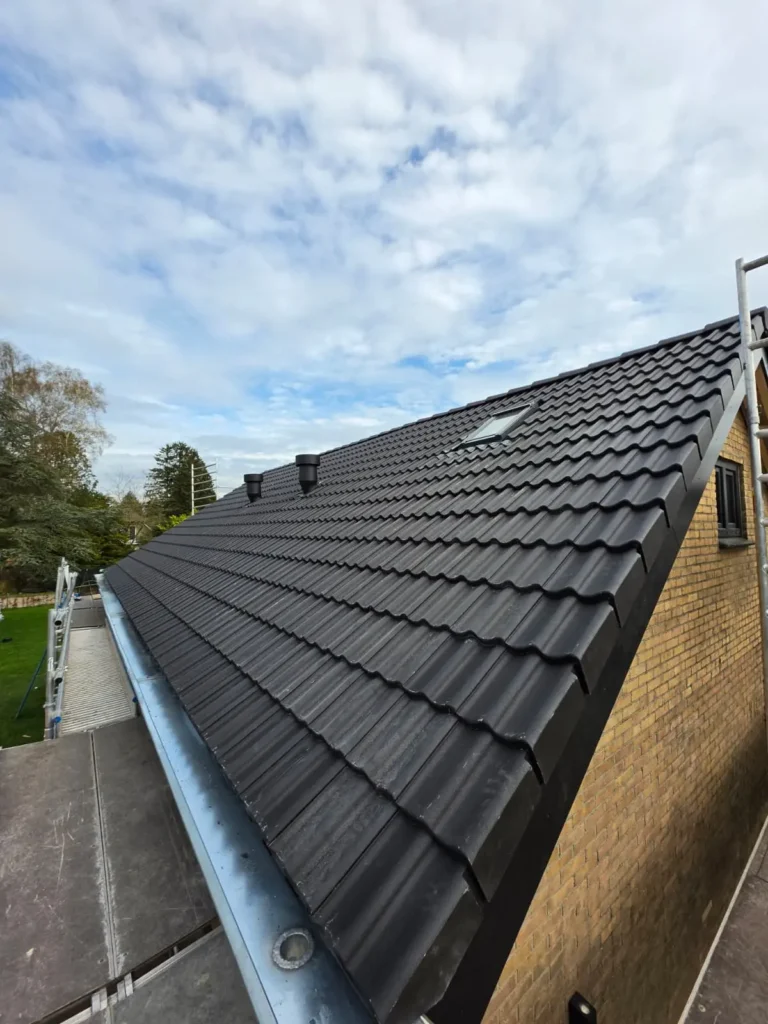
Cleaning is perfectly possible, just not with force. Wiping by hand or using low pressure and plenty of water works well on a healthy roof, and there are products that kill the moss so it washes away with the rain. That takes weeks instead of an afternoon, and the roof stays intact.
Important: work from top to bottom and always clean the gutters and downpipes afterwards, because all the loosened moss ends up there. See
cleaning gutters.
On a flat roof and on zinc work
The same applies there, with an extra risk. On bitumen, a high-pressure jet blasts off the mineral slate chippings of the top layer, and it is exactly that layer that protects the bitumen from UV. On zinc and old lead, the jet can punch through thin spots or open a seam.
Want to know whether your roof can handle cleaning? That can be seen in ten minutes during an inspection: I look at the skin of the tiles and at how the roof dries after rain. See
free roof inspection and
our page on maintenance.
What must always happen after cleaning
Everything that has come off the roof is now in the gutter and the downpipes. With a thorough clean that is a considerable amount of moss and sludge, and if it stays there you end up with a blocked drain after a clean roof.
So ask in advance whether cleaning the gutters and clearing the downpipes is part of the job. If a provider does not include that as standard, it tells you something about how the rest of the work is done.
Frequently asked questions about roof cleaning