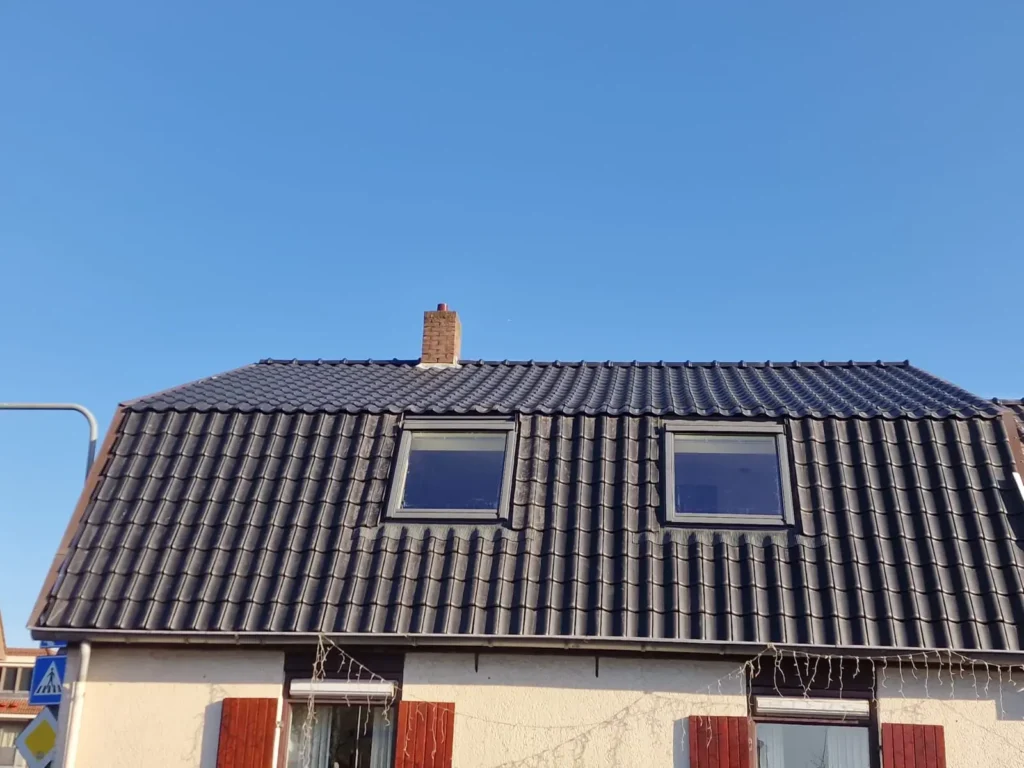
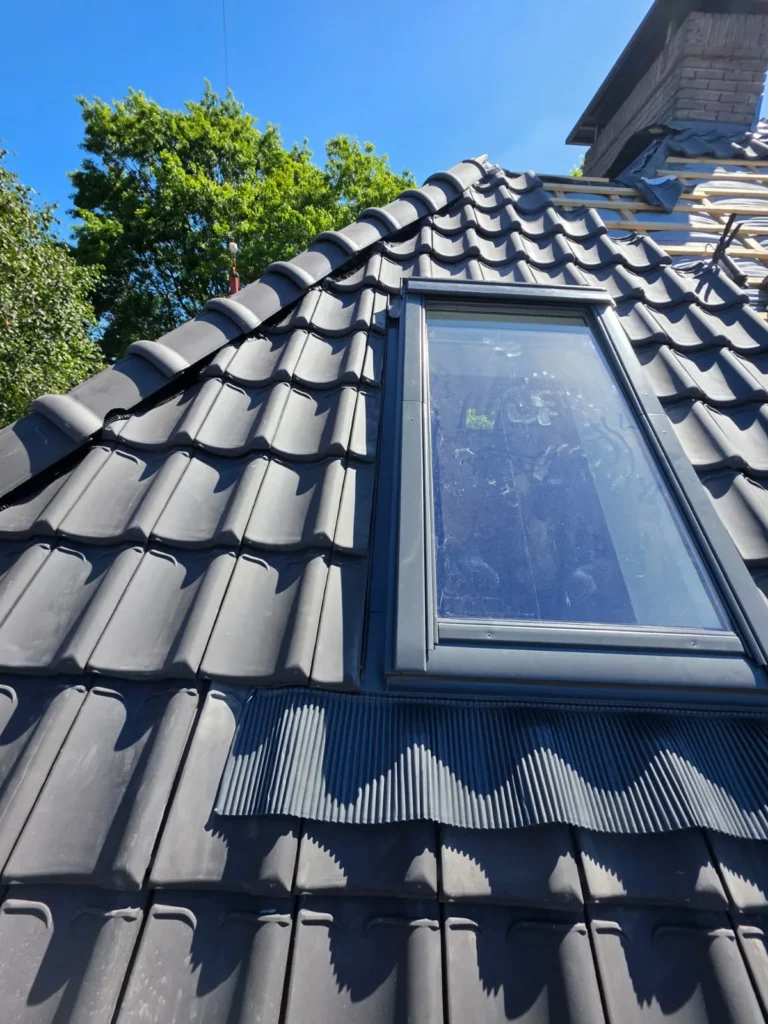
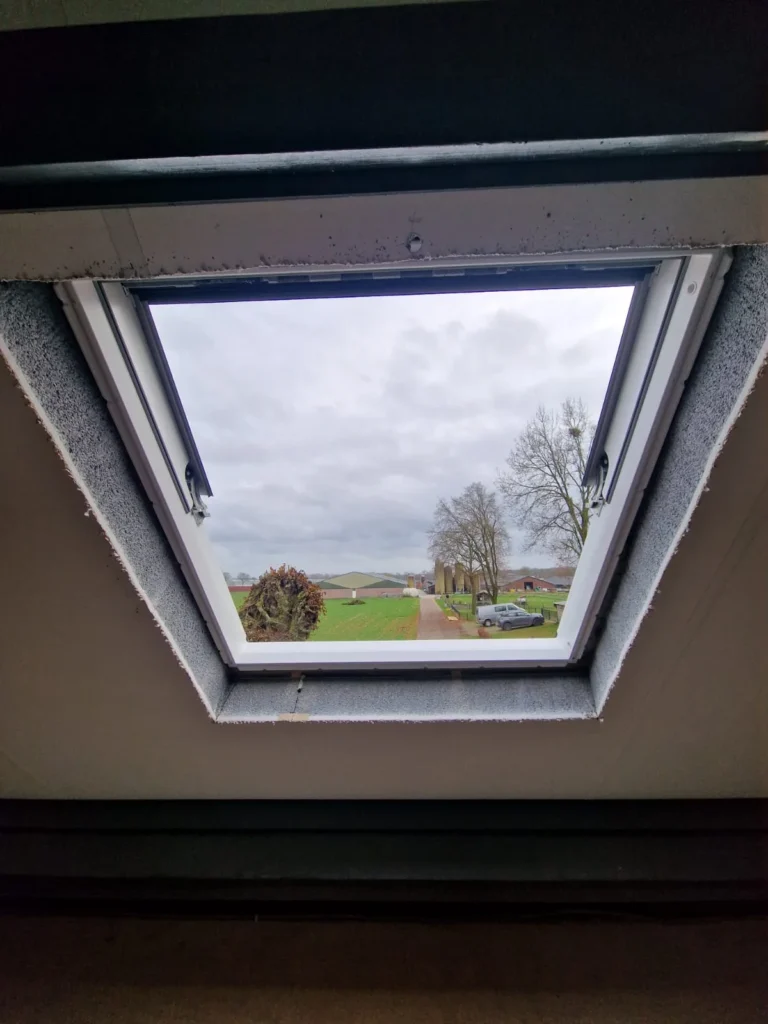
A roof window looks straight up at the sky and therefore catches much more sun than a window in a wall. In an attic bedroom with a south or west-facing window, that means a room in July where you cannot sleep.
Most people then buy a blackout roller blind. That makes the room dark but not noticeably cooler, and the conclusion is that it does not work. It does work; it is just not the solution to that problem.
Why outside makes the difference
Sunlight falling on the glass partly turns into heat there. That happens in the pane itself. If your shading hangs on the inside, that heat is already in the pane and therefore already inside; the blind then stops the light, but the heat is trapped in between.
External sun shading intercepts the sun before it hits the glass. Then the pane does not heat up and the heat does not get inside. The difference you feel on a summer's day is considerable, not subtle.
External sun shading. A screen or awning on the outside, manual or electric. This is the only measure that really works against heat. You can still see through the window, so it does not make the room dark.
Solar control glass. Glazing that reflects part of the sun's heat. Works permanently, needs no operating, and is the logical choice for a new or replacement window. See
replacing a roof window.
Blackout roller blind. On the inside, against light. For a bedroom or a child's room exactly what you need, but not against heat.
Pleated blind or venetian blind. Controls light and privacy and dampens the heat a little, but with sun from the south that is not enough.
“A blind on the inside keeps out light. The heat is already inside by then, trapped between glass and fabric.”
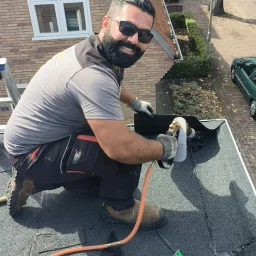
Fouad, owner of Astrodak Service
Against heat
outside
or solar control glass
What does insulating get you in your own house?
The benefit depends on the roof structure, the current insulation and how you use the space. I work it out for you in concrete terms during the inspection, including the grant you are entitled to.
The combination that works
For an attic bedroom facing south or west: external sun shading plus a blackout blind inside. The shading keeps the heat out, the blind makes the room dark. Two products for two problems.
For a north-facing window, external sun shading is often unnecessary, because little direct sun falls on it. Then a blind inside is enough.
What to watch for with external sun shading
Wind resistance. A screen on a roof catches wind. Check the stated wind class and automatic retraction in wind; with an electric version, a wind sensor is worth it.
Operation. With a window placed high up, manual operation is awkward. Electric or solar-powered is then much more convenient.
Fixing. The shading is fixed to the frame or to the flashing pieces. That should be done without affecting the watertightness of the connection.
Why insulation is the foundation
Shading on the window solves the window. If the rest of your roof surface is not insulated, the heat still comes through the roof itself. In that case, sun shading is a sticking plaster on a bigger problem.
Why operation determines the choice
External sun shading only works if it is actually used, and with a window placed high up that is the sticking point. A manual version you have to operate with a pole often stays in the wrong position in practice.
An electric or solar-powered version with a sensor does the work without you having to think about it, and that is exactly what you want for a window above a bed. So the extra cost is not about comfort, it is about the chance that the measure actually works.
Frequently asked questions about sun shading on roof windows