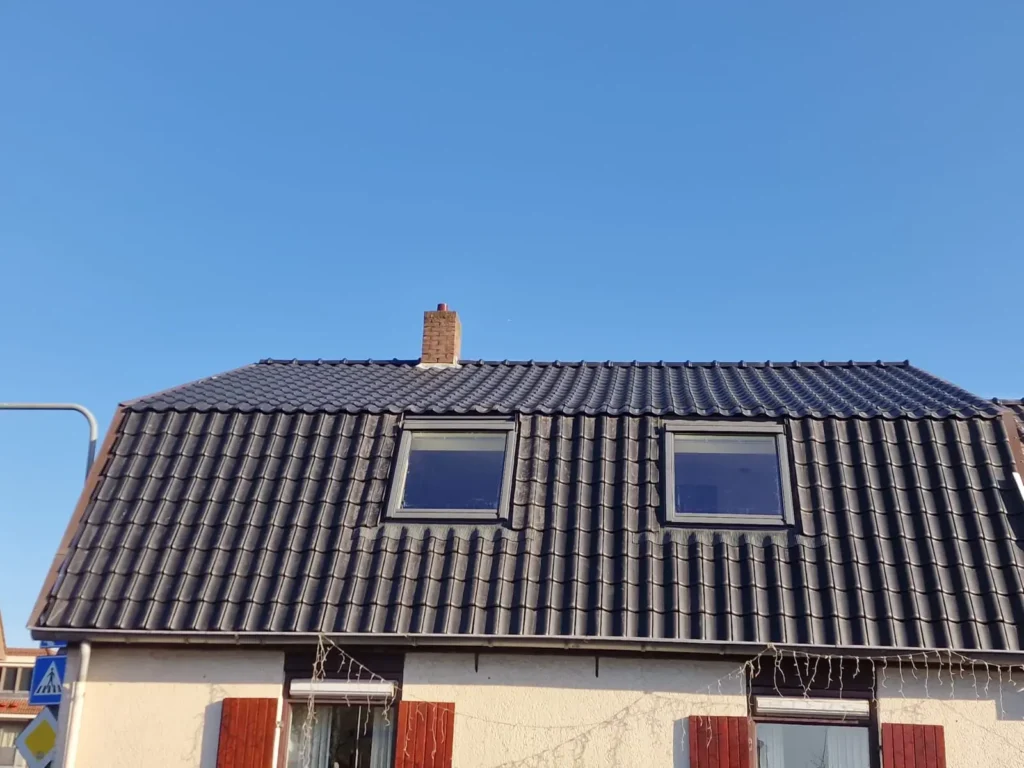
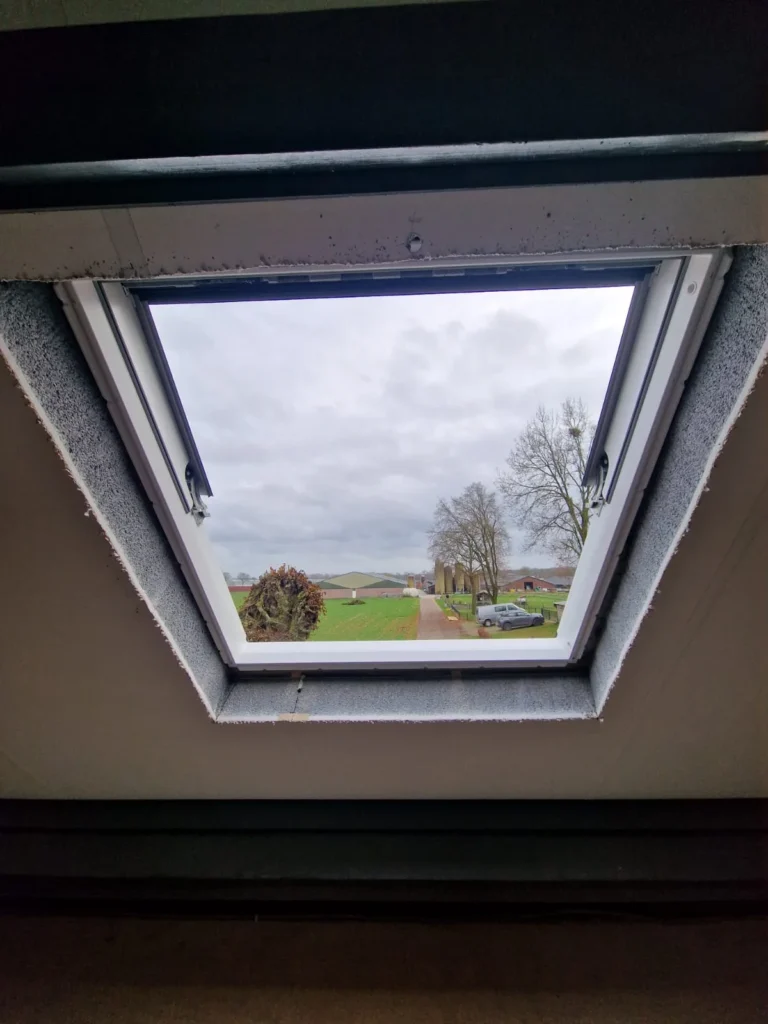
Rooflights that are twenty to thirty years old have often turned yellow and dull. The rooflight then lets noticeably less light through than when it was fitted, and that is why the room underneath has become darker without anything having changed.
More important is the risk of leaks. Old plastic develops hairline cracks, and the edge around it is a joint that ages just like the rest of the roof.
When replacement makes sense
Yellowed or dull plastic. Measurably less light transmission. In a room that only gets light from this rooflight, that is a noticeable difference.
Hairline cracks. Fine cracks in the plastic, often first on the top where the UV is strongest. That is the forerunner of a break.
A leaking edge. The joint between the rooflight and the roof covering is a detail that ages. See
why a flat roof leaks.
Condensation between the skins. With a double-skinned rooflight, moisture between the layers means the seal has failed.
Single-skinned. A single-skinned rooflight barely insulates and gives condensation in winter and heat in summer. When replacing it, choose double or triple-skinned.
“The rooflight itself is the least interesting part. It is the upstand underneath where things go right or wrong for years.”
Fouad, owner of Astrodak Service
Why the upstand matters most
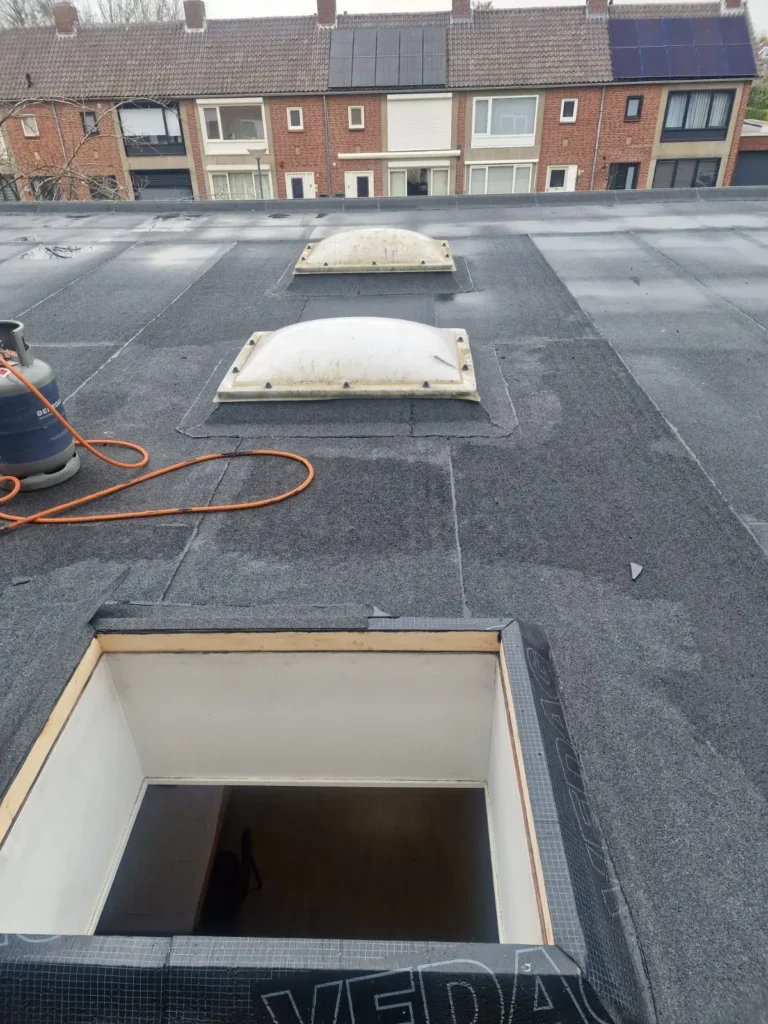
The rooflight sits on an upstand: a raised frame of plastic, timber or insulation material that the roof covering is turned up against. That upstand decides how high the water can rise before it goes over the edge. With a low upstand on a roof with standing water, that is a real risk.
During a replacement, this is the moment to raise the upstand if it was tight, and to check whether the water can actually drain away. That is an adjustment that cannot be made later without opening up the covering again. See
fall on a flat roof.
Not sure about the right approach?
I would rather come and look at your roof with my colleagues first than come up with a solution from a distance. During the free inspection you hear what is really needed, even if that is less than you thought.
What replacing involves
The old rooflight comes off, the upstand is assessed and repaired or raised where needed, the roof covering around it is checked and reconnected, and the new rooflight is fitted and sealed. If the rooflight is a different size from the old one, the opening has to be adjusted, and that is more work.
So measure the existing opening size before you decide anything. With standard sizes there is usually a rooflight that fits; with a non-standard size it becomes made-to-measure or an adapter frame is needed.
What you can choose to add
Multi-skinned plastic. Two or three skins insulate considerably better than one and give less condensation. The standard for a new rooflight.
An opening version. With a riser or an electric opener, useful if there is no other ventilation in that room.
Solar control or opal. On a rooflight that gets a lot of sun, opal or solar control plastic keeps out the heat and the glare.
A roof lantern instead of a rooflight. If you are doing the work anyway and want more light: this is the moment to weigh that up. See
rooflight or roof lantern.
When to combine it
With the roof covering. If the flat roof is going to be replaced within a few years, wait with the rooflight, because the covering around it will come off then anyway and the joint is made properly in one go. Done separately, you pay for that joint twice.
What to measure before you call
Two measurements are enough to make a conversation concrete: the clear opening size in the roof, so the inside dimension of the upstand, and the outside dimension of the rooflight edge. Measure from inside the room, and outside on the roof if you can get to it safely.
With those two measurements and a photo of the upstand, I can often already tell whether a standard rooflight will fit or whether it will be made-to-measure. That saves a visit and largely decides the lead time, because made-to-measure has a delivery time.
Frequently asked questions about replacing a rooflight