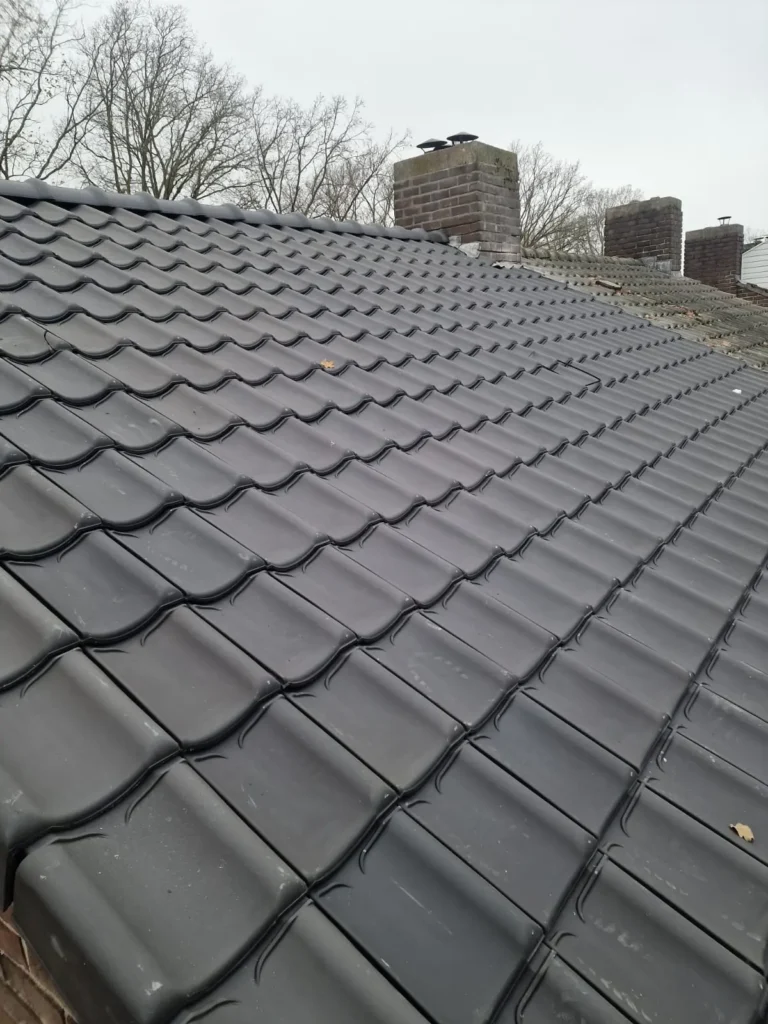
It is one of the few roof jobs where the technical part really is simple. A tile hangs by a nib over a tiling batten and its side sits in the interlock of the tile next to it. Lift, take it out, put the new one in, done.
So the risk is not in the job itself. It is in the place you have to be to do it.
When it is responsible
You can reach it without climbing. From a roof window, from an adjoining flat roof, or from a securely placed ladder at the foot of the roof. Anything that requires you to walk across the roof slope is ruled out.
It is dry and calm. A damp roof is slippery, even without moss. In wind you have no control over your balance or over the tile in your hand.
You spread your weight. A tile is not made to stand on. Use a roof ladder or a crawling board that rests on several battens, never your foot directly on a tile.
You are not alone. Someone at the foot of the ladder, and someone who knows you are on the roof.
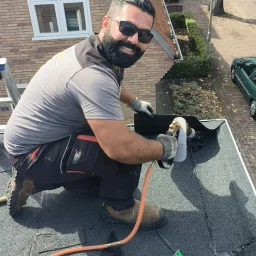
“Putting the tile back takes two minutes. Getting up there and back down safely is the whole job.”
Fouad, owner of Astrodak Service
How to do it
Lift the tile above the broken tile slightly and slide it a little to one side, so the tile underneath comes free. Remove the pieces of the broken tile and watch out for shards sliding down and ending up in the gutter.
Slide the new tile in with the nib over the tiling batten and make sure it drops into the interlock of the tile next to it. Let the tile above drop back down. Check with your hand that everything lies flat and that no tile is sticking up, because that is exactly where the wind gets underneath.
At a roof window
often doable
without climbing
In the middle of the roof slope
not yourself
have it done
Not sure about the right approach?
I would rather come and look at your roof with my colleagues first than come up with a solution from a distance. During the free inspection you hear what is really needed, even if that is less than you thought.
What to look out for with the new tile
It has to be the same model and the same size. A tile that looks roughly similar will not fit properly and will not solve the problem. If you still have spare tiles from when the house was built or from the last renovation, those are the best. Otherwise, looking up the model and size is the first step.
And pay attention to the colour. A new tile stands out on a weathered roof for years. That is cosmetic and otherwise harmless, but if it is at the front, you will want to know before you start.
When you are better off having it done
If the tile is in the middle of the roof slope, if it is a steep roof, if several tiles are missing, or if you are not sure your ladder is stable. And always if it is after a storm, because then there is a good chance that more is wrong than that one tile. See
roof tiles after a storm.
What you should see under the tile
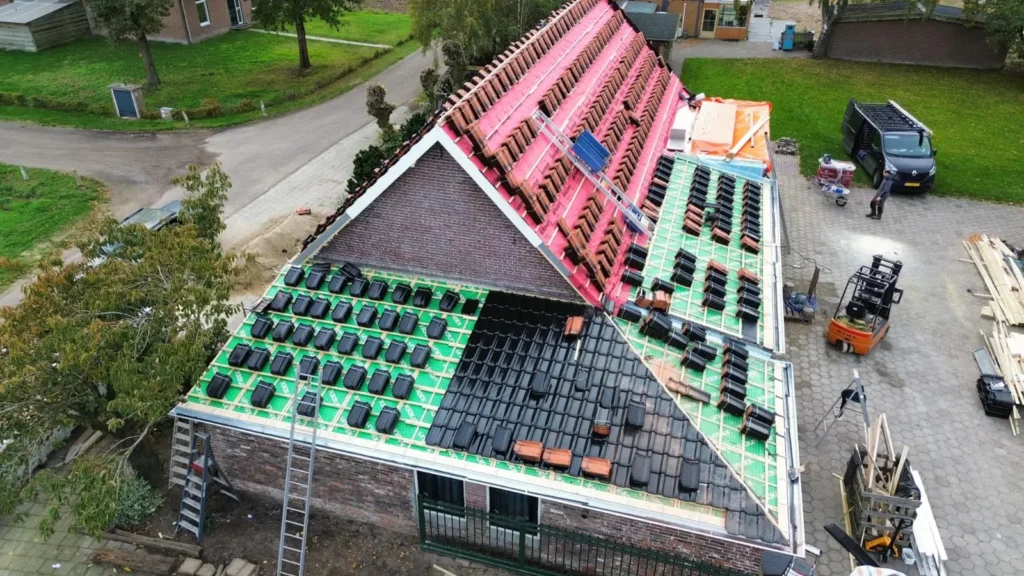
If you are lifting a tile anyway, take a moment to look at what is underneath. You will see the tiling batten, and below that the counter batten and the membrane. If the batten feels firm and the membrane is whole and intact, your roof is in good condition under the tiles.
If the batten is soft, the wood crumbles at the nail or the membrane is brittle and torn, you have information you could never get from the ground. That is exactly what determines the lifespan of your roof. See
tiling battens and counter battens.
Frequently asked questions about a loose roof tile