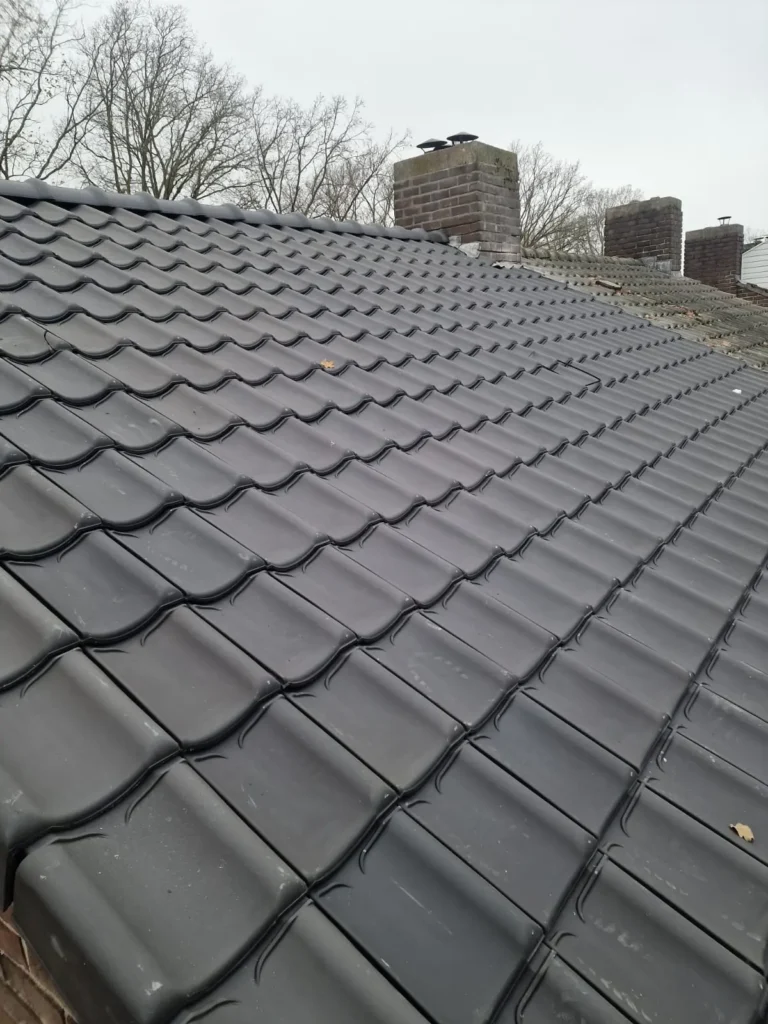
This is the option people talk about least, and for many roofs of thirty to forty years old it is the smartest choice. Your tiles are often still good. The wood and the membrane underneath are not. Then you do not have to replace everything.
With relaying you effectively get a new roof with your own tiles on it, and you save the entire material cost of the tiles themselves.
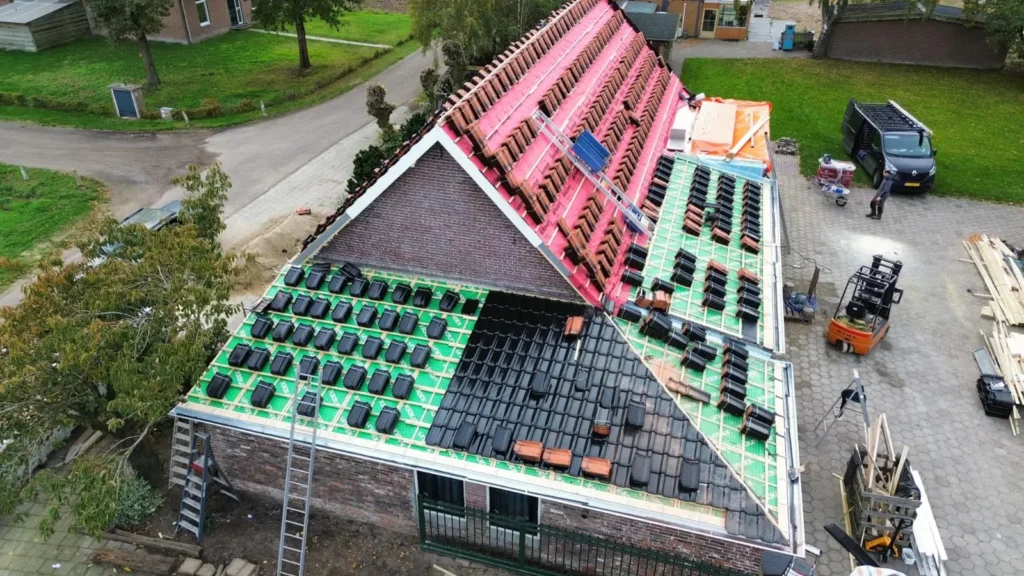
What happens when relaying
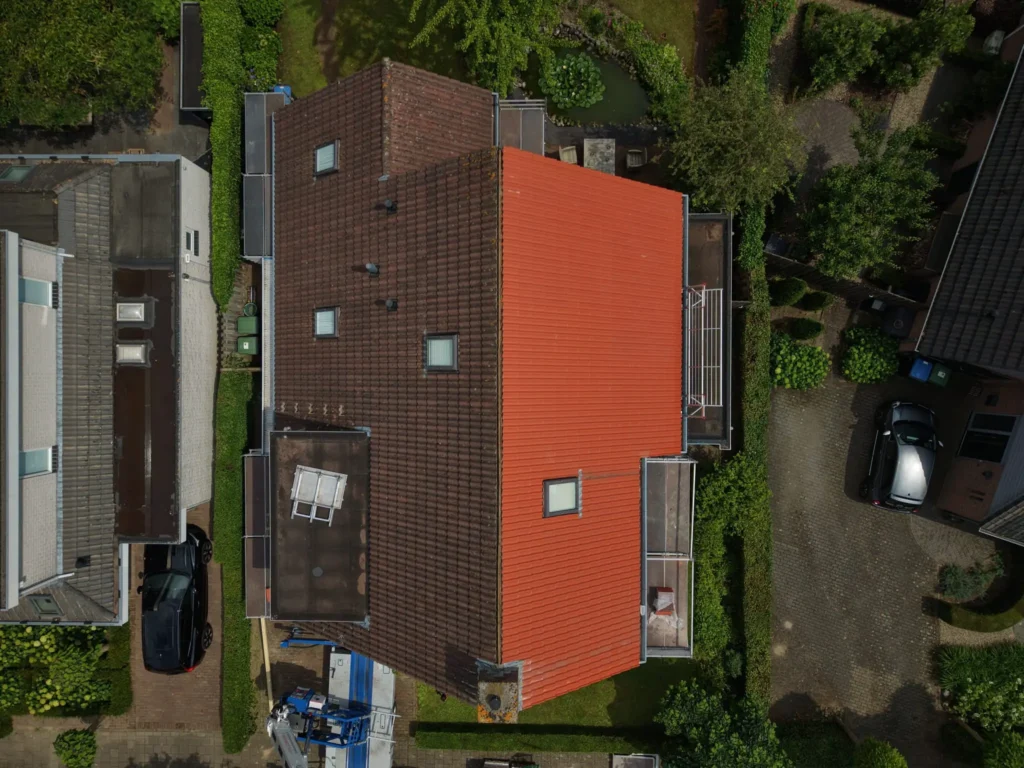
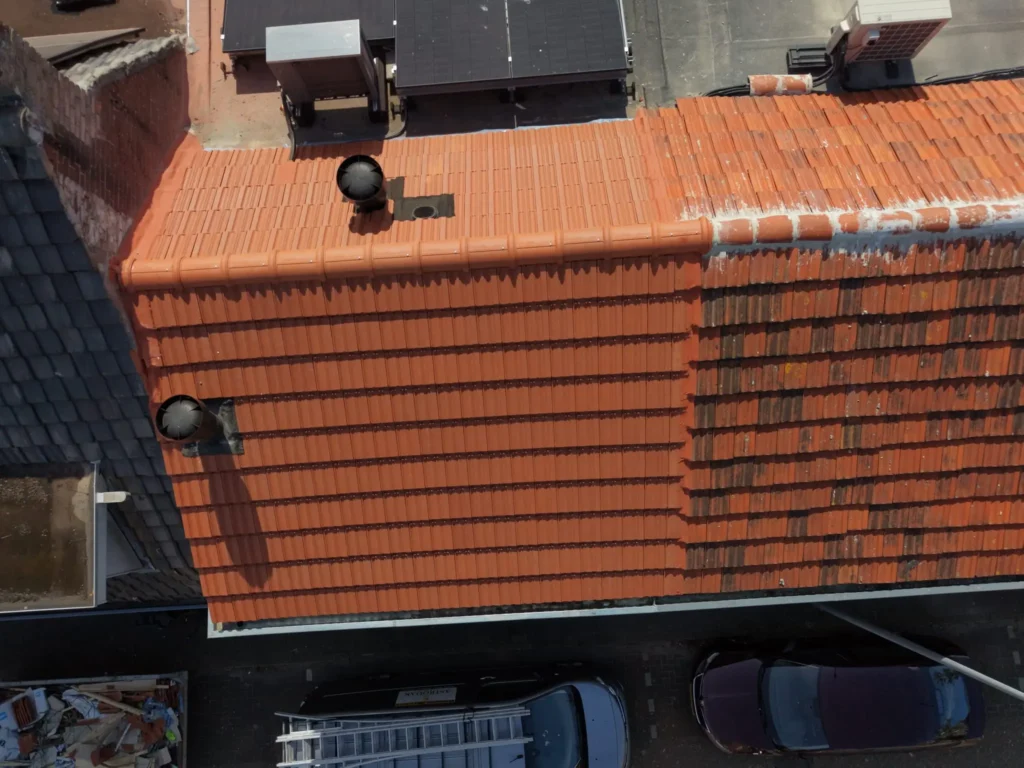
The tiles come off and are sorted. Carefully, because every tile that stays intact is a tile you do not have to buy. They are stacked and the broken ones are set aside.
The roof boarding is checked. Now the roof is open and visible. Affected areas are replaced. See
replacing roof boarding.
The tiles go back, topped up. Five to ten percent of the tiles break. Those are bought in the same model, or for a roof with a discontinued model, sourced from a second batch.
“With relaying you get a new roof with your own tiles. For a roof with good tiles, it is simply the most sensible choice.”
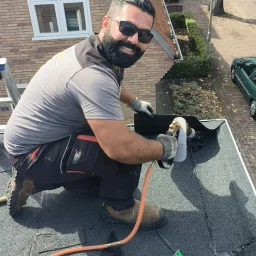
Fouad, owner of Astrodak Service
When it is possible
Two conditions. The tiles must not be porous, because then they break when picked up and you are left with too few. And the model must still be available, or a matching second batch must be found to top up.
That first condition is the most important, and you can largely judge it yourself: do your tiles stay dark much longer than normal after rain? Then relaying is probably no longer an option. See
recognising porous roof tiles.
Want to know what your roof will cost?
A price per m² is a guideline, not a quote. I come round with my colleagues, we measure the roof, look at the structure and then send a quote with a fixed price. The inspection is free and puts you under no obligation.
When it is not a good idea
With a discontinued model. If you cannot get matching tiles to top up, you end up with a roof in two colours or with too few tiles to finish it.
If you want to change colour or model anyway. Then the material saving does not apply and you might as well choose what you want straight away. See
types of roof tiles.
With concrete tiles whose surface coating has weathered. They have often become grainy and absorb water, even if they do not break yet. See
concrete or clay.
If you are going to insulate from the outside. Then the build-up and the height of the roof surface change. Relaying is still possible, but it is a different job. See
sarking.
Why you are often not offered this
To be honest: because it brings in less money. The material cost of the tiles disappears, while the labour stays largely the same. For the roofer, a completely new roof is more attractive, and it is technically simpler too, because there is no sorting and no risk of running short of tiles.
I mention it anyway, because for a roof with healthy tiles it is simply the right choice. What is possible in your case can be established in half an hour during an inspection: I lift a few tiles and look at the battens, the membrane and the condition of the tile. See
free roof inspection and
roof tiles and pitched roofs.
What happens to the broken tiles
When relaying, the tiles are sorted as they come off: intact ones stacked, broken ones set aside. That sorting takes real time, and it is the reason relaying is not as much cheaper as the material saving suggests.
The broken tiles are taken away as building rubble. What you can do: ask whether the undamaged tiles left over can be left with you. Those are then your spare tiles for the coming decades, and later you will not be able to buy them anywhere in the right colour.
Frequently asked questions about relaying