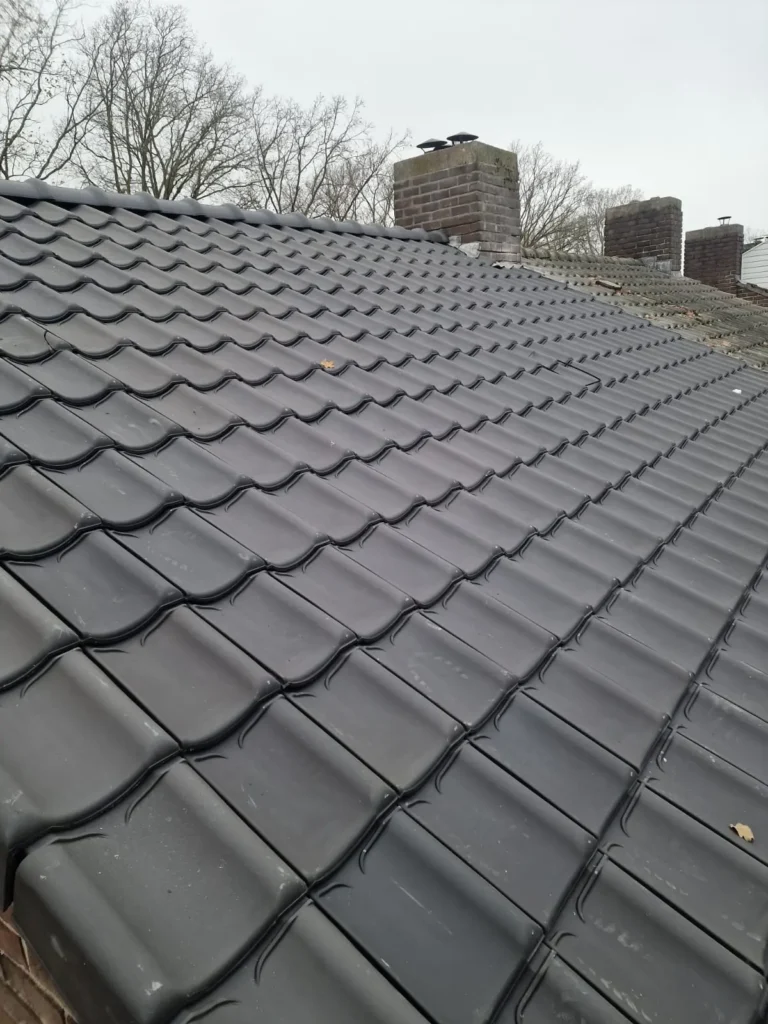
After an autumn storm I get calls from people who see one thing: a tile that is crooked or a piece of tile in the garden. Understandable, because that is what is visible from the ground. But in most cases that is not where the damage is that will cost you money.
Wind does not attack a roof in the middle of a roof surface. It attacks at the edges: the ridge, the sides, the eaves, and anywhere something sticks up. Those are the places you want checked.
What you can check from the ground
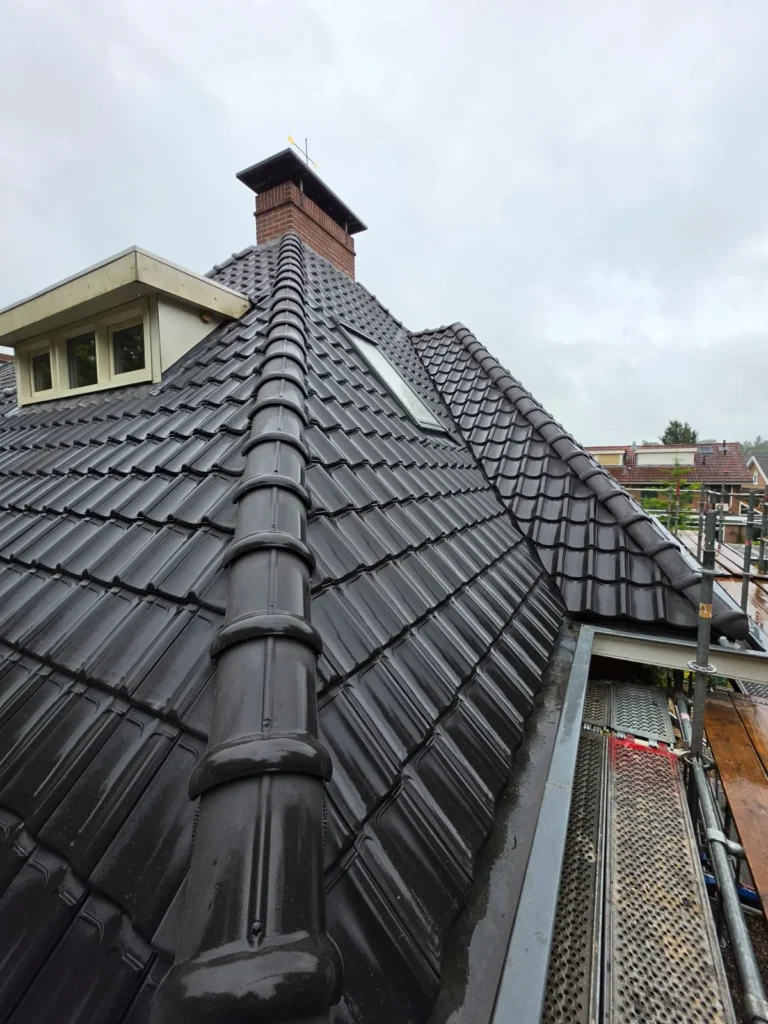
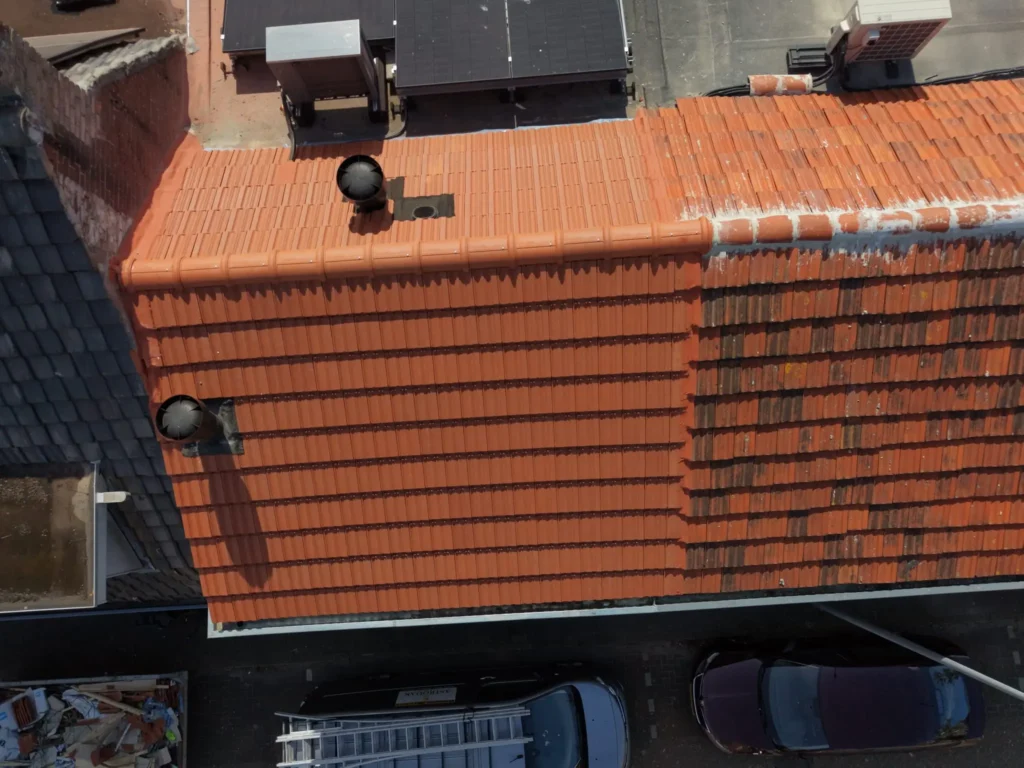
The ridge. Check whether the ridge tiles still lie in one straight line and whether there are no pieces of mortar on the roof surface or in the gutter. Shifted ridge tiles are the most common problem after a storm. See
loose ridge tiles.
The edges. The bargeboard sits along the sides of the roof surface. Loose, split or partly missing is an urgent problem, because that is where the wind can get under the tiles. See
replacing a bargeboard.
The rows of tiles. Scan the roof surface with your eyes and look for irregularities in the pattern. A tile that sits slightly higher than the rest is a tile that has come off its batten.
The gutter and the garden. Bits of tile, lumps of mortar or slate chippings in the gutter tell you where something has broken, even if you cannot see the spot itself.
“Almost nobody calls about the ridge after a storm. And that is almost always where the damage is.”
Fouad, owner of Astrodak Service
What to check from inside
Go into the attic with a lamp and look up. If daylight comes through the roof anywhere it should not, you immediately know where to look. Then feel the roof boarding at the ridge, by the chimney and at the eaves to see whether it is damp.
Do this even if there was nothing to see outside. A tile that was lifted and fell back looks normal from the ground, while a bucket of water may have blown in during the storm. You will only find that spot from inside. See
following the water trail.
From the ground
ridge and edges
look first
From inside
daylight and damp
in the attic
A leak? Do not let it spread.
A leak you leave for a season usually costs ten times as much in follow-on damage. Call or send a message: you will get an answer today, from me personally, not from a scheduler.
Why a storm sets off the next problem
A roof is a system that holds itself in place. Tiles overlap each other and the batten, and the rows at the edge hold the rest in place. As soon as one edge comes loose, the wind can get underneath and the next storm takes it further.
That is why after a storm I prefer to check the whole roof surface rather than just put back the one tile. Not to create extra work, but because putting back one tile does not solve a problem that is small now if the bargeboard next to it is loose.
And the insurance?
Storm damage is an event, not wear, so this is exactly the case in which buildings insurance usually does pay out. What matters is that you report it quickly and record it: dated photos, the date and wind force of the storm, and a report from the roofer on what was found.
Why the first storm prepares the next
Wind takes hold wherever there is an unevenness. On an intact roof surface the air slides over it, but as soon as a tile sits slightly higher somewhere or an edge is open, that becomes a point of attack and the force on that spot multiplies.
That is why damage after a storm rarely stays in the same place. What is one loose tile in October is a row in January and a whole roof surface in February. Repairing that first tile is therefore the cheapest job of the whole season.
Frequently asked questions about storm damage to the roof