This is the question I get most often, and usually the customer wants it answered over the phone. That is not possible, and it is not unwillingness. The four things that settle it, namely the roof boarding, the battens, the membrane and the insulation, are none of them visible from the ground.
What I can do is tell you what I look at when I am on the roof. Then you know what to look out for yourself and whether it is worth having someone come round.
Seven signs that replacing is the wiser choice
The roof is older than about 35 years. Not the tiles, because ceramic tiles can last almost a century. But the tiling battens, counter battens and membrane underneath have done their job after three to four decades.
There are leaks in several places. One leak is a defect. Three leaks in three places is a roof at the end of its life.
The roof boarding feels soft. When I walk over a roof, I notice it giving way. Soft timber means the moisture has been there longer than the stain in the attic suggests.
The tiles absorb water. Porous tiles break in frost and when you pick them up. Relaying them is then no longer an option. See
recognising porous roof tiles.
You are going to insulate anyway. If you want to insulate from outside, the covering comes off anyway. Then a separate repair is money thrown away.
With a flat roof: there are already several layers of bitumen. Another layer on top just adds weight to a problem that lies underneath.
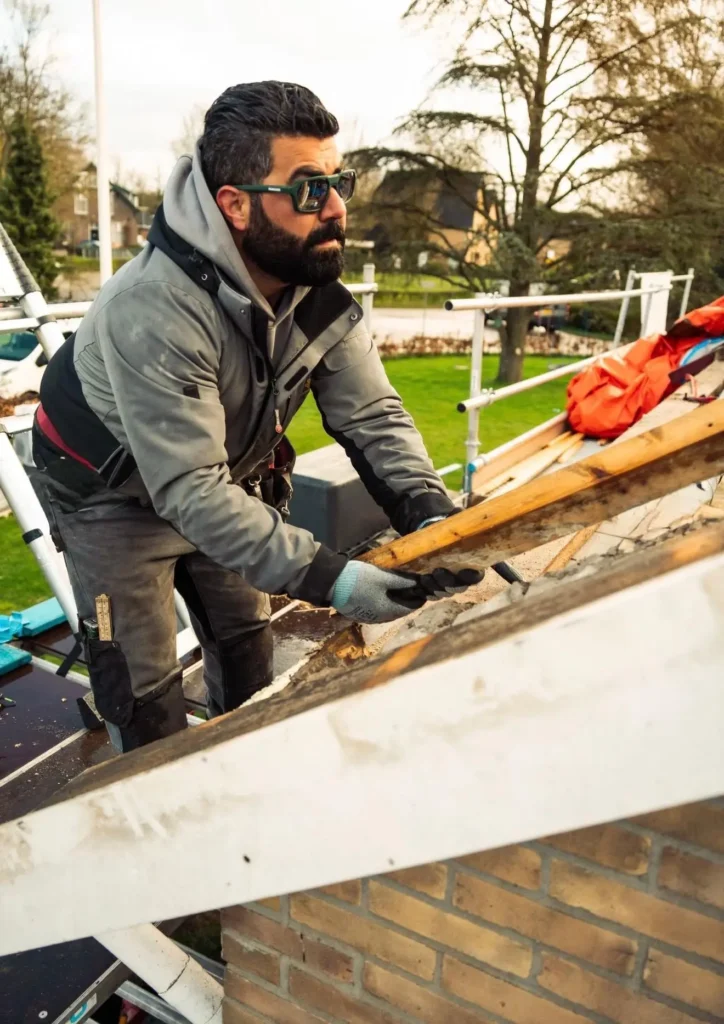
“I would rather recommend a repair than a renovation that is not yet needed. That pays itself back twice over later on.”
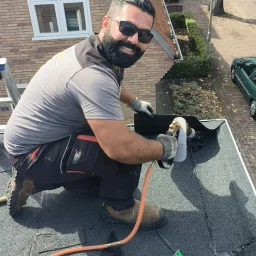
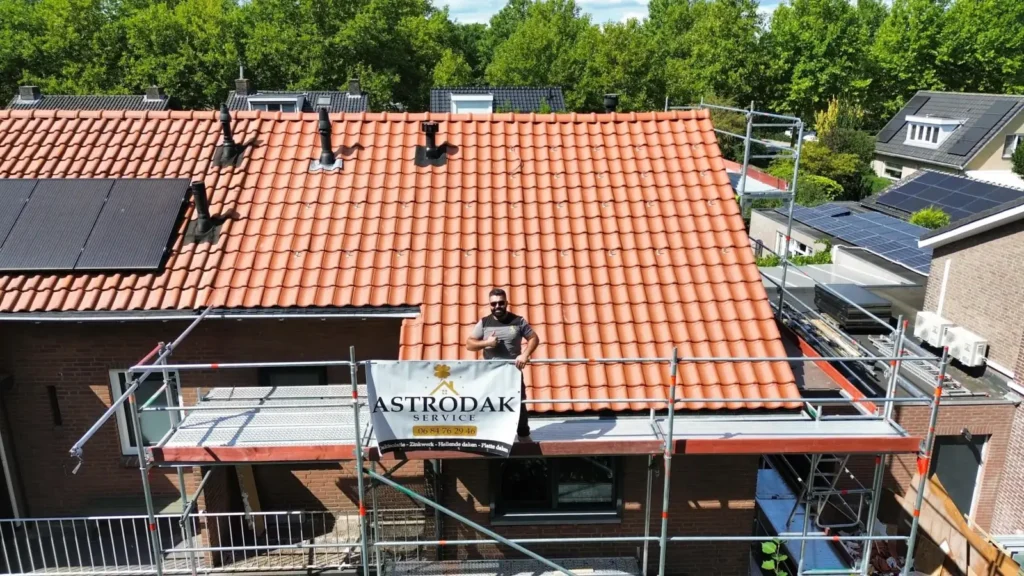
Fouad, owner of Astrodak Service
When repairing is actually the smart choice
At least half the roofs I get called out for do not need replacing. I say so too, even though commercially it is the less interesting conclusion.
The roof is less than twenty years old. Then a leak is almost always a detail: a lead flashing, a valley gutter, a roof penetration. Repair it and you will not have to think about it again for years.
The problem is in one place. A valley gutter, a chimney junction, one roof window. That is a repair, not a renovation.
The structure is dry. Roof boarding hard, rafters dry, insulation dry. Then there is simply time.
You are selling soon. A proper repair with an invoice and a guarantee is often just as valuable as a new roof when you sell. Do report it honestly in the questionnaire, though, because otherwise it will come back to you.
Not sure about the right approach?
I would rather come and look at your roof with my colleagues first than come up with a solution from a distance. During the free inspection you hear what is really needed, even if that is less than you thought.
What makes a roof age sooner than it should
Two roofs of the same age can be in completely different condition, and that is rarely down to the tiles. It is down to water that has been able to do its work somewhere for years: a gutter that overflows, a valley gutter made too narrow, a lead flashing that split. Where that water ran, the timber reaches the end of its life sooner than on the rest of the roof.
That is also why during an inspection I always look at the
gutter and the junctions and not just at the roof slope. A roof that is affected in one place can often still be saved. A roof where water has run everywhere cannot.
What I do during an inspection
I look from outside and from inside. Outside: are the tiles lying flat, are the ridge tiles secure, what state is the lead in, is the gutter hanging properly. Inside in the attic: are there stains on the roof boarding, does the timber feel solid, does it smell of damp, is there mould in the corners. That last point usually tells more than the roof slope itself.
Afterwards you hear what is needed, what can wait and what I would do if it were my house. That takes half an hour and there is no obligation. Also see
what the price of a new roof is made up of and
our projects. They include both small repairs and complete replacements.
How much longer you can go on
With a roof that is not yet at the end of its life, almost everyone wants to know how many years it still has left. It is not an exact science, but something can be said about it. What decides it is the condition of the tiling battens, whether the membrane is still intact and whether water is running somewhere and affecting the timber.
In practice I come across roofs where I can say with reasonable certainty that they have ten years left, and roofs where the answer is three to five years. That difference decides whether you insulate now or wait, and that is a choice worth thousands of euros. That is why I would rather spend half an hour looking than quote an average.
Frequently asked questions about repairing or replacing