Bitumen and EPDM are made to last for years, but they are exposed to sun, rain and frost day and night. Dirt, leaves and standing water wear the material out faster. A quick check takes little time and prevents a lot of trouble.
These are the four things I check on a flat roof.
Four points in flat roof maintenance
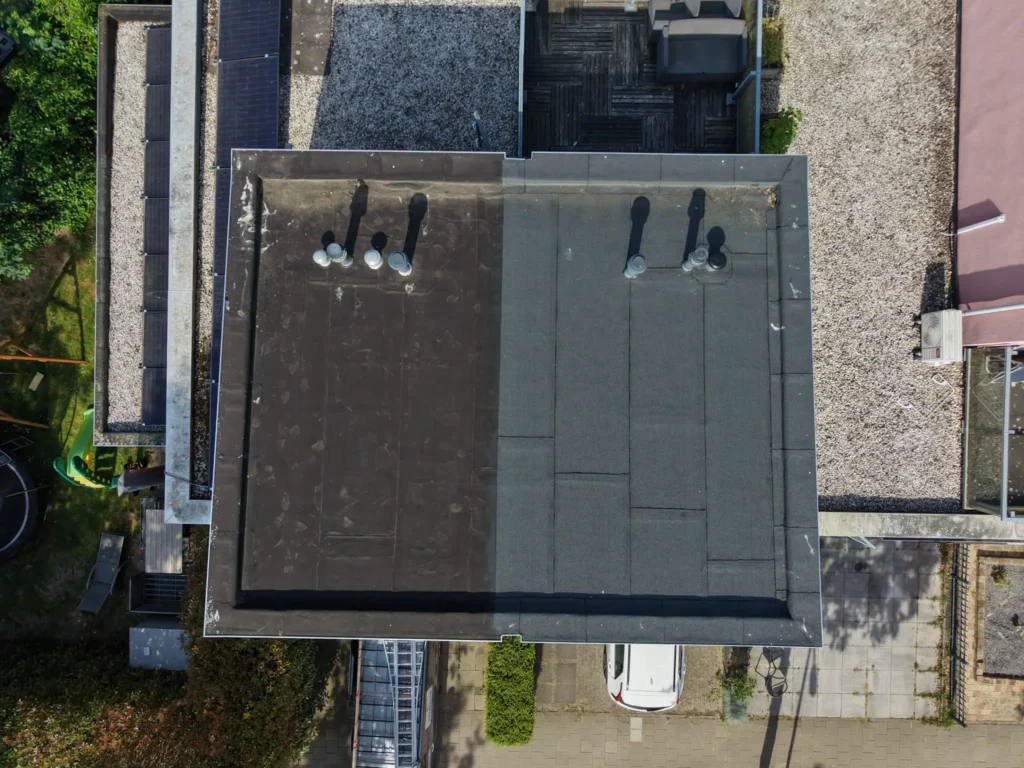
The roof covering itself. Blisters, cracks, loose seams and bare patches show that the layer is wearing. Also read about blisters in a bitumen roof.
Drains and water. Leaves and dirt hold the water back. Standing water is the enemy of every flat roof, see the fall of a flat roof.
Growth and dirt. Moss, algae and seedlings hold moisture and can damage the layer.
“Standing water and blocked drains are the two biggest enemies of a flat roof.”
Fouad, owner of Astrodak Service
What you do yourself and what you leave to a professional
Keep the roof clear of leaves and dirt, and after a heavy shower check whether the water drains away properly. Only go up on the roof if it is safe to do so, and first read whether you can walk on a flat roof.
Have cracks, blisters and loose seams checked by a professional. A timely repair costs a fraction of a new roof covering. Also read about the lifespan of a flat roof.
Blisters or cracks
have this
repaired quickly
Have your flat roof checked
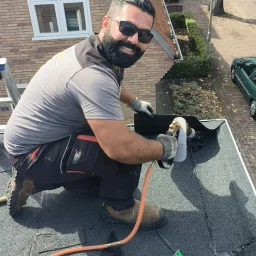
I come round with my colleagues, we check the covering, the drains and the edges, and tell you honestly what needs doing and what can wait.
What happens if you do nothing
Standing water. It slowly soaks the layer.
A small crack becomes a leak. Water always finds its way in.
Moisture in the insulation. Wet insulation insulates poorly and costs energy.
A more expensive job. What could have been a repair becomes a new roof covering.
What you can do about it
Have the roof checked once a year, preferably in the autumn before winter.
If the covering is at the end of its life, read bitumen or EPDM to help choose a new layer.
What you can do yourself
Do not go up on a roof without knowing whether it is safe. Get advice first.
Frequently asked questions about flat roof maintenance