There is a lot online about this choice, and most of it is written by a party that sells one of the two. I lay both and have no preference on paper. What I do have is a preference per roof.
Because that is what it really comes down to. Not which material is better, but which material suits the shape of your roof, how you use it and how long you want to stay there.
Where EPDM is stronger
Lifespan. A well-laid EPDM membrane easily lasts forty years and sometimes more. Rubber doesn't harden and doesn't become brittle from UV the way bitumen eventually does.
No seams across the surface. EPDM is made to measure and lies in one piece on a normal roof surface. Every seam that isn't there can never open up either.
Movement. Rubber stretches with the expansion and contraction of the substrate. On a roof with large temperature differences, that is a real advantage.
No open flame when laying. EPDM is bonded, not torched. On a timber roof structure or against a facade with vulnerable material, that makes for pleasant working.
Where bitumen is stronger
Repairable. This is the most underrated advantage. Damage in bitumen can be patched with a piece of new bitumen by almost any roofer. With EPDM you need the right rubber and the right adhesive.
Complex roofs. Lots of corners, upstands, penetrations and rooflights? Bitumen is easier to work around all those details. With EPDM, those all become hand-made connections.
Mechanical load. Two layers of bitumen with a mineral top layer are more resistant to foot traffic and sharp material than a single rubber membrane.
Familiarity. Every roofer works with bitumen. For maintenance in fifteen years' time, that is a practical plus you don't feel now.
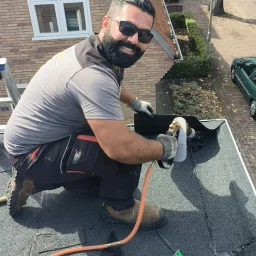
“On a straight roof surface without many details, I choose EPDM. On a roof full of rooflights and penetrations, bitumen remains my choice.”
Fouad, owner of Astrodak Service
Not sure about the right approach?
I would rather come and look at your roof with my colleagues first than come up with a solution from a distance. During the free inspection you hear what is really needed, even if that is less than you thought.
What makes the difference with both
More important than the choice between these two is what lies underneath and how the edges are finished. An EPDM roof with a poor upstand will leak sooner than a bitumen roof with a good one. The fall determines whether water stays standing, and the roof edge determines whether the covering stays in place.
What it means for your roof
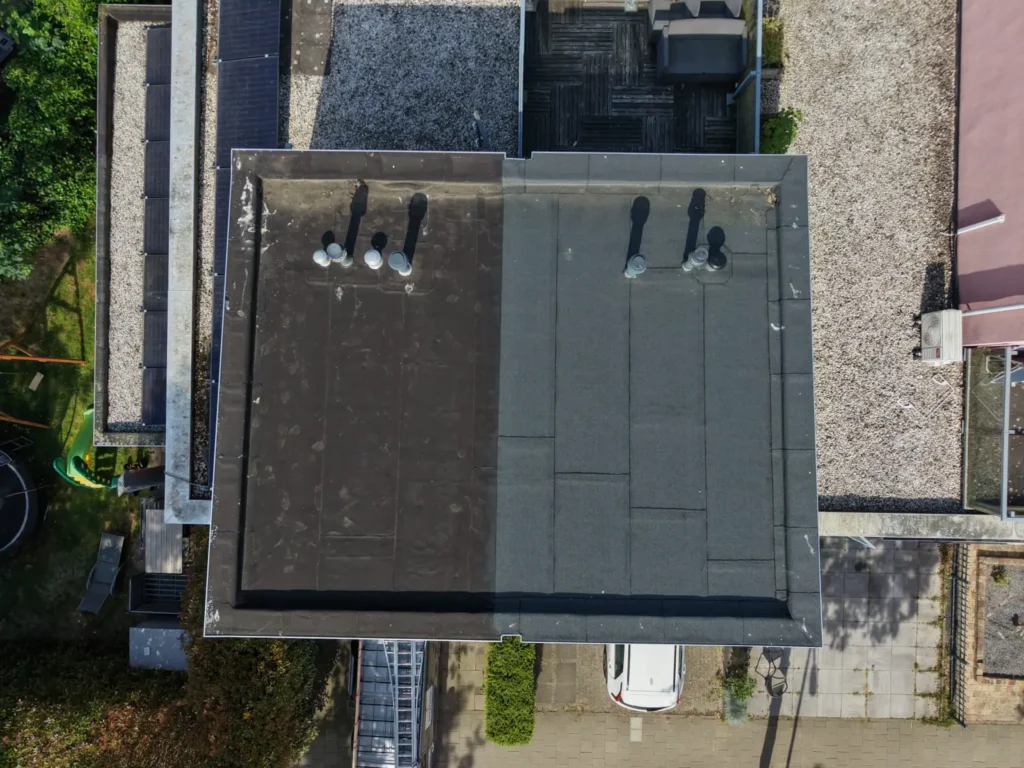
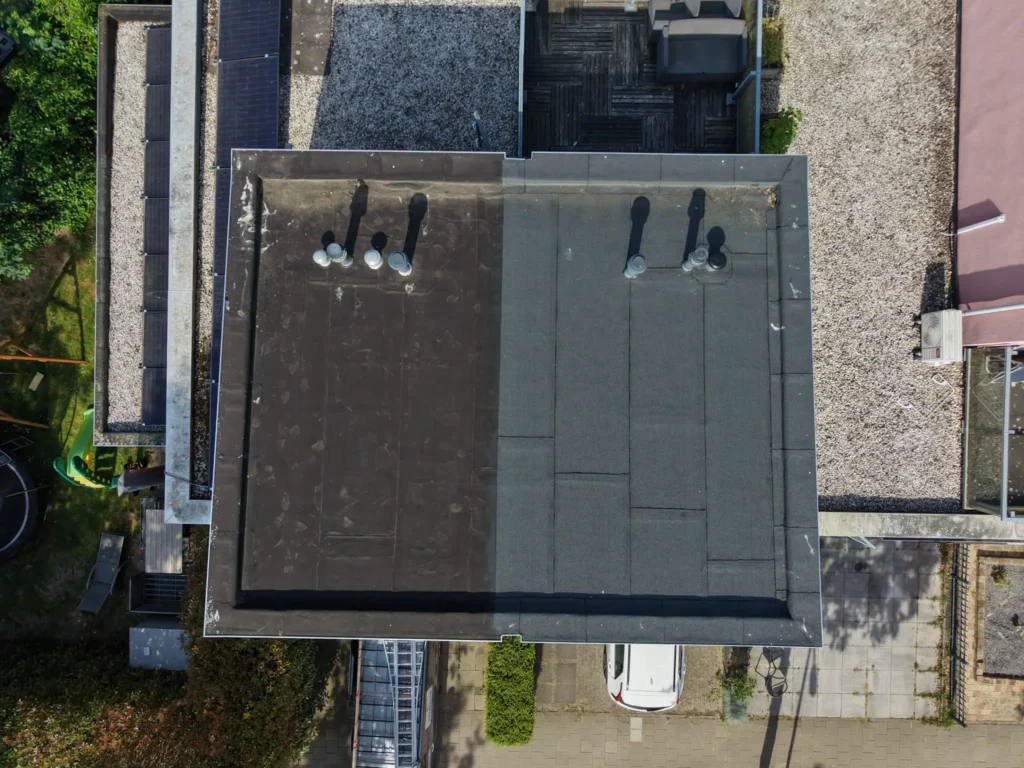
An extension or garage with a straight roof surface, one outlet and perhaps a rooflight: there EPDM is a good investment, because you lay it once and don't have to think about it for decades. The roof of a house with many vents, a dormer and several upstands: there bitumen gives an equally watertight result with fewer hand-made connections.
If you are still unsure, the question that gives the quickest answer is: how many things go through this roof? With one or two it will be EPDM, with six or seven bitumen.
Include the insulation
If the roof is being opened up anyway, that is the moment to renew or upgrade the insulation. The covering is off, you can see what condition the insulation is in, and the labour is shared. Done separately, you pay for the stripping and disposal a second time.
What should happen under the covering
Both systems stand or fall with the substrate. It must be flat, dry and clean, because bitumen torched onto a damp layer traps the moisture, and EPDM bonded onto an uneven layer won't stick everywhere. That is why, when replacing a roof, we remove the old covering instead of working over it.
That takes more work and it is the only way to see what you are laying on. If there is water in the insulation, it comes to light at that moment and not three years later when the new covering is already in place.
Frequently asked questions about bitumen and EPDM