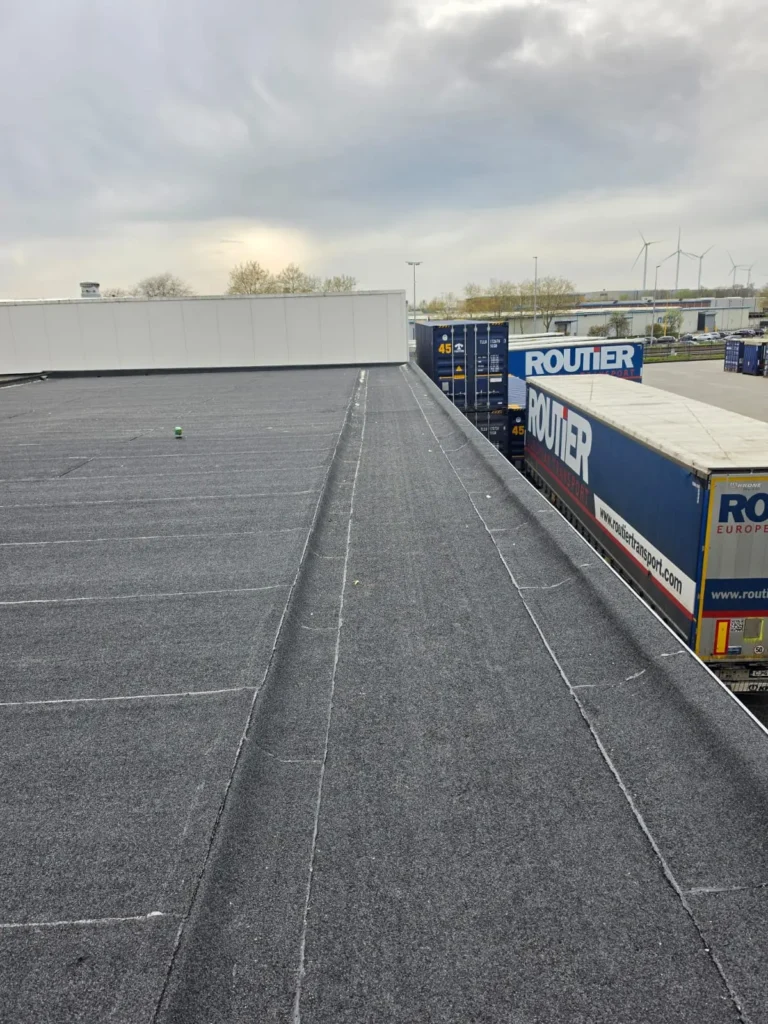
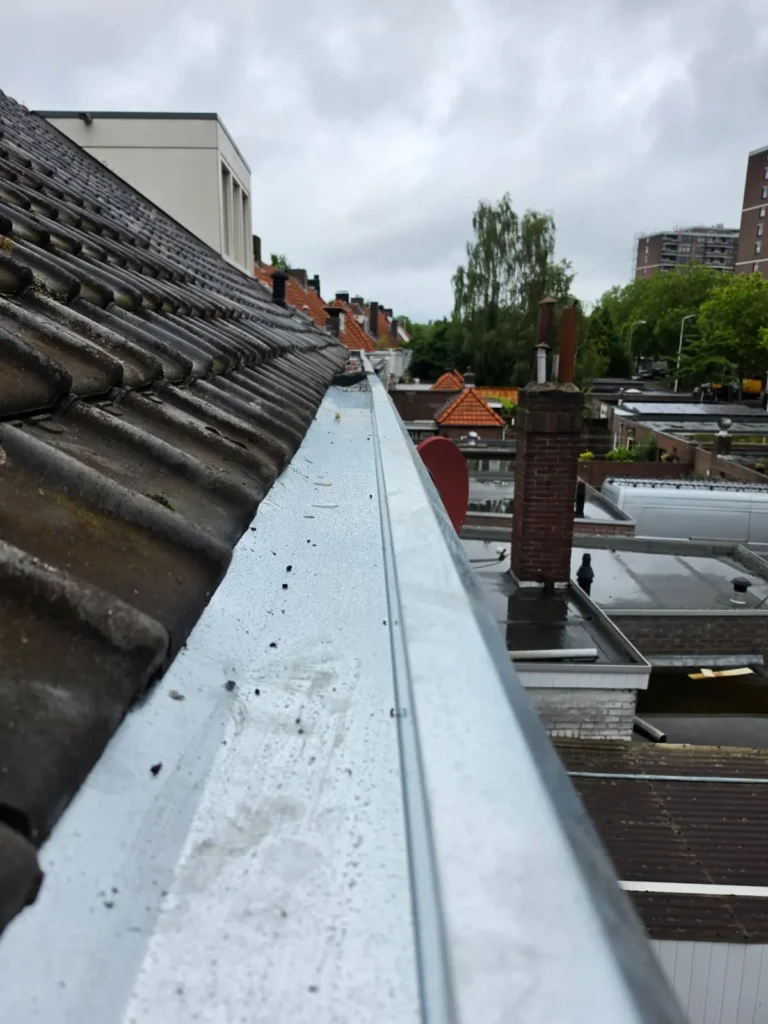
On a flat roof, almost every leak is at the edge. That is because the covering has to do something there that it never has to do in the middle: go up, over an edge, and be held down against wind suction.
The roof edge finish is the part that takes care of that, so it is the part that deserves the most attention.
What the roof edge does
Holding the covering in place. In wind, suction develops at the edge of a flat roof. The profile clamps the covering mechanically so that it cannot lift.
Keeping water on the roof. An upstand with a profile over it makes sure rain does not run over the edge down the facade, but stays on the roof and goes to the outlet.
Protecting the edge of the covering. The end of the covering is the most vulnerable spot. A profile covers it against UV and mechanical damage.
Absorbing expansion. An aluminium or zinc profile expands in the sun. So there should be room and a connecting piece that absorbs that movement.
“On a flat roof, the edge is the roof. What happens in the middle is the rest of the story.”
Fouad, owner of Astrodak Service
Where it goes wrong
Screws that have come loose. Expansion and contraction work screws loose, especially with a profile that is fixed in one piece over too great a length.
A seam that is open. Where two profile sections meet. Without a proper connecting piece, an opening forms there that lets water get behind.
An upstand that is too low. If the covering does not come up far enough behind the profile, standing water can rise above it. See
fall on a flat roof.
Affected wood underneath. The profile is fixed to a timber edge. If that wood has gone soft, the fixing no longer holds. See
fascia board and roof edge trim.
Covering in the main roof area
Have it checked before it becomes a job
Most of the damage I repair was still a small fix a year earlier. Have your roof checked with no obligation and you will know exactly where you stand.
What you can check yourself
Walk along the edge and look for three things: is the profile tight against the edge everywhere, is a seam open anywhere, and is there a screw sticking out or missing anywhere? That is a five-minute check, and it is exactly what prevents a leak.
Also check that the covering behind the profile has not come loose anywhere. A bulge or a raised edge in the covering at the roof edge means the clamping no longer works.
When replacing
Include the profile. A new covering under an old roof edge profile is a half-finished job, because the edge is exactly where the load is. And when the profile comes off, that is also the moment to assess the wood underneath and to raise the upstand if it was on the low side.
What you can do yourself
With a flat roof you can reach: once a year, run your hand along the edge. Feel whether the profile is tight everywhere and whether any screw is sticking out. That is the cheapest maintenance task on a flat roof, and it is exactly where leaks start.
Why wind suction hits the edge hardest
When wind flows over a flat roof, negative pressure develops at the edges and especially at the corners, pulling at the covering. That is exactly why the fixing at the edge should be closer together and stronger than in the main roof area, and why corner zones need extra attention.
On a roof where the covering has been lifted in a storm, it almost always starts at a corner. That is a sign that the clamping or the fixing there fell short, not that the covering itself was poor.
Frequently asked questions about the roof edge