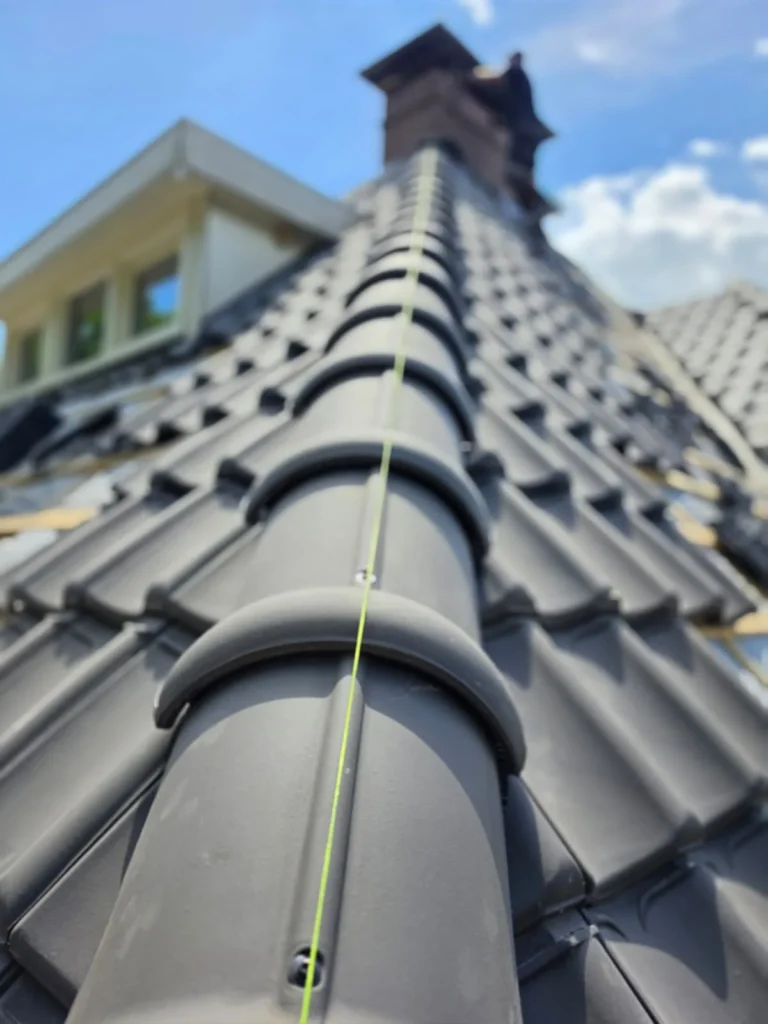
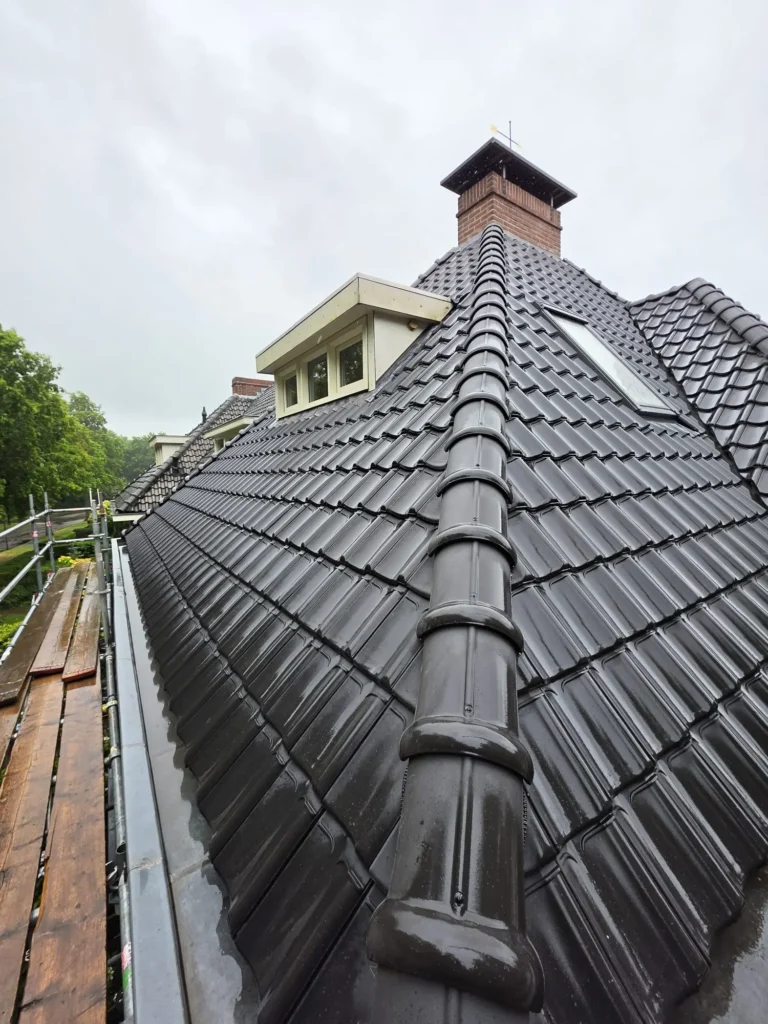
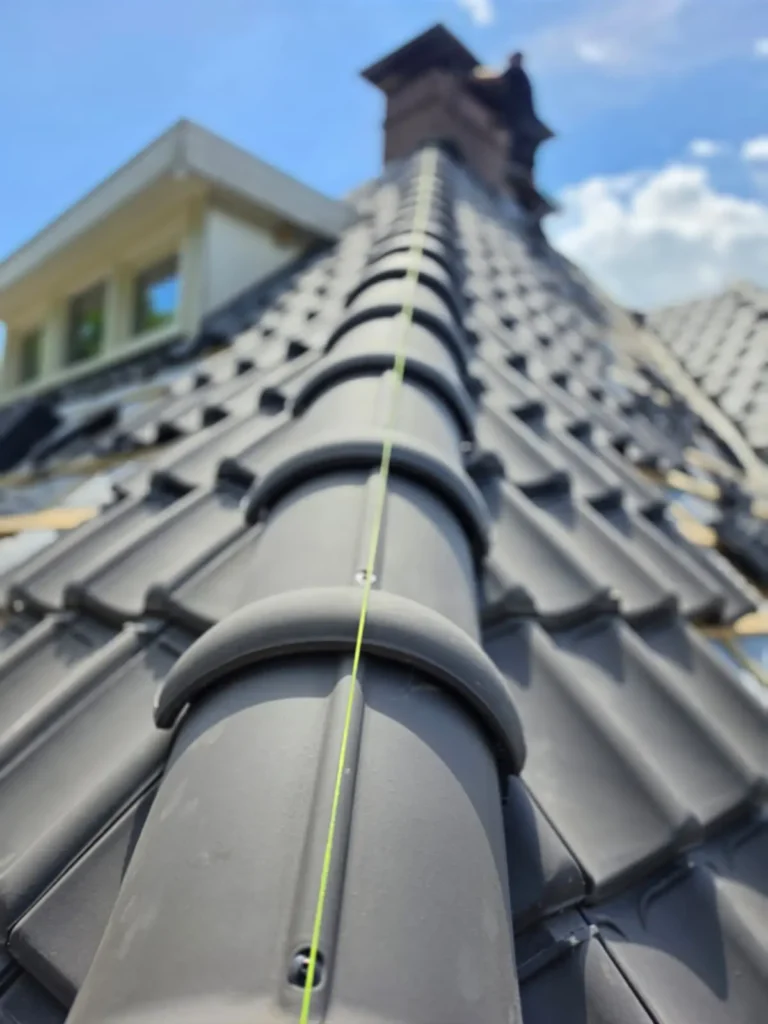
The ridge is the top line of your roof and the place where two roof slopes meet. On a traditional roof, the ridge tiles there are bedded in mortar: a bed of mortar that holds the tile in place and seals the opening.
Mortar on top of a roof is exposed to wind and weather all year, with frost, heat and movement in the roof surface. After twenty to forty years that mortar has crumbled, and then the ridge no longer seals.
How to recognise it
Damp in the attic along the top edge. A trail or rings on the roof boarding just below the ridge, over a longer length. That is different from a single spot at a chimney.
Grit and mortar in the gutter. Bits of mortar that have come down from the ridge. This is the clearest sign and you can see it from the ground.
Ridge tiles that are not in line. Shifted or slightly tilted ridge tiles mean the mortar underneath has fallen away. See
loose ridge tiles.
Worse with wind and snow. Water and powder snow get pushed up under a loose ridge tile. That is why it is worst in storms and after snow. See
leaks in driving rain.
“If there is mortar in your gutter, the ridge is talking to you. That is the only warning you get.”
Fouad, owner of Astrodak Service
Why the ridge goes first
Two reasons. The first is exposure: higher up on the roof there is no protection at all and the wind hits hardest there. The second is movement: a roof surface expands and contracts with the temperature, and the ridge sits exactly where two slopes work against each other.
Mortar cannot follow that movement. It is a hard, rigid material between two parts that move, and then it inevitably comes loose. That is not bad workmanship from back then, it is the nature of the construction.
Not sure about the right approach?
I would rather come and look at your roof with my colleagues first than come up with a solution from a distance. During the free inspection you hear what is really needed, even if that is less than you thought.
What a ridge renovation involves
The ridge tiles come off, the old mortar comes out, and a new finish goes on. We usually work with a ventilated ridge roll: a self-adhesive strip with a ribbed shape that follows the wave of the tile, onto which the ridge tiles are fixed with screws or clips.
When to combine it
The ridge is one of those jobs where someone has to get high up on the roof, and that setup is a considerable part of the cost. If there is scaffolding up anyway for tile replacement, a chimney job or lead work, this is the moment.
Why a ridge trail runs along the whole length
With a leak at the chimney you see one ring. With a ridge that no longer seals, you see a trail that runs over a longer length, because water gets in under the ridge tiles in several places and spreads along the ridge beam.
That distinction is useful: a long, more or less horizontal trail just below the top edge points to the ridge, a single ring points to a detail. With that information you know in advance whether the conversation will be about a ridge renovation or a repair.
Frequently asked questions about the ridge