Lead is an excellent building material and at the same time a material that is rightly debated. It is heavy, it needs care when working with it, and lead ends up in the rainwater as it washes off. So there are good reasons to look at alternatives.
Those alternatives exist and have improved in recent years. They are not yet equal in every situation.
Why lead was the standard for so long
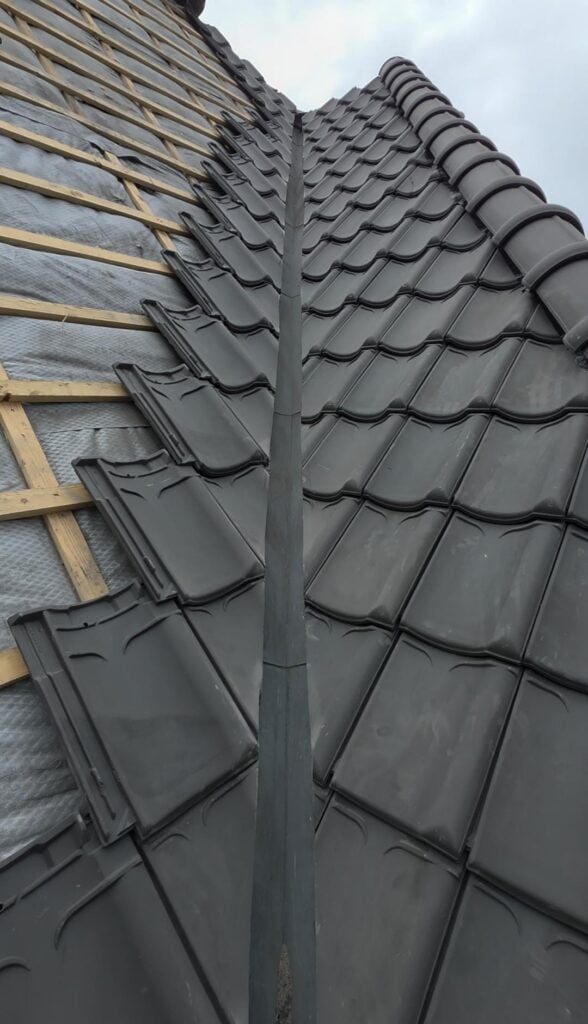
It can be dressed. Lead follows any shape. On a wavy tile you can press it by hand into the shape of the tile, and then it fits without sealant or filler. No other material does that as well.
It can be repaired. A leadworker can patch or extend an existing flashing locally. With a system that has an adhesive layer, that is harder.
Every roofer can work with it. For maintenance in fifteen years’ time, that is a practical advantage you do not feel now.
What a lead substitute does well
Lighter and safer. No heavy material on the roof and no lead on your hands. For someone who works with it every day, that is a real difference.
No run-off. No lead gets into the rainwater that falls on your roof. With a green roof, a water butt or a roof above a garden, that is a good argument.
Quick to apply. Flexible strips with an adhesive layer that are pressed down with a roller. With simple joints, that saves work.
Fine for flat joints. Wall abutments, roof windows and joints onto a flat tile are situations where it works well.
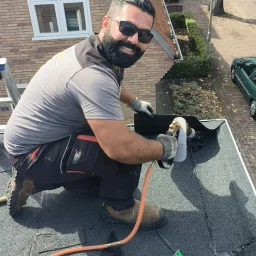
“For a wall abutment I am happy to use a substitute. For the top of a chimney I stick with lead.”
Fouad, owner of Astrodak Service
Not sure about the right approach?
I would rather come and look at your roof with my colleagues first than come up with a solution from a distance. During the free inspection you hear what is really needed, even if that is less than you thought.
Where lead is still the better choice
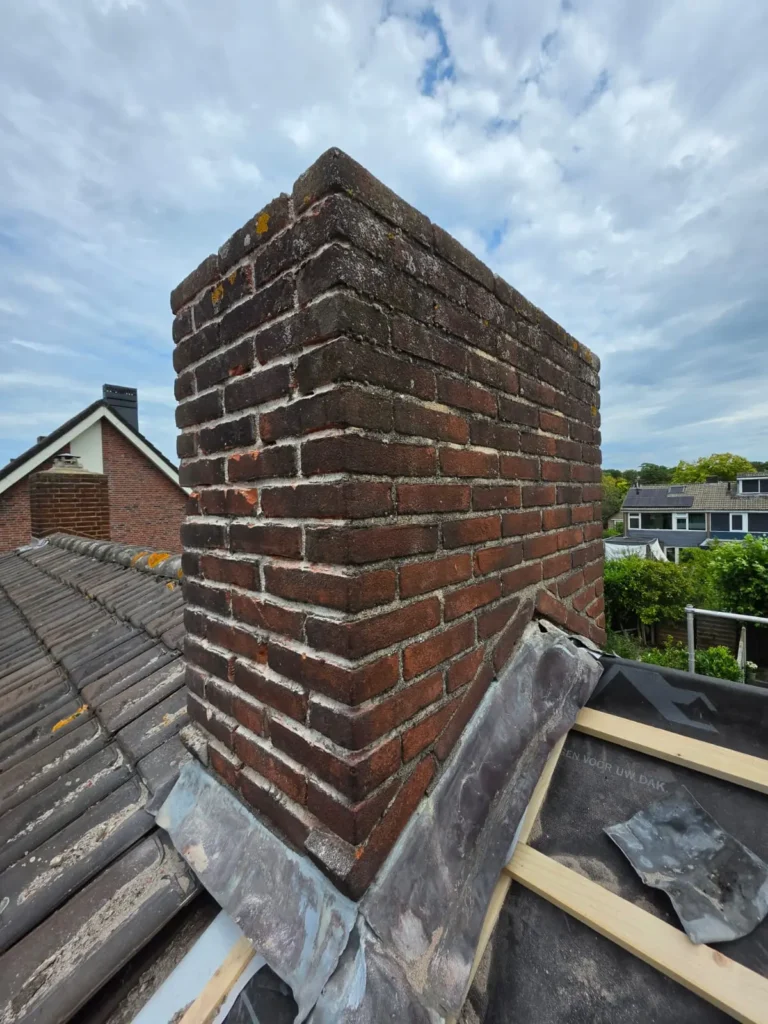
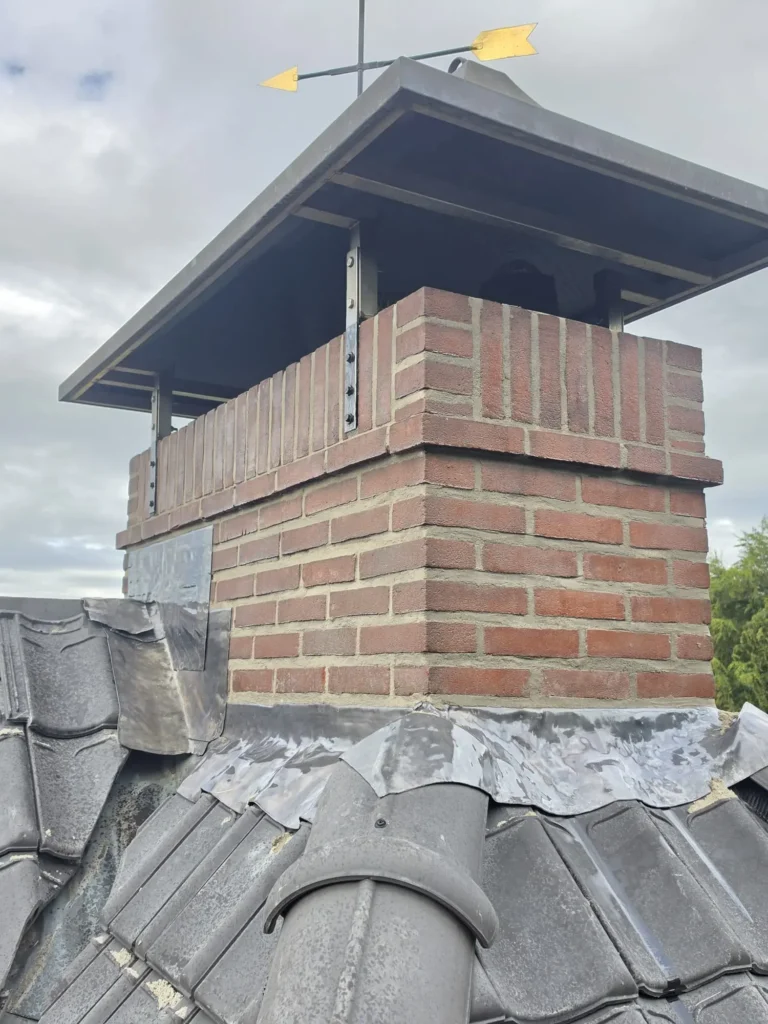
At the top of a chimney, where all the water from the roof above runs past and the load is highest. With wavy or irregular tiles, where the material really has to be dressed into shape. And on listed buildings or in a protected village conservation area, where lead is sometimes required.
With a valley gutter that takes a lot of water, I also still often choose lead or zinc, because the load there is constant and the lifespan counts for a lot. See
valley gutter leaks.
What to look out for with a substitute
The adhesion. These systems use an adhesive layer, and it only sticks to a clean, dry surface that is not too cold. Applied to a damp or dusty tile, it comes loose after a few years, and then you have a joint that looks good and does nothing.
And the quality varies considerably between manufacturers. Ask which system is being used and what the stated lifespan is. With a good product that is a real figure and not a marketing claim.
What we do
We work with both and choose per joint. Where the load is high and the shape complex, lead goes in. Where it is flat and straightforward and there is a reason to avoid lead, we use a substitute. The quote states which material goes where, so you can check it.
What the rules say about it
Using lead in construction is not banned, but things are moving. Some municipalities and housing associations choose lead-free for their own projects, and in new-build projects a lead substitute is specified more often. For private homes it is still a free choice.
Where it can be binding is with listed buildings: there, lead is sometimes actually required because of the original appearance and authenticity of materials. So that is exactly the opposite. We look into that for your address before any material is ordered.
Frequently asked questions about lead substitutes