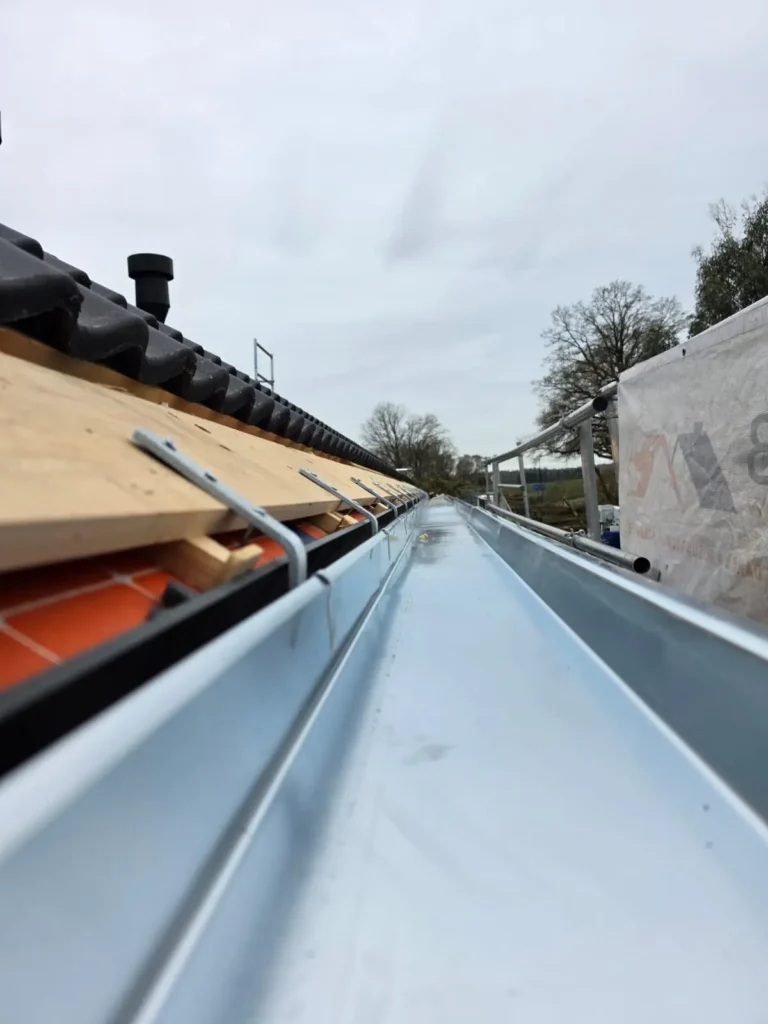
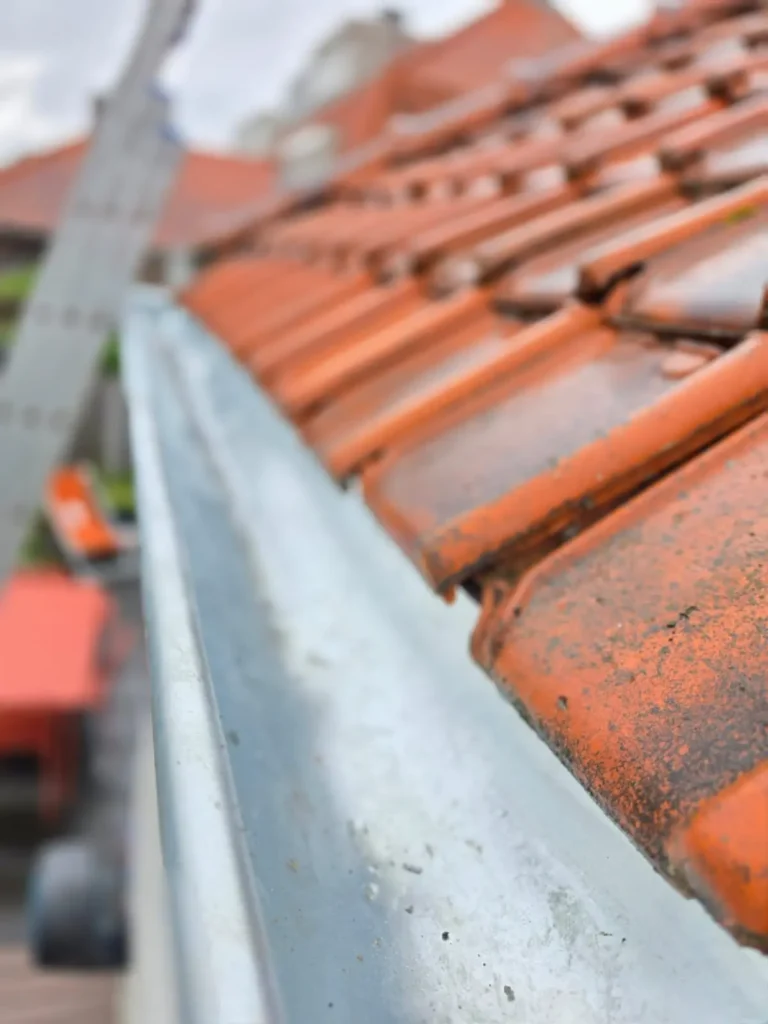
A box gutter is a gutter built into the eaves instead of hanging below them. On many older homes and farmhouses in the Meierij it is the standard, and it is a lovely solution that is neatly concealed.
It also has a drawback you cannot see: the gutter sits inside the structure, so when it leaks, it leaks into the timber of your eaves and not to the outside.
Why a box gutter does not last as long as a hanging gutter
Water stands in it for longer. A box gutter is wider and flatter, so the water drains out more slowly. Zinc that is permanently wet deteriorates faster.
Leaf sludge stays put. More leaves and sludge collect in a box gutter than in a hanging gutter, and that holds moisture against the zinc and speeds up corrosion.
It is less accessible. Because it sits inside the structure, it is checked less often and cleaned late.
The base underneath moves. The timber under the gutter moves with moisture and temperature, and that puts stress on the zinc and the soldered seams.
“A box gutter leaks inwards. That is why you only notice once the timber underneath has been wet for a few years.”
Fouad, owner of Astrodak Service
Where it wears through
Almost always at the bottom, and usually where leaf sludge has sat for years. Zinc corrodes from both sides, and at the lowest point, where the water stands longest, it goes first. It starts as a thin spot and becomes a pinhole you cannot find with the naked eye.
The second spot is the soldered seam, especially at a corner or an outlet to the downpipe. Movement in the structure puts strain on those seams, and after decades they give way.
Have it checked before it becomes a job
Most of the damage I repair was still a small fix a year earlier. Have your roof checked with no obligation and you will know exactly where you stand.
Solder or renew
A single leaking seam in otherwise sound zinc can be soldered well, and then you are good for years again. That is a targeted repair and the right choice for a gutter that is otherwise in good order.
If there are worn-through spots on the bottom, or it has already been soldered several times in the past, the zinc is at the end of its life. Every further repair is then a sticking plaster, and within five years you pay three times for something you could have done once. See
maintaining zinc work.
What always comes with renewal
The timber underneath. Under a gutter that has leaked for years, the gutter board or fascia board is often damaged, and that only comes to light once the old zinc is out. With a box gutter that is thirty years old or more, that is the rule rather than the exception.
What you can do to make it last
Empty it twice a year, in late autumn and in spring. That is the only maintenance task that really makes a difference, because leaf sludge on the bottom is exactly what causes the worn-through spot. And have the outlet to the downpipe checked at the same time, because that is where blockages start.
Why a box gutter causes problems with a delay
A hanging gutter that leaks drips to the outside, and you can see that. A box gutter is built into the eaves, so a leak runs into the timber and the roof boarding and not onto the pavement. So there is no visible signal when it starts.
What you can see is the result: a damp patch upstairs near the outside wall, flaking paint on the inside of the eaves, or a damaged fascia board. By that point it has usually been going on for a few years. That is why a box gutter deserves an annual check, while a hanging gutter can wait.
Frequently asked questions about the zinc box gutter