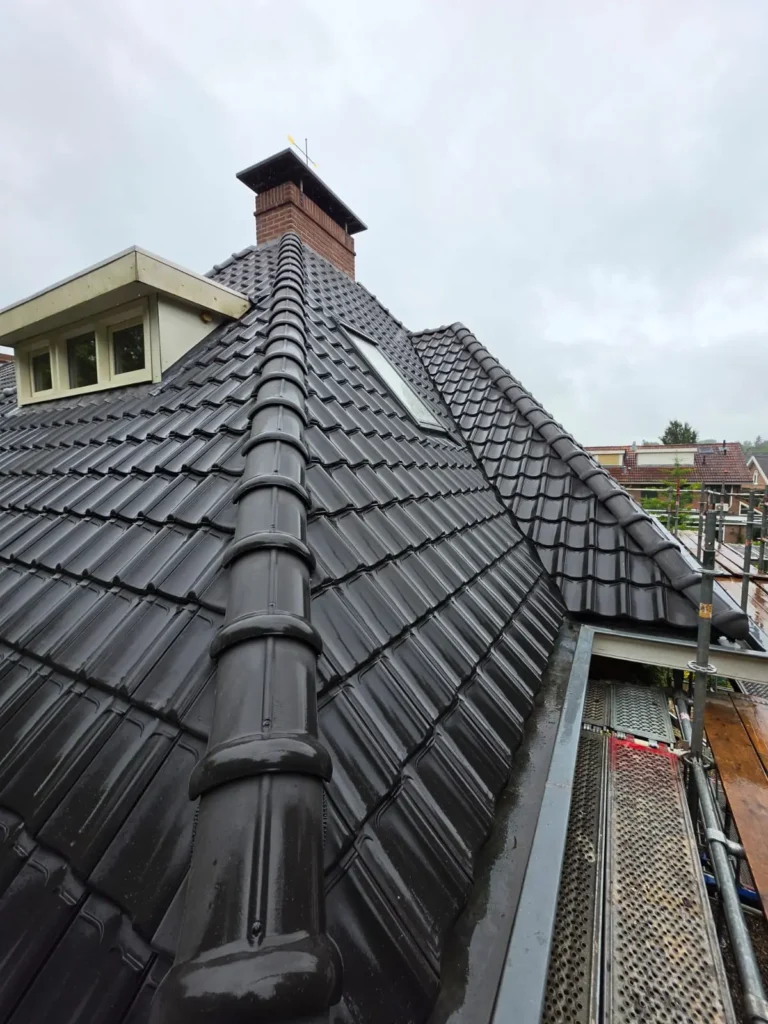
Warm air rises. That is the whole reason roof insulation is so often the first measure an adviser mentions. In a home with an untreated roof, a considerable share of the heat you generate escapes through the roof, and that happens twenty-four hours a day.
I can't give you a figure for what it will save you without having seen your house. And that isn't an evasive answer, because the difference between two houses with the same roof area is enormous.
What the savings depend on
What is there now. Going from nothing to well insulated is a world of difference. Going from moderately insulated to well insulated saves much less, because the first centimetres of insulation do most of the work.
Whether you heat the space. An attic with the radiator on loses heat through the roof. A cold, unused attic behind a closed floor doesn't lose that heat, and then you are insulating something you don't heat. See
an attic you don't use.
The size of the roof surface. In a home with a large roof or a farmhouse roof, the roof's share of the total heat loss is considerably greater than in a terraced house with a small roof surface.
How you heat. Someone who keeps the house at nineteen degrees saves more in absolute terms than someone at sixteen degrees. The saving is a percentage of what you heat now.
Airtightness. Insulation only works if no air can get past it. An insulation layer with gaps insulates well on paper and moderately in practice. See
the vapour control layer.
“The first ten centimetres of insulation do most of the work. Everything after that is fine-tuning.”
Fouad, owner of Astrodak Service
What you notice besides the bill
This is the part that surprises people most at completion, because it doesn't appear in any calculation. An insulated roof makes the space below noticeably more comfortable in winter, because you are no longer sitting next to a cold surface that draws heat away from you. You feel that effect before you see anything on the bill.
And in summer it works the other way: an insulated roof keeps the heat out. An untreated attic becomes unbearably hot in July, and an insulation layer changes that considerably. See
an attic that is too hot.
From nothing to good
biggest effect
on heating costs
From moderate to good
smaller effect
but more comfort
What does insulating get you in your own house?
The benefit depends on the roof structure, the current insulation and how you use the space. I work it out for you in concrete terms during the inspection, including the grant you are entitled to.
Why the timing matters so much
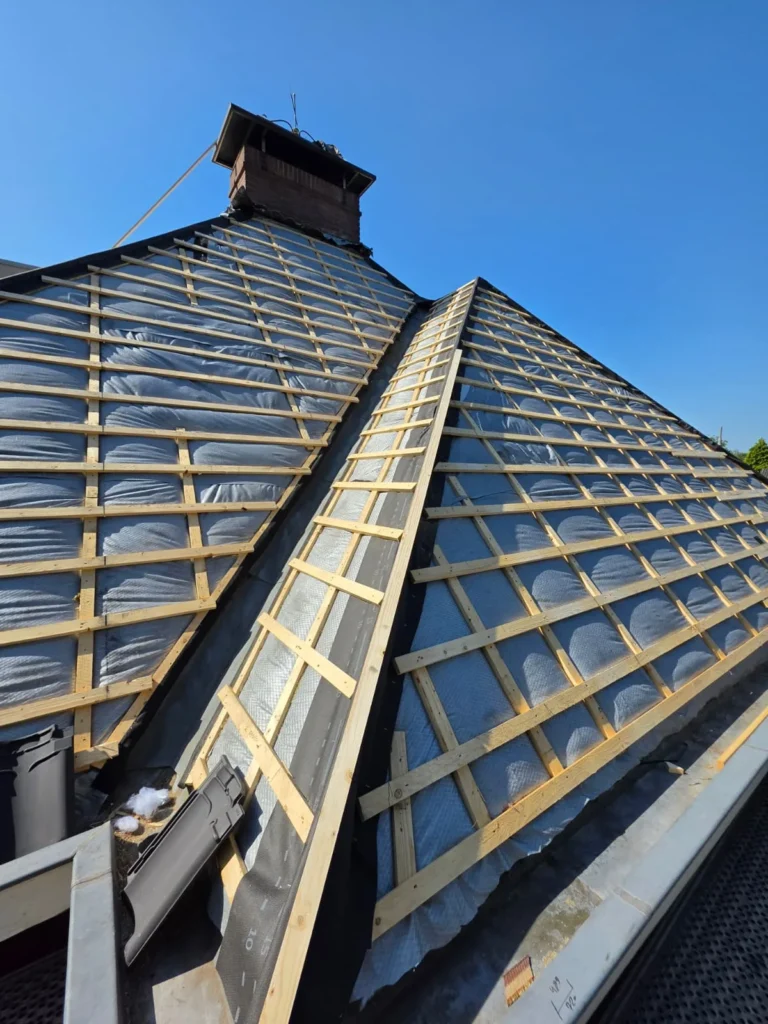
Insulating from the outside means the roof covering has to come off. That is the most expensive and labour-intensive part of the whole job. If you insulate at the moment the roof is being replaced anyway, you pay for that work once.
Done separately, you pay for the stripping, the scaffolding and the disposal a second time, and the payback period becomes a lot less attractive. That is why the most important question is often not whether you will insulate but when. See
roof work in phases or in one go.
And the grant
For owner-occupiers of an existing home there is the ISDE grant. In 2026 it is 16.25 euros per square metre for roof insulation alone and 32.50 euros per square metre if you carry out a second insulation measure within twenty-four months. With bio-based material, five euros per square metre is added.
To qualify, you insulate a minimum of twenty and a maximum of two hundred square metres, with an insulation material that achieves an Rd value of at least 3.5 m²K/W, and the work must be carried out by a professional. The full conditions are in
grants for roof insulation in 2026. I work out what it means for you in concrete terms during the
free inspection. See also
our page on roof insulation.
Why the first centimetres do the most
Insulation doesn't work in a straight line. The step from no insulation to a ten-centimetre layer stops most of the heat loss. The step from ten to twenty centimetres adds a bit more, but considerably less than the first ten.
That means two things. With an untreated roof, insulating saves a lot, even with a layer that isn't the maximum. And with a roof that is already moderately insulated, the gain from thicker insulation is smaller than people expect. That is why I always want to know what is there now first.
Frequently asked questions about roof insulation and heating costs