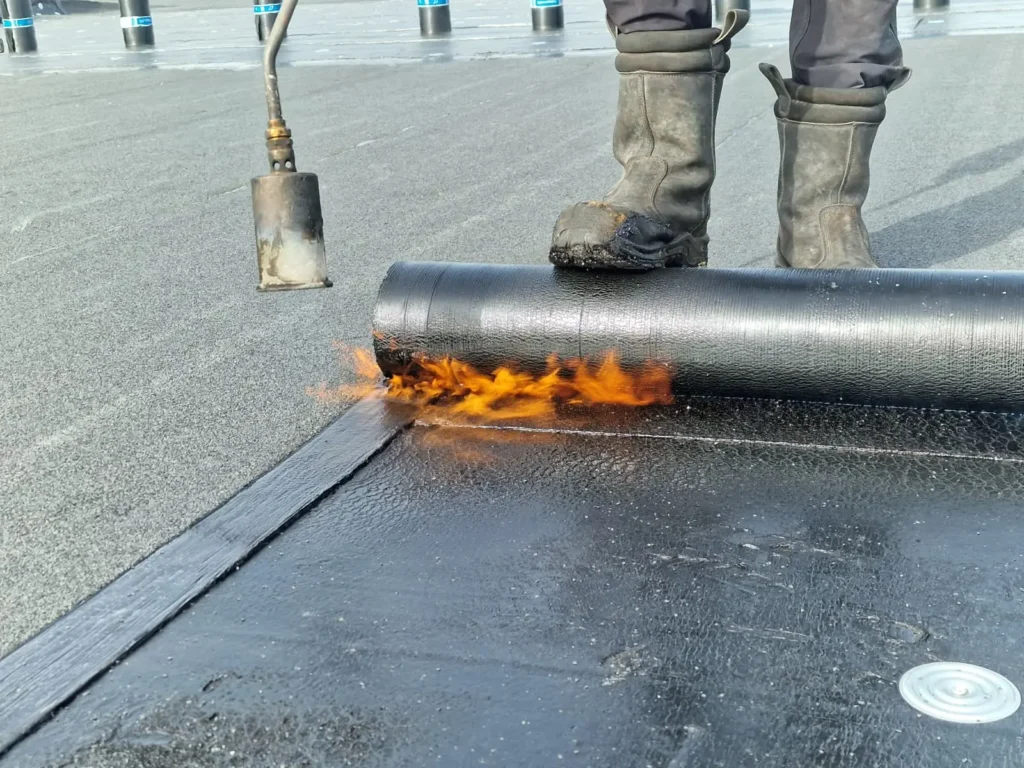
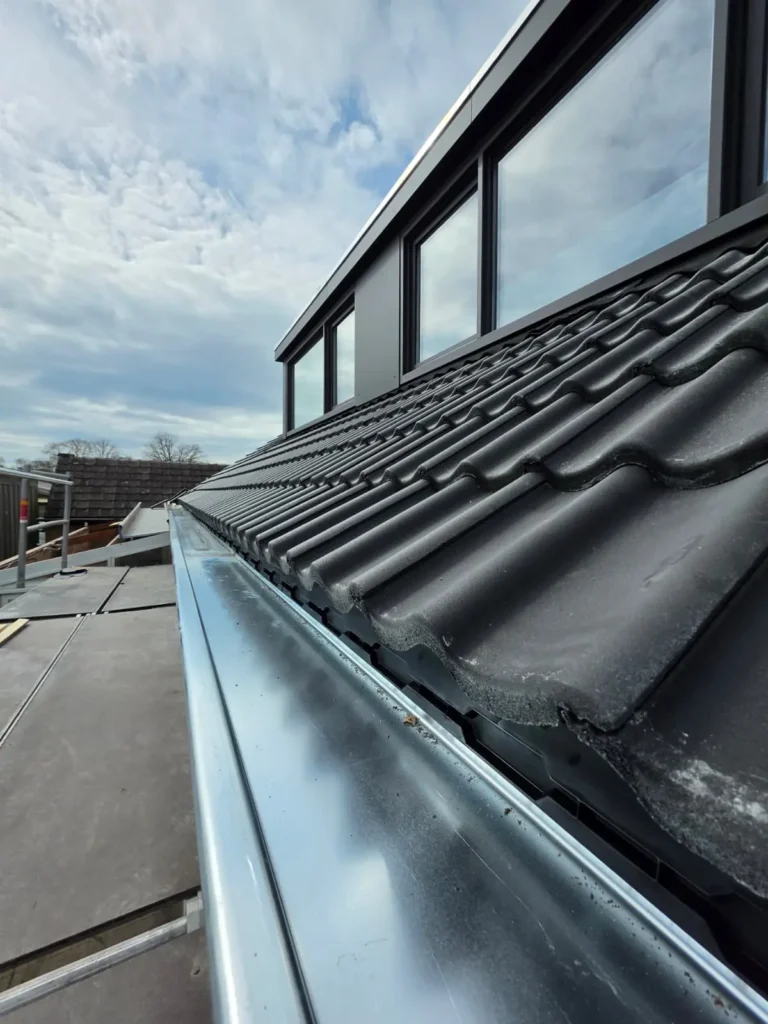
Winter is the toughest season for a roof. A lot of rain, wind from the south-west, temperatures hovering around zero and a sun that no longer dries anything out. What is a small job in the autumn is a repair in February.
This is the round I recommend myself, in order of how much it pays off.
Five steps
Empty the gutters and downpipes. This is by far the most important. A gutter that goes into winter full stands under water for months, and in frost that expands against the zinc and the brackets. See
cleaning gutters.
The ridge and the bargeboards. The places where the wind attacks. Loose ridge tiles and a bargeboard that has come loose are a small job now, and in January a roof slope that is open.
The lead work at the chimney. In winter, driving rain comes from the south-west and is pushed up the slope. A flashing with too little overlap then lets water through. See
leaks in driving rain.
The roof boarding in the attic. With a lamp along the ridge, the chimney and the eaves. What is a faint stain now will be a wet patch by March.
Clear the ventilation openings. At the eaves and at the ridge. In a closed-up, damp winter, that is what prevents mould. See
insulating and ventilating.
“If you do one thing before winter, empty the gutter. The rest of this list comes after that.”
Fouad, owner of Astrodak Service
Why frost does so much damage
Water expands when it freezes, and that is the driving force behind almost all winter damage to a roof. Water in a porous tile pushes against the material from inside. Water in a seam or small crack makes that opening bigger. Water in a full gutter puts strain on the zinc and the brackets. Water in a blocked pipe can split it open.
Have it checked before it becomes a job
Most of the damage I repair was still a small fix a year earlier. Have your roof checked with no obligation and you will know exactly where you stand.
What you no longer do yourself in winter
Climb onto a wet or frozen roof. That is already unwise in the autumn and in winter it is simply dangerous. Anything you still want to check then, you do from the ground and from inside.
And do not put off a repair until spring in the hope that it will not be too bad. A leak you see in November and have fixed in March has spent four months in the roof boarding and the insulation. That is exactly where a repair of a few hundred euros turns into a job costing thousands. See
wet insulation.
What we do in an autumn round
Gutters and outlets emptied and swept out, downpipes cleared, ridge and bargeboards checked, lead work and valley gutters inspected, and a look at the roof boarding in the attic. We report what we find with a photo, separating what needs doing now from what can wait.
What you can already arrange in summer
The autumn round is the most important, but there are two things you are better off arranging in summer. The first is a repair you already know about: a loose ridge tile, a split flashing, a gutter seam that drips. That works better in dry, warm weather, and there is more room in the schedule then.
The second is cutting back overhanging branches. That is a garden job that saves your gutters a lot all autumn and that can no longer be done in winter. Ask about the branches above the roof itself at the same time, because they rub tiles loose.
Frequently asked questions about getting your roof ready for winter