A leaking gutter isn't always obvious straight away. You see a wet streak on the wall, a green stain under the gutter, or you hear water dripping where you don't expect it. The water lost here ends up where it doesn't belong: against the fascia board, in the roof base and along the brickwork.
The sooner you find the spot, the smaller the job. This is how to find out where it is coming from.
The four most common causes
A seam that comes loose. Gutter sections are joined with a seam or connector. Temperature changes make gutters expand and contract, so over time a seam can start to leak.
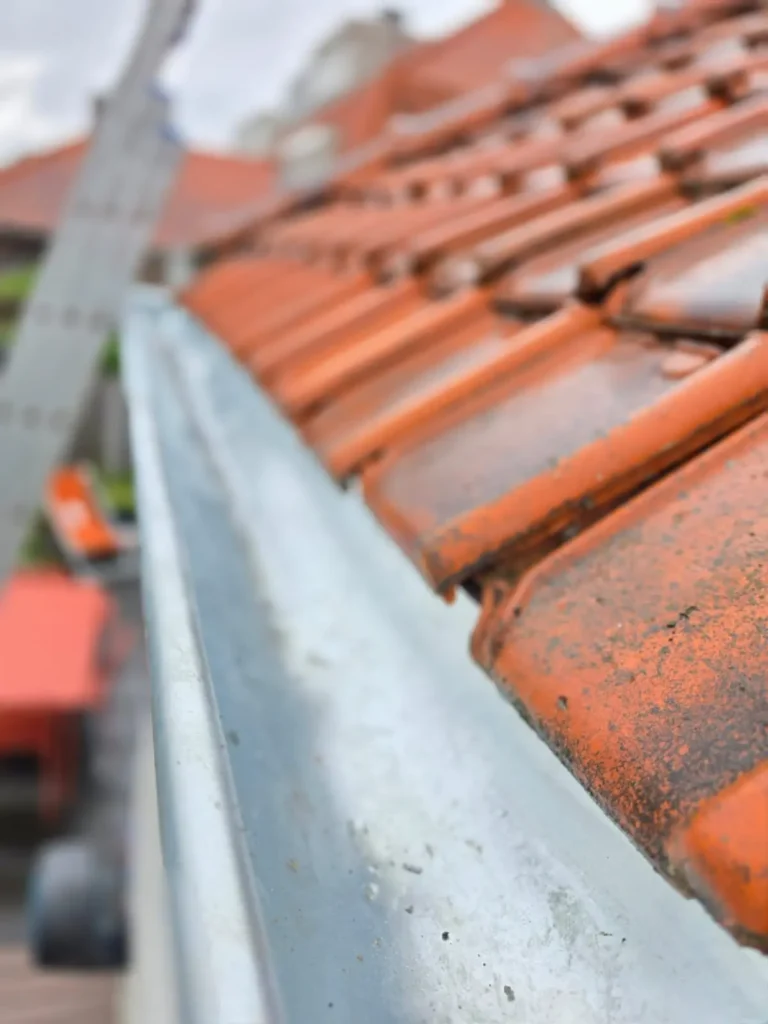
A hole or rust. Standing water attacks zinc and steel. A spot where dirt keeps lying can wear through. Read also about the lifespan of a zinc box gutter.
A poor corner or connection. The corners and the connection to the downpipe are the weakest points. That is where sections meet, and that is often where it starts.
A gutter that no longer drains. Sagging brackets let water stand, and standing water finds its way through every weak spot.
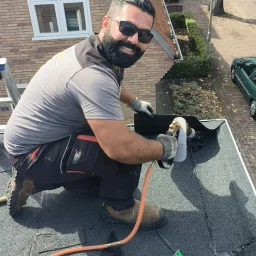
“Pour a bucket of water into the gutter and see where it drips. That's the spot you need to look at.”
Fouad, owner of Astrodak Service
How to find the spot
Wait for rain, or imitate rain with a garden hose or a bucket. Start at the highest point of the gutter and work towards the outlet. Look under the gutter and on the wall to see where the water comes from: a seam, a corner or the middle of a gutter section.
If you only see a wet trail down the wall without finding a spot, it may also be coming from above, for example from a roof edge or a valley gutter. So read also about valley gutter leaks.
In the middle of the gutter
a hole or rust
usually means replacement
Have the leak looked at
Want to know for sure whether the gutter can still be saved? My colleagues and I will come by with no obligation, find the spot and tell you honestly whether repair still makes sense or whether replacement is wiser.
What happens if you leave it
Damaged fascia board. Water that keeps running down the roof base in the same place makes the timber rot.
Damp in the wall. The brickwork soaks up water, which can cause damp patches inside.
Algae and stains. A green or black streak under the gutter is often the first sign.
A bigger job. A seam you can seal now may mean a complete replacement in a few seasons.
What you can do about it
A small seam or a loose connector can often be resealed once the spot has been cleaned and dried. That works if the material is otherwise sound.
If the gutter has rusted through, sagged or leaks in several places, replacing it is wiser than patching it again and again. Read how that works under replacing a gutter.
What you can do yourself
Clean the gutter before you seal anything, because nothing sticks to dirt and sludge. You can read how to go about it under cleaning gutters.
Don't go onto the roof and don't work on a ladder without someone holding it. A gutter that is high up is better checked by a professional.
Frequently asked questions about a leaking gutter