If you are reading this while water is coming in: the order below is the order in which it matters. Do steps one and two first; the rest can wait a quarter of an hour.
The first ten minutes
Electrics first. If water comes near a light, a socket or the fuse box, switch off that circuit. This is the only step that really can't wait.
Catch the water. A bucket with a towel in it, so it doesn't splash, and plastic underneath. If it drips from a beam, hang up a strip of cloth or a piece of string to guide the water into the bucket.
Relieve a bulging ceiling. With a water bubble: make one small hole at the lowest point and put a bucket under it. Better a small hole than a whole board coming down.
Move things out of the way. Furniture, boxes, electronics, floor coverings. Water finds the lowest point faster than you can clear up.
Photograph everything. With the date. The stain, the attic, your belongings. This is your file for the insurer.
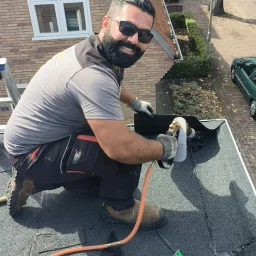
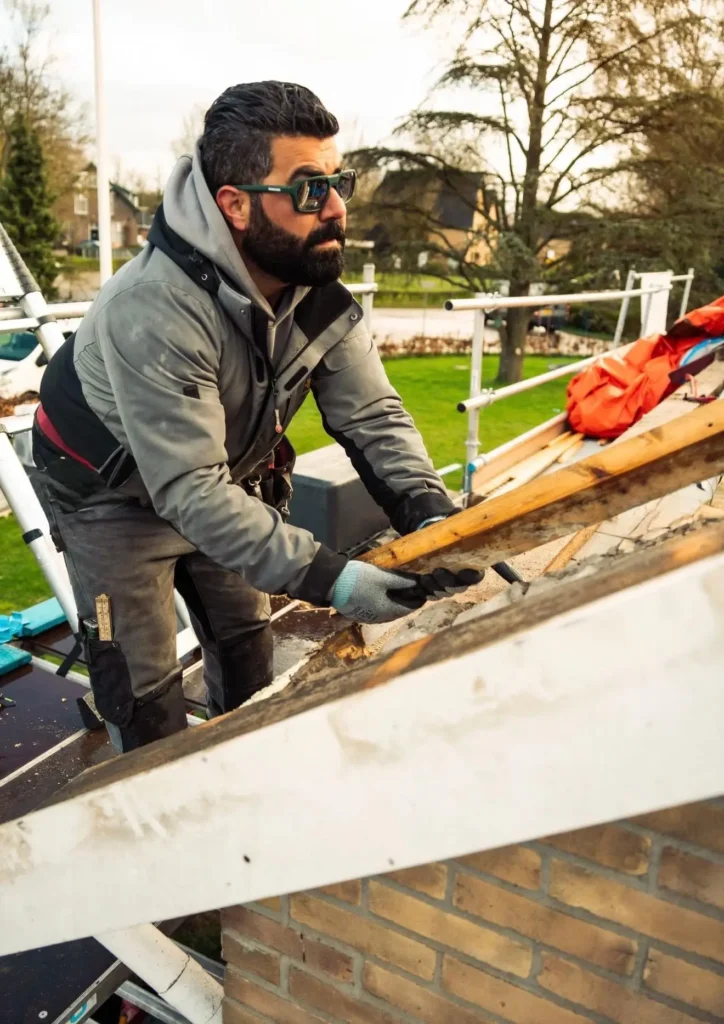
“In an emergency we seal the roof first. The search for the cause can always wait; water inside can't.”
Fouad, owner of Astrodak Service
What not to do
Don't go onto the roof. In rain, wind or in the dark, a roof is slippery and a tiled roof won't carry your weight. Almost everything that limits the damage, you do inside. Every year there are accidents with people who went onto their own roof during a storm for something a bucket could have caught.
Also don't: spray sealant or expanding foam into a hole on a pitched roof. It keeps the water out for a few weeks and makes the real repair more expensive afterwards. And don't slide tiles aside to have a look, because then you open up the roof at the wrong moment. See
temporary sealing.
Inside
catch the water
and record it
A leak? Do not let it spread.
A leak you leave for a season usually costs ten times as much in follow-on damage. Call or send a message: you will get an answer today, from me personally, not from a scheduler.
When is it really an emergency?
Now, call straight away. Water actively coming in, water near electrics, a sagging ceiling, or a hole in the roof after a storm.
Today or tomorrow. A stain that visibly grows during rain, or moisture in the attic that reaches the insulation.
This week. An old, dry stain that doesn't change after rain. Do have it checked, but it doesn't have to be tonight.
If in doubt, call. A phone call costs you nothing and usually gets you an answer within two minutes to the question of whether it can wait.
What we do when we get there
First seal it, with an emergency measure if the weather doesn't allow a proper repair straight away. Then follow the trail back to find the actual cause, because it is often not above the stain, see
tracing a leak. And then a fixed price for the repair, with a report and photos you can give to your insurer.
What you can keep ready
In a home with an older roof, it isn't an excessive precaution to keep a few things to hand: a bucket, an old towel, a sheet of plastic and a roll of strong tape. Together that costs less than ten euros and saves you a quarter of an hour of searching when you need it.
And know where your fuse box is and which circuit is for the upstairs. That is the first thing to do when there is water near electrics, and that is not the moment to start working out which switch is which.
Frequently asked questions about an acute leak